
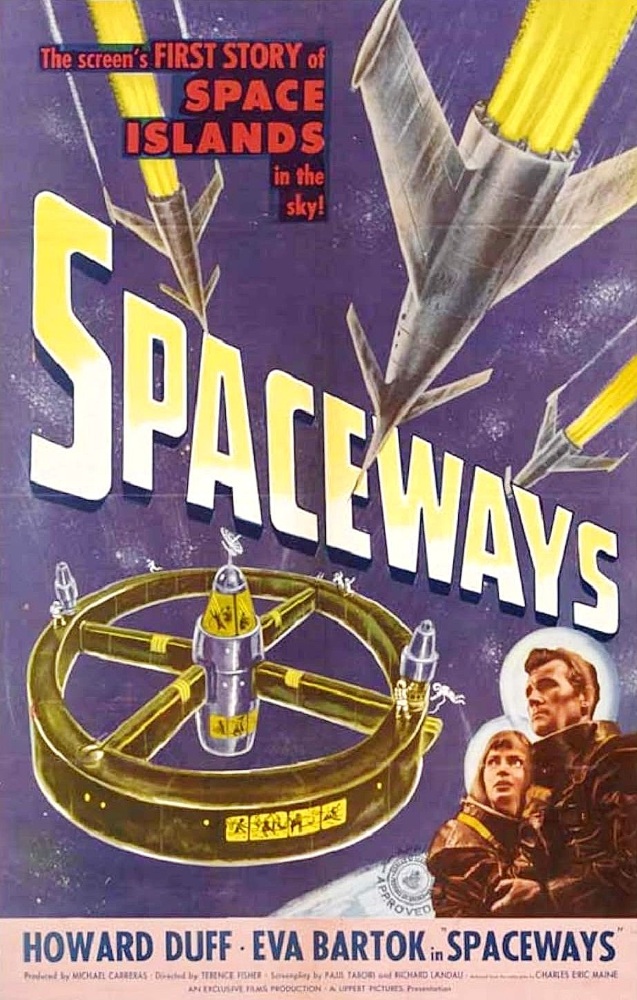
Crew
Director – Terence Fisher, Screenplay – Richard Landau & Paul Tabori, Adaptation – Paul Tabori, Based on the Radio Play Spaceways (1952) by Charles Eric Maine, Producer – Michael Carreras, Photography (b&w) – Reginald Wyer, Music Director – Ivor Slaney, Process Shots – Bowie, Margutti & Co., Ltd., Special Effects – The Trading Post Ltd.. Production Company – Exclusive Films Ltd.
Cast
Howard Duff (Dr Stephen Mitchell), Eva Bartok (Dr Lisa Frank), Philip Leaver (Professor Koepler), Alan Wheatley (Dr Smith), Andrew Osborn (Dr Phillip Crenshaw), Cecile Chevreau (Vanessa Mitchell), Michael Medwin (Dr Toby Andrews), Anthony Ireland (General Hayes), Hugh Moxey (Colonel Alfred Daniels)
Plot
At the top secret Deanfield military facility in the countryside, Dr Stephen Mitchell prepares to launch the AS1 rocket. He then comes across his wife Vanessa and colleague Dr Phillip Crenshaw kissing. The next morning the rocket is launched. It is then discovered that Vanessa and Phillip are missing. It is believed that they were launched into orbit inside the rocket. As Stephen prepares to launch another rocket to rendezvous with the first and rescue them, he is drawn into a romance with his colleague Dr Lisa Frank.
Hammer Films is the legendary studio that held dominance over British horror from 1957 until they closed up shop in the late 1970s. The studio’s name was made with the dual hits of The Curse of Frankenstein (1957) and Dracula/The Horror of Dracula (1958), which revitalised the classic horror stories in vibrant colour and made stars out of Christopher Lee and Peter Cushing. Hammer had been in existence since the 1930s under the name Exclusive where they had produced a steady output of quota quickies (films that were cheaply made, usually in black-and-white, to fulfil a requirement by the British government that a certain percentage of films be locally produced). Around the 1950s, they had switched over and started calling themselves Hammer Films – although Spaceways is still billed as an Exclusive film, as were several other films up until Quatermass II/Enemy from Space (1957).
Spaceways was made in the early days where Hammer had paired with US producer Richard Lippert, making a series of low-budget films that were predicated on luring an American actor to the UK to give the film transatlantic appeal. The most well-known examples of this were the Quatermass films beginning with The Quatermass Xperiment/The Creeping Unknown (1955). In this case, the imported face is the less well-known name of Howard Duff who had appeared in various film noirs, crime films and Westerns in the 1940s, including Brute Force (1947) and The Naked City (1948).
Terence Fisher (1904-80) was one of the key directors at Hammer and in later years his work had gained a cult following. Fisher had broken into the industry as a clapper boy and worked as an editor before directing his first film in 1948. He began work for Hammer with his ninth films as director, the film noir The Last Page/Man Bait (1951), followed by the crime film Mantrap (1953). Fisher made his first genre films for Hammer with respectively his fourteenth and fifteenth films as director, Four-Sided Triangle (1953), released in May 1953, and Spaceways, released two months later in July of the same year. Of course, what would make Fisher’s name was his subsequently directing the abovementioned Dracula and Frankenstein adaptations. (See below for Terence Fisher’s other films).
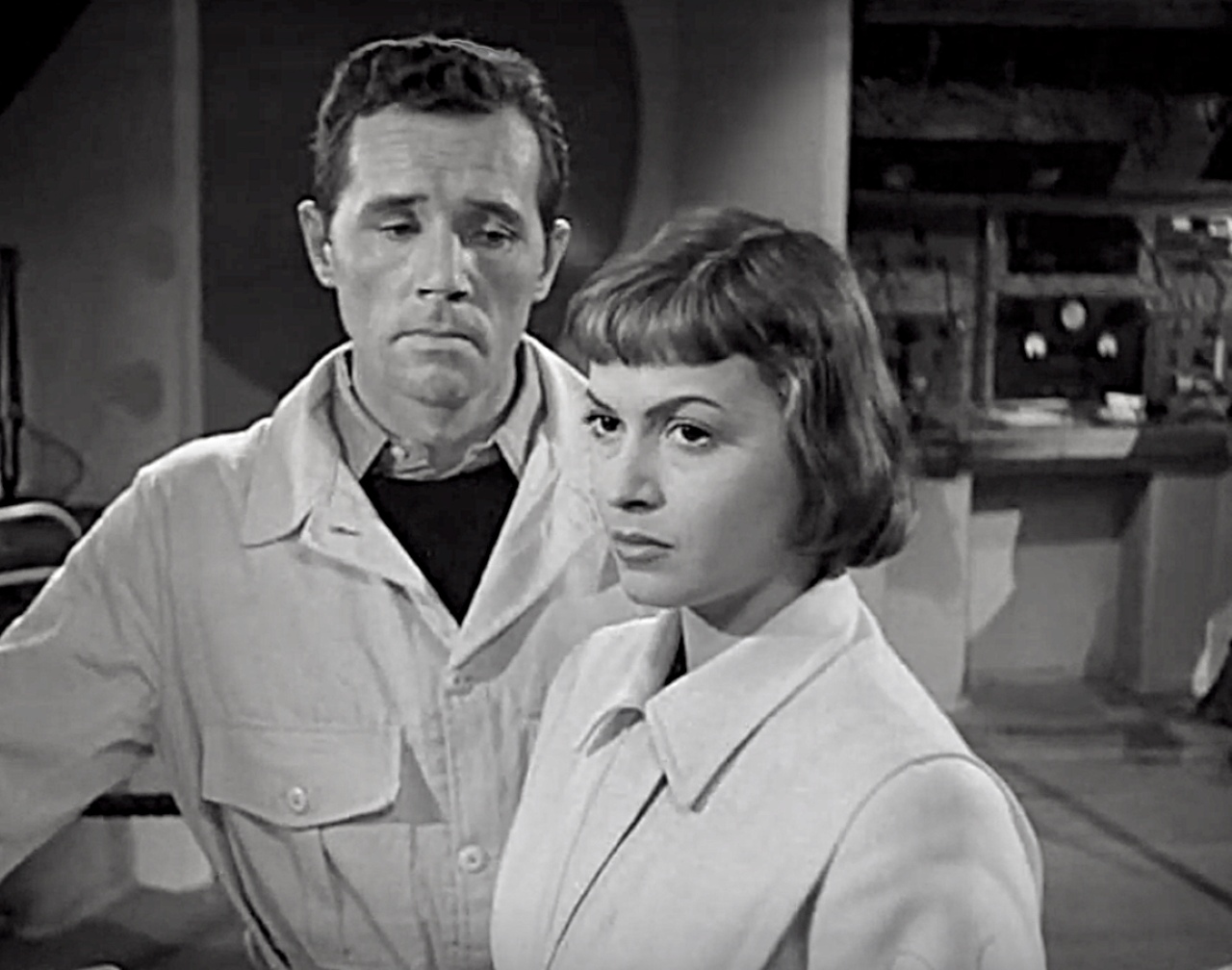
Spaceways is adapted from a radio play by Charles Eric Maine, the pseudonym of British author David McIlwain (1921-81). Maine/McIwain served during World War II and afterwards worked as a tv engineer and editor. His first work of SF was the radio play Spaceways (1952) for the BBC, which Maine then wrote as a book before it was filmed by Hammer. (This was in a period where quite a number of Hammer’s films were adapted from radio shows). A number of Maine’s other works were adapted into film with the interesting Timeslip (1955) about a man displaced several seconds out in time; The Electronic Man (1960), the first screen work on the dreamscape theme; and The Mind of Mr Soames (1969) about a man who awakens from a coma with the mind of a child.
Fisher’s two early SF films, Spaceways and Four Sided Triangle, are almost never regarded as significant or even interesting works by Anglo-horror cycle purveyors and it is not seen that Hammer got its start until The Quatermass Xperiment and properly with The Curse of Frankenstein. Here they are still stuck down in quota quickie territory with Fisher shooting in black-and-white. The radio play origins of the story are evident in the largely static script, which is essentially a progression of scenes with people talking in various laboratories and control rooms.
Spaceways was one of the early films of the Space Age, which had started on screen only three years earlier with Destination Moon (1950). (For a more detailed view see Films About NASA and the Space Program). The film is quite accurate in predicting things like the three-stage rocket. On the other hand, it was off quite a bit in saying that it would only be five years after the launch of the rocket before we would have the first space station and that this would be a stepping stone to The Moon and be used as a launch platform for atomic weapons.
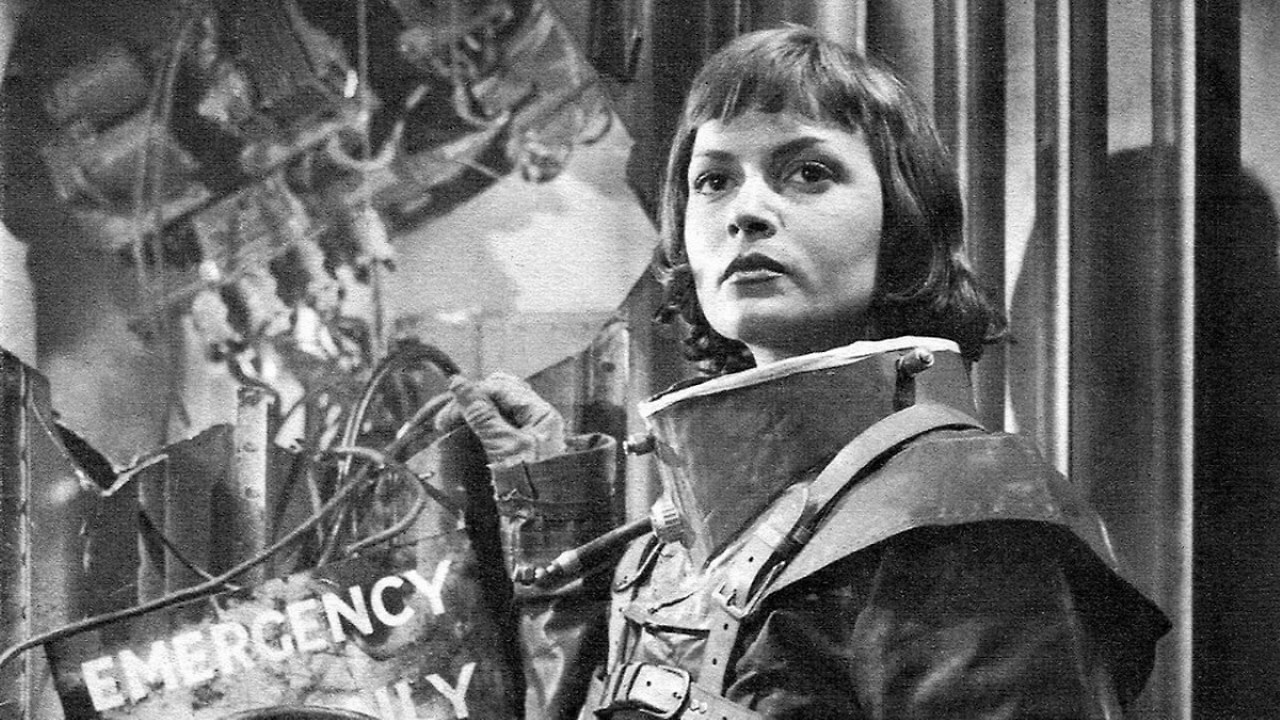
Unlike the US films of this era, Spaceways is not interested in exploring The Moon or other worlds. It simply becomes a unique murder mystery (although perhaps more accurately a missing persons thriller) where it is believed that Howard Duff disposed of wife Cecile Chevreau and her lover Andrew Osborn by launching their bodies in the rocket, or that they themselves eloped into orbit. It is also a mystery where there is not a great deal of tension engendered in solving what happened – I am not sure if that is Fisher’s fault or one that can be blamed on the script.
The thing that gets me about the set-up is that we have the launch of an unmanned rocket. The plot then reveals that two people are supposed to be inside and must stay up in orbit presumably alive for an untold period of time – weeks? more likely months? – until a second mission is launched to rendezvous. If the mission was unmanned, what supplies are they subsisting on in terms of food, water and oxygen? It would surely be completely wasteful to send weeks’ worth of food supplies up on an unmanned mission. Or did nobody notice these being surreptitiously loaded aboard or that the weight payload would be way off? Although [PLOT SPOILERS], given the final denouement, this is no surprise, but you cannot help but wonder when these theories about them being aboard were floated, why a bunch of rocket scientists failed to consider these matters?
Terence Fisher’s other genre films are:– Four Sided Triangle (1953), The Curse of Frankenstein (1957), Dracula/The Horror of Dracula (1958), The Revenge of Frankenstein (1958), The Hound of the Baskervilles (1959), The Man Who Could Cheat Death (1959), The Mummy (1959), The Stranglers of Bombay (1959), The Brides of Dracula (1960), The Two Faces of Dr. Jekyll (1960), The Curse of the Werewolf (1961), The Phantom of the Opera (1962), The Gorgon (1964), Dracula – Prince of Darkness (1966), Frankenstein Created Woman (1967), The Devil Rides Out/The Devil’s Bride (1968), Frankenstein Must Be Destroyed (1969) and Frankenstein and the Monster from Hell (1974), all for Hammer. Outside of Hammer, Fisher has made the Old Dark House comedy The Horror of It All (1964) and the alien invasion films The Earth Dies Screaming (1964), Island of Terror (1966) and Night of the Big Heat (1967).
Trailer here
Full film available here (colorized version)