

Crew
Director – Craig Gillespie, Screenplay – Ana Nogueira, Based on the Comic-Book Supergirl: Woman of Tomorrow (2021-2) by Bilquis Evely & Tom King, Producers – James Gunn & Peter Safran, Photography – Rob Hardy, Music – Claudia Sarne, Visual Effects Supervisor – Geoffrey Baumann, Additional Visual Effects Supervisor – Jose Armengol, Visual Effects – Barnstorm VFX, Digital Domain (Supervisor – Michael Melchiorre), Framestore (Supervisors – Benjamin Loch & Stephane Naze), Industrial Light and Magic (Supervisor – Malcolm Humnphreys, Animation Supervisor – Benjamin Krolick) & Peerless VFX, Special Effects Supervisor – Paul Corbould, Prosthetic Designer – Kristyan Mallett, Character Prosthetics & Animatronics – Legacy Effects (Supervisors – Lindsay MacGowan, Shane Mahan & J. Alan Scott), Production Design – Neil Lamont. Production Company – Troll Court Entertainment/The Safran Company.
Cast
Milly Alcock (Supergirl/Kara Zor-el), Eve Ridley (Ruthye Marye Knoll), Jason Momoa (Lobo), Matthias Schoenaerts (Krem of the Yellow Hills), David Corenswet (Superman), David Krumholtz (Zor-el), Emily Beecham (Alura Zor-el), Kadiff Kerwan (Bomar Vran), Thalissa Teixera (Mareck Vran), Diarmid Murtagh (Drom Braxton), Imogen Turner (Young Kara), Keeley Forsyth (Healer), Ferdinand Kingsley (Elias Knoll), Emily Piggford (Delilah Knoll), Paul Hunter (Wormhole Bus Driver)
Plot
On the planet Holzherr, Ruthye Marye Kroll is witness as her parents and young brother are killed by the bandit Krem of the Yellow Hills. She walks into a dive bar and offers the sword made by her father to whoever kills Krem. One of the aliens simply takes the sword but is stopped by Kara, who is drinking in the bar (because the planet’s red sun means she is without superpowers and she can get drunk). Kara turns down Ruthye’s offers but then her ship is stolen by Krem and her dog Krypto shot by an arrow from Krem. With Krypto having only days to live, Kara reluctantly takes Ruthye as her companion as sets out to find Krem and get her ship back. They enter Krem’s lair on the planet Bilquis where they make an alliance with the intergalactic bounty hunter Lobo to stop Krem.
Supergirl first made her appearance in Action Comics #252 in 1959 where she was conceived as a version of Superman intended to appeal to teenage girls, gaining her own comic-book in 1972. Her origin story was elaborated as being Superman’s cousin Kara, who survived the destruction of Krypton when Argo City was thrown free and her coming to Earth and adopting the secret identity of Linda Lee, later adopted by the Danvers family. She was killed off in the DC’s continuity reboot Crisis on Infinite Earths (1985). There were several alternate versions of her floating around before she was reintroduced to continuity in 2004. She has undergone several reboots since then that have played and mix and match with her origin story.
Supergirl has had an uneven life on the screen. The first of these was Supergirl (1984), a spinoff of the Christopher Reeve Superman films, where she was played by Helen Slater, but this is an incredibly bad film. The best screen incarnation of Supergirl was the wonderfully sunny portrayal by Melissa Benoist in the tv series Supergirl (2015-21), which was part of the Arrowverse, even if the plotting surrounding her was a mishmash that frequently felt made up on the spot. We have had other live-action Supergirls such as Laura Vandervoort as a guest star, later regular on tv’s Smallville (2001-11) and Sasha Calle’s guest appearance in The Flash (2023). The best written Supergirl was the one who appears in the animated Superman Unbound (2013) where we see her as a traumatised survivor trying to adjust to life on Earth. There were also fine versions in the animated films Legion of Superheroes (2023) where she was still trying to adjust and tame her powers and the rebellious and uncontrolled version in Superman & Batman: Apocalypse (2010).
Supergirl emerges as the second entry in the DC Universe films under producer James Gunn. Australian actress Milly Alcock made a cameo at the end of the first produced film, Gunn’s Superman (2025). Gunn’s Superman David Corenswet makes a number of appearances throughout this film and Alcock is slated to appear in the next film Man of Tomorrow (2027).
Actual directing duties have been handed over to Craig Gillespie who first gained attention his second film, with the witty Lars and the Real Girl (2007). He subsequently went on to works like the remake of Fright Night (2011), Million Dollar Arm (2014), The Finest Hours (2016), the critical acclaim of I, Tonya (2017) and the live-action Disney prequel Cruella (2021), among other works.
Supergirl premiered to a negative fanboy, critical and box-office reaction. I suspect in choosing Supergirl to follow-up Superman, Gunn was hoping that she would be a female character that would strike a note with audiences in the same that Margot Robbie’s Harley Quinn in Suicide Squad (2016) and Gal Gadot’s Wonder Woman (2017) had been huge crossover successes with audiences.
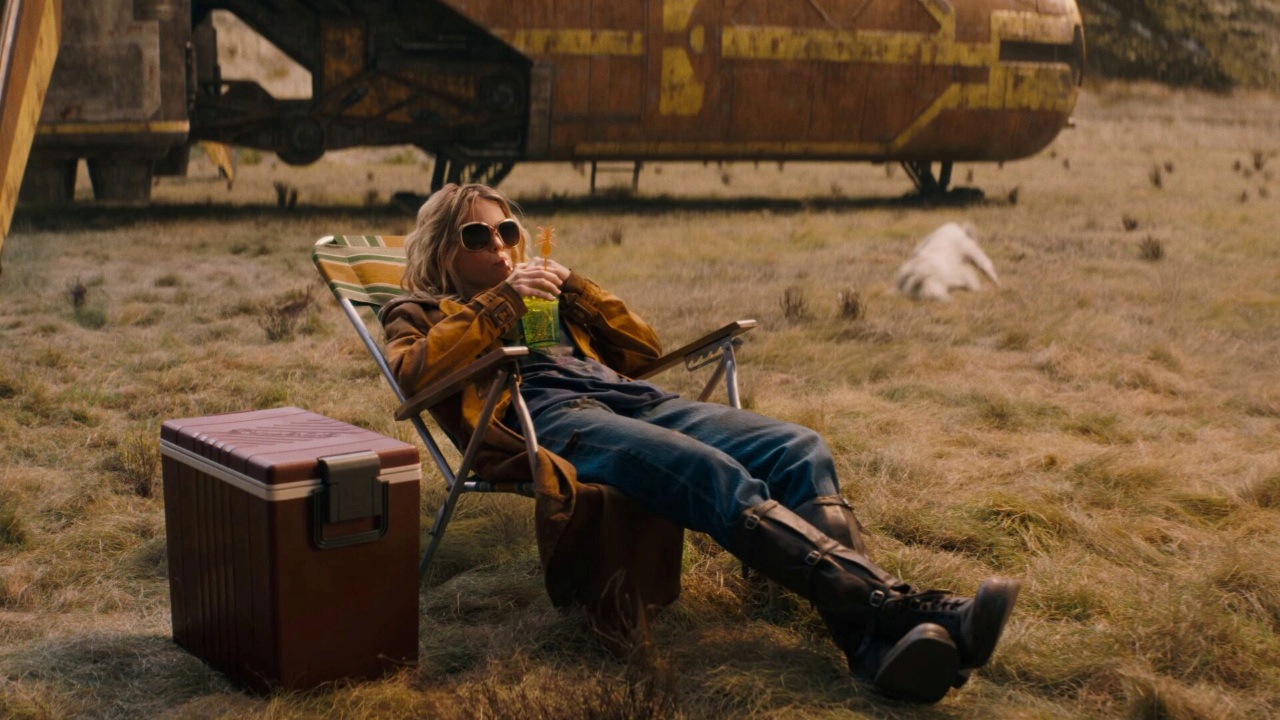
The biggest problem with Supergirl is that we have a film that sets out to fairly much trash any previous image we might have of Supergirl. Both Helen Slater and Melissa Benoist’s incarnations were paragons of virtue. Here we get a bratty Milly Alcock who gives us Supergirl as party girl who goes through much of the film with a cynical indifference to getting involved with someone else’s problems. When we first meet her, she is recovering from a hangover – her first line is praising Krypto for managing to piss on the paper she has put down. In her second scene, we meet her in an alien dive bar where she declares in voiceover “I, Kara Zor-El of inebriated mind, body and spirit.” The film went out with an initial poster that had the legend “Trust, Justice. Whatever.” If this is the future of the DC Universe, it seems kind of sad.
Gillespie and screenwriter Ana Nogueira have adapted Supergirl: Woman of Tomorrow (2021-2), an eight-issue comic run written by Tom King and drawn by Bilquis Evely that received a good deal of acclaim. The film adapts the comic with a great deal of faithfulness – the first thirty minutes are taken almost verbatim from the comic-book page – even right down to Supergirl outfitted in the ochre-coloured longline trench coat. The comic was also responsible for giving us the re-conception of Supergirl as intergalactic party girl.
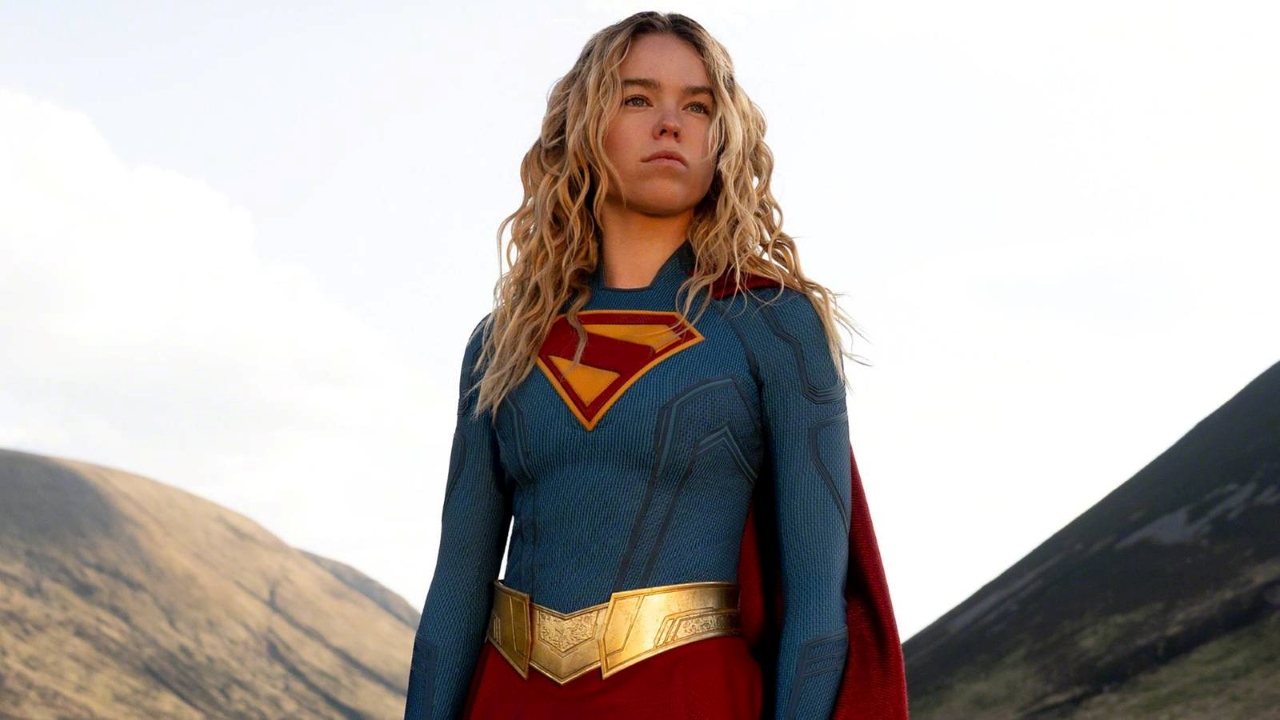
Unfortunately, the adherence to Woman of Tomorrow also provides other problems. One of these is that what we have is no longer anything that is much of a Superhero Film anymore. Kara spends most of her time in trench coat, t-shirt and boots. The Supergirl costume is discarded in a corner of her ship and she does not emerge as the characters we all know until 82 minutes in (three-quarters of the way through the film). Certainly, there are flashbacks that conduct a reasonable depiction of her origin story and Kara’s life on Krypton and the survival of Argo City. On the other hand, there is no discussion of her life on Earth apart from the scene where Superman finds her capsule. Nor is there any mention of her secret identity as Linda Lee/Danvers.
What we have feels far more like a Space Opera or a Planetary Adventure. The scenes with her and Ruthye blatting about various planets of the universe resemble more one of the various Star Wars universe tv series or perhaps more so a copy of James Gunn’s Guardians of the Universe films. You often get the impression that Gillespie and co have simply conceived of regular terrestrial places and just grafted weird alien mugs onto it. Much of the film takes place in a series of gungy dive bars filled with alien denizens – but this feels like a cliché that is riffing off the Mos Eisley cantina scene in Star Wars (1977).

Similarly, there is a scene where Supergirl and Ruthye catch a ride on an intergalactic bus service, which is the sort of creaky bus that you usually get as a cliché in some film where a person is forced to take a trip in a third world country – but filled with alien lowlifes. All before such degenerates into slapstick action with intergalactic pirates and a teleportation device. The character of Ruthye – the child driven by vengeance – is a good one. The story of the cynical loner and their orphaned child companion is a riff on the basics of films like True Grit (1969) to more modern equivalents like A Perfect World (1993), The Professional/Leon (1994), Logan (2017) and Dust Bunny (2025), as well as tv’s The Mandalorian (2019-23), but is one that the film has reduced to no more than the generic and a few wry asides.
One of the more successful characterisations in the film is Lobo as incarnated by Jason Momoa, who only a couple of years ago was Aquaman for the DCEU. The film gets right the look and the conception of Lobo as a kind of intergalactic biker with anti-heroic persona to match. And Supergirl is allowed a triumphant climactic scene where she emerges into her powers and costume and tears apart an entire battalion of Krem’s men. It is here that Supergirl finally allows its heroine to be superheroic rather than lingering in a castoff Star Wars copy where she feels entirely out of place.
The end of the film almost makes the rest of the film worthwhile. But it also fails its character’s arc. The Supergirl we have at the end – someone who is filled with moral purpose and integrity, who pleads with young Ruthye not to kill Krem because of what it will turn her into (but then kills Krem herself anyway) – is the kind of Supergirl we are used to on the comic-book page. However, this is also a very different Supergirl than the one we met at the start who was the party girl declaring her lack of involvement or interest in other’s problems. The real problem is that the change from one version of the character to the other is never a progression that is ever earned by the story or feels like a natural emotional journey.
Trailer here