
Crew
Director/Screenplay – Richard John Taylor, Producers – Leslie Grantham & Richard John Taylor, Photography – Harry Tali Cord, Music – Craig Gannon, Visual Effects – Vladislav Evdokimov, Makeup Design – Charlotte Smeulders, Art Direction – Rolf Steiner. Production Company – Lytton Bros. Pictures/Hello Princess.
Cast
Lizzy Willis (Alice Aciman), Rula Lenska (Beth Crimesly/The Red Queen), Steve Wraith (The Rabbit), Nikol Atanasova (The Cheshire Ripper), J.P. Gates (The Mad Hatter), Rikki Kimpton (The Walrus), Nigel Troup (The Smoking Man), Lila Sarner (The Twins)
Plot
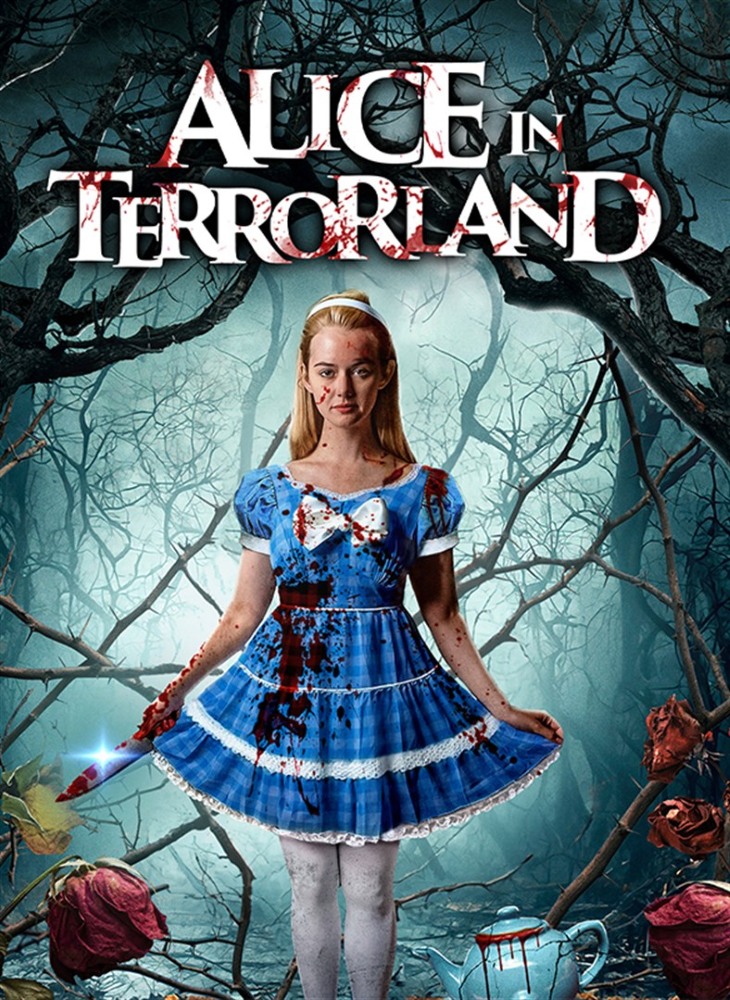
Following the death of her mother, Alice Aciman inherits a large, rambling countryside mansion that is called Wonderland. She moves to the house, which is tended by her aging grandmother Ruth. Soon after arriving, Alice falls ill. While Alice is in bed, Ruth comes to read to her from Alice’s Adventures in Wonderland, a work that was said to have been inspired when Lewis Carroll once lived in the house. In her fever dream, Alice has visions of nightmarish visions of the characters from the book.
Alice’s Adventures in Wonderland (1865) and its sequel Through the Looking Glass, and What Alice Found There (1872) by Lewis Carroll (a pseudonym for the Reverend Charles Dodgson) are key works of fantasy. The book’s characters and Lewis Carroll’s nonsensical rhymes have become embedded in popular culture. There have been an enormous number of filmed Alice in Wonderland adaptations (see below). The 2000s have seen such dark and horror-adjacent versions as Alice (2009) with Alice entering into a dark science-fictional wonderland; Alice in Murderland (2010), an Alice in Wonderland-themed slasher film; Alyce (2011), a modernised urban translation; and The Other Side of the Mirror/Alice: The Darker Side of the Mirror (2016), a dark retelling.
Alice in Terrorland comes from British filmmaker Richard John Taylor who has been making films since the early 2010s. Quite a number of Taylor’s films are within the crime genre, including three films based on the true-life British gangsters The Kray Brothers. Taylor has also made a number of horror films including Muse (2019), The Haunting of Pendle Hill (2022), The Huntress of Auschwitz (2022), The Winter Witch (2022) and a version of The Picture of Dorian Gray (2023).
It is almost certain that Alice in Terrorland was inspired by the success of Winne-the-Pooh: Blood and Honey (2023) and its trashing of the much-loved children’s story. This has seen a host of other such low-budget horror films laying into perennial children’s stories and fairytales with a vengeance. Taylor sinks into teeth into Lewis Carroll and goes as dark as possible – The Walrus is a hulking child killer and possible cannibal; The Cheshire Cat is a serial killer in a strait-jacket who gouges the character’s grin into her own face.
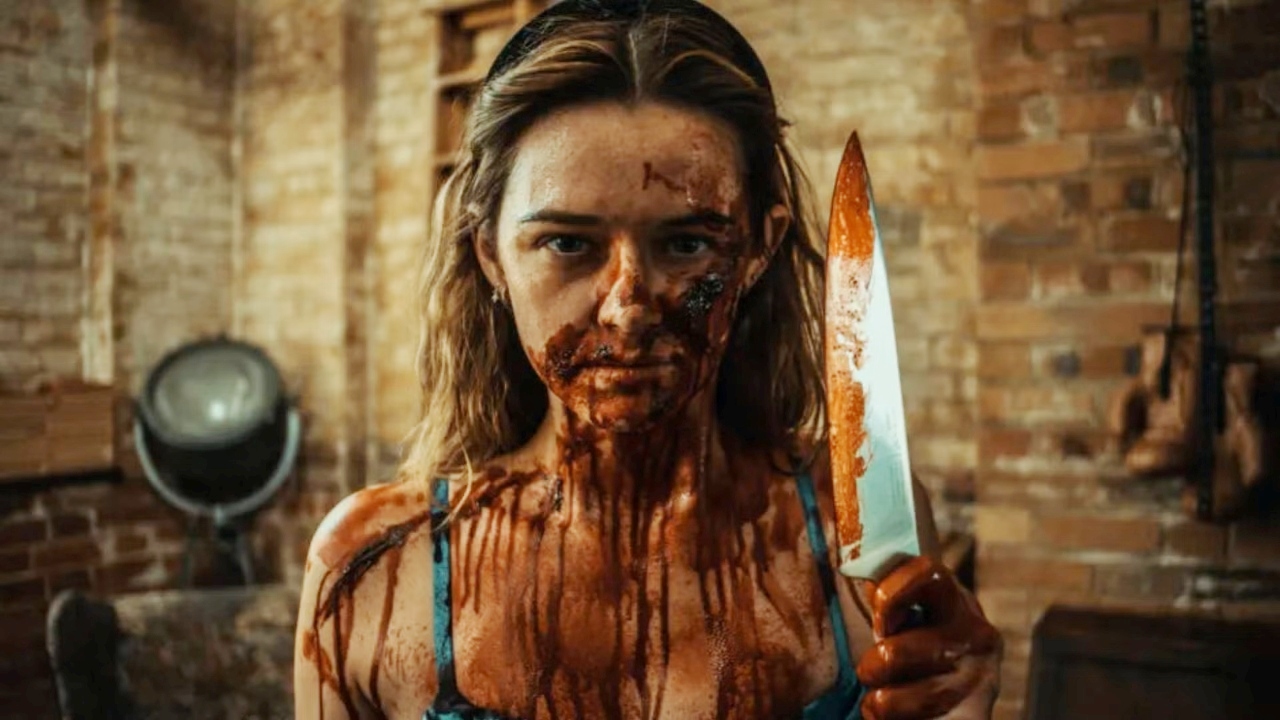
Alice in Terrorland is clearly made on a low-budget. It has just been shot around a big old house. No attempt has been made to do anything to bring Lewis Carroll’s characters to life – at most the White Rabbit is just a man with a white rabbit mask held on his face with an elastic string. None of the other characters dress up. The jumps the film has are as unexceptional as seeing a Rula Lenska’s aged face pop up or Lizzy Willis’s being grabbed by a claw from under the bed.
The film has a very slow pace. Much of it consists of Rula Lenska reading from Alice’s Adventures in Wonderland as Lizzy Willis lies sick in bed, while wandering in and out of a fever dream involving the characters. There is no real progression to any of this as a story, before an end that reveals Rula Lenska is the Red Queen. Richard John Taylor does little with the film – certainly, he wastes such a rich premise. It is a case of a good concept but terrible execution of it into a meandering, shapeless plot that never goes anywhere and is too impoverished in terms of its budget to ever find any of the imagination of the original stories.
The other screen adaptations of Alice in Wonderland are:- Alice in Wonderland (1903), a silent British short; Alice’s Adventures in Wonderland (1910), a silent American short; Alice in Wonderland (1915); Alice Through the Looking Glass (1928); Alice in Wonderland (1931), the first sound version; Paramount’s Alice in Wonderland (1933) with an all-star cast of the day including W.C. Fields, Cary Grant and Gary Cooper; the partly stop-motion animated French Alice in Wonderland (1949); the classic Disney animated version Alice in Wonderland (1951); the NBC tv version Alice in Wonderland (1955); the modernised Hanna-Barbera animated tv special Alice in Wonderland, or What’s a Nice Kid Like You Doing in a Place Like This? (1966); the NBC tv production Alice Through the Looking Glass (1966); the all-star British film Alice’s Adventures in Wonderland (1972) featuring Michael Crawford, Ralph Richardson, Peter Sellers, Spike Milligan and Dudley Moore; the BBC tv production Alice Through the Looking Glass (1974); the Italian tv mini-series In the World of Alice (1974); a 1976 Argentinean film version; a pornographic version Alice in Wonderland (1976); a Spanish film version Alice in Spanish Wonderland (1979); the Belgian film Alice (1982), which features equivalents of the Wonderland characters in the modern world; a US tv production Alice in Wonderland (1982); a US tv version Alice at the Palace (1982) with Meryl Streep as Alice; a BBC musical version A Dream of Alice (1982) with Jenny Agutter as Alice; a British tv series Alice in Wonderland (1985); Irwin Allen’s all-star tv mini-series Alice in Wonderland (1985) featuring Roddy McDowall, Telly Savalas and Shelley Winters; a BBC tv series Alice in Wonderland (1986); the animated Alice Through the Looking Glass (1987); having been combined with the Care Bears in the animated The Care Bears Adventure in Wonderland (1987); Jan Svankmajer’s bizarrely brilliant Claymation animated Alice (1988); Woody Allen’s modernised urban spin Alice (1990); the US tv series Alice in Wonderland (1991); the British tv version Alice Through the Looking Glass (1998) with Kate Beckinsale as Alice and an all-star cast; the Hallmark tv version Alice in Wonderland (1999) with Tina Majorino as Alice and an all-star cast; Alice’s Misadventures in Wonderland (2004), a modernised indie film take on the story; Alice (2009), a modernised tv mini-series starring Caterina Scorsone as Alice entering into a dark science-fictional wonderland; Malice in Wonderland (2009), a modernised British film that translates Wonderland into an urban environment; Alice in Murderland (2010), an Alice in Wonderland-themed slasher film; Tim Burton’s big budget Alice in Wonderland (2010) and its sequel Alice Through the Looking Glass (2016); Alyce (2011), another modernised urban translation; the modernised tv series Once Upon a Time in Wonderland (2013-4); and The Other Side of the Mirror/Alice: The Darker Side of the Mirror (2016), a dark retelling. Also of note is Dennis Potter’s tv play Alice (1965), which explores Lewis Carroll’s relationship with Alice Liddell, the young girl who became the model for Alice, and the later film Dreamchild (1985) in which the real-life Alice reminisces back on her memories of Lewis Carroll and the writing of the story.
Trailer here