

Crew
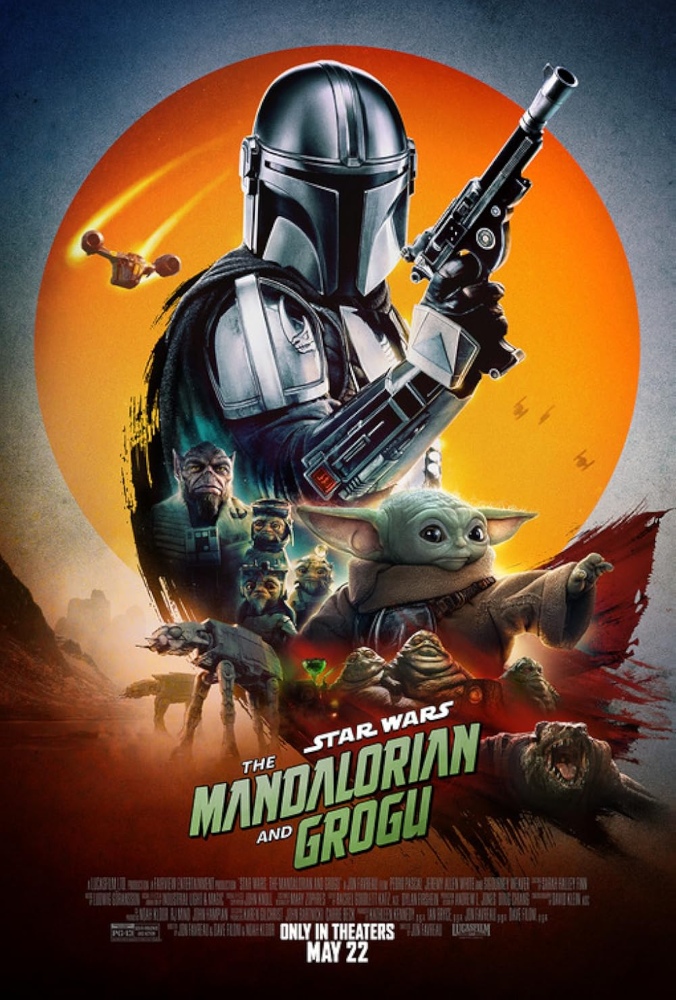
Director – Jon Favreau, Screenplay – Jon Favreau, Dave Filoni & Noah Kloor, Producers – Ian Bryce, Jon Favreau, Dave Filoni & Kathleen Kennedy, Photography – David Klein, Music – Ludwig Göransson, Visual Effects Supervisor – John Knoll, Animation Supervisor – Hal Hickel, Visual Effects/Animation – Hybride (Supervisor – Olivier Beaulieu), Important Looking Pirates (Supervisor – Bobo Skipper), Image Engine Design Inc (Supervisor – Robin Hackl), Industrial Light & Magic (Supervisors – Jeff Capogreco, Tania Richard & Kabir Verma), Animation Supervisor – Rick O’Connor), Lola VFX (Supervisor – Trent Claus) & Tippett Studio (Supervisor – Phil Tippett), Special Effects Supervisor – Scott Fisher, Makeup Design – Cristina Waltz, Production Design – Doug Chiang & Andrew L. Jones. Production Company – Lucasfilm Ltd/Fairview Entertainment.
Cast
Pedro Pascal (The Mandalorian), Brendan Wayne (The Mandalorian Suit Performer), Lateef Crowder (The Mandalorian Stunt Performer), Sigourney Weaver (Colonel Ward), Jeremy Allen White (Rotta), Steve Blum (Zeb Orrelios), Johnny Coyne (Lord Janu), Martin Scorsese (Hugo Durant), Stephen McKinley Henderson (Gatori), Matthew Willig (Hogsbreth), Hemky Madera (Commander Barro), Shirley Henderson (The Anzellans)
Plot
The bounty hunter The Mandalorian is given an assignment by Commander Ward of the New Republic to bring back Rotta, the son of Jabba the Hutt, who is sought by Jabba’s twin cousins. The Mandalorian protests that he does not deal with crime families but is given a new ship and told to take the assignment because the Hutt twins will trade the whereabouts of the wanted warlord Commander Coin. The Mandalorian and his foundling Grogu head to the planet Shakari where they discover that Rotta is a star gladiator in the pit fights managed by local crime boss Lord Janu. The Mandalorian breaks Rotta out despite his refusal to leave. Rotta pleads with The Mandalorian that the twins only want control of Jabba’s crime empire and will kill him if he is returned. Instead, he offers up the identity of Coin – none other than Janu. They return and capture Janu. However, this displeases the twins who order that The Mandalorian and Grogu be captured to be imprisoned and tortured.
The Mandalorian and Grogu is a spinoff film from the Star Wars franchise. Things began way back with Star Wars (1977) and the original trilogy throughout the 1980s. The franchise languished in limbo for many years before being revived with a prequel trilogy beginning with Star Wars Episode 1: The Phantom Menace (1999). In the 2010s, George Lucas sold the rights to Disney who embarked on a further series of sequels with Star Wars Episode VII: The Force Awakens (2015), Star Wars Episode VIII: The Last Jedi (2017) and Star Wars Episode IX: The Rise of Skywalker (2019). Disney also announced that in the years in between each of the episodes, we would get some other story from the Star Wars universe, beginning with Rogue One (2016) but this petered out with the lukewarm reception from Solo: A Star Wars Story (2018). More recently, Disney have branched off into a series of Star Wars tv series that have included The Mandalorian (2019-23), The Book of Boba Fett (2021-2), Andor (2022-5), Obi-wan Kenobi (2022), Ahsoka (2023- ), The Acolyte (2024) and Skeleton Crew (2024-5).
The Disney era is a divisive one with Star Wars fandom. (Star Wars fandom itself is notoriously divisive but that is another argument). The Disney sequels are much disliked and the standalone films failed to take off. There have a mountain of sequels that have been talked about but have never gone anywhere from a standalone Boba Fett film to proposed new trilogies from Game of Thrones (2011-9) showrunners David Benioff and D.B. Weiss, Rian Johnson and Simon Kinberg, Patty Jenkins’ Rogue Squadron, and other offerings from J.D. Dillard, Kevin Feige, Shawn Levy, Damon Lindelof, James Mangold, Steven Soderbergh and Taiki Waititi.
All have come and gone but there has been nothing in theatres since Rise of the Skywalker in 2019. And the reason for that can be put down to the proliferation of Star Wars on the small screen and streaming platforms. Firstly, when you can get it for free while staying in your own home, what incentive is there to go out and pay to watch it in theatres unless you are a hardcore completist? (The Mandalorian and Grogu tried to compensate by offering some scenes shot for IMAX. These alter with regular screen size, which makes for a confusing watch on the small screen. This was largely indifferent to audiences who made this one of the lowest grossing of all Star Wars films). Secondly, and this is the killer that has dragged down The MCU in the 2020s, keeping up with Star Wars now involves a massive dedication of watching time in order to follow in-house continuity and who characters are. What is being turned out is something speaking only to the dedicated fan that invariably excludes the casual viewer.
I have skipped watching the Star Wars tv series for the simple reason that I have better things to do with my time than spend it on endlessly extruded IP product and would rather watch something original. Most of the tv series are based around some characters from the original – The Book of Boba Fett, Obi-wan Kenobi, Ahsoka – that I have negligible interest in finding out more about. I have heard Andor is supposed to be quite good and may give that a look in when I have a spare viewing slot.
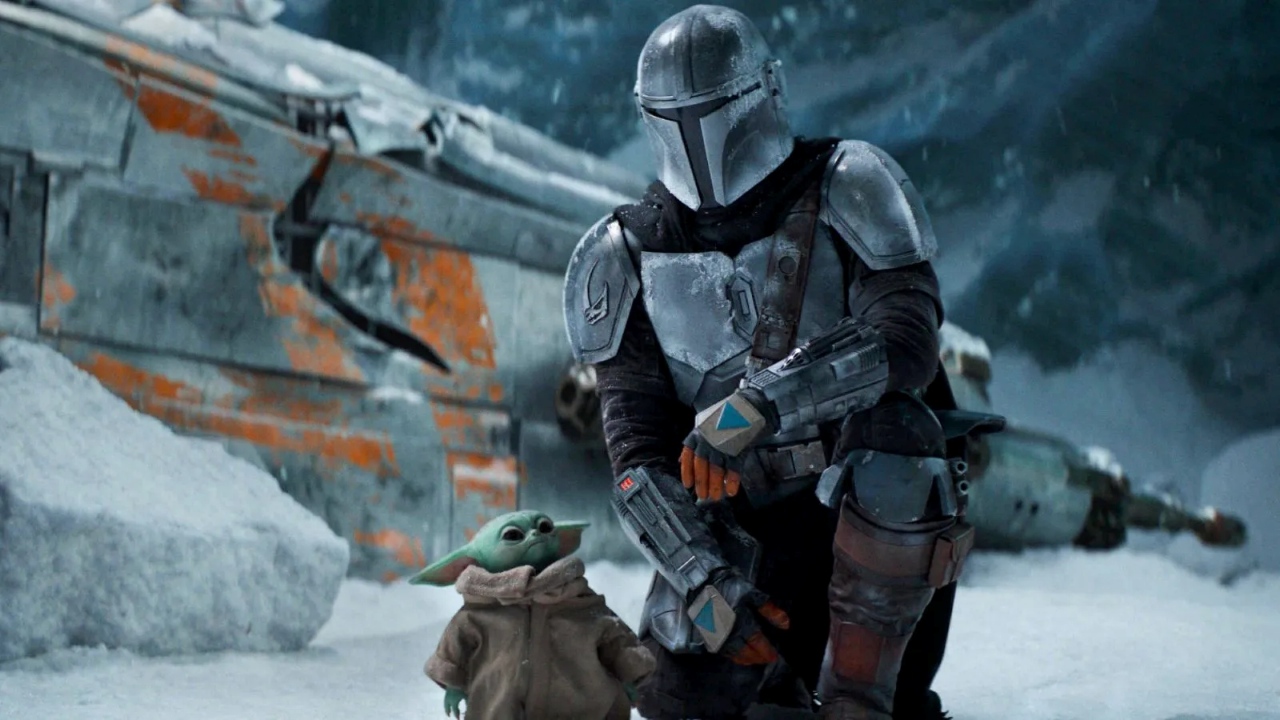
The one show I did enjoy was The Mandalorian. We checked it out because it was the first of the Disney shows and kept with it because the central character and especially his sidekick of the Baby Yoda prove an endearingly winning combination. It was a show that had the creativity and colour of the Star Wars universe that had felt noticeably lacking in the Disney theatrical films.
The Mandalorian and Grogu is the first Star Wars theatrical release in several years and the lowest grossing next to Star Wars: The Clone Wars (2008). As always this is a relative figure and the film earned $344 million worldwide (which would be wildly successful for any other film) and sits in the box-office Top 10 for the first half of 2026. The main problem is that we are stuck halfway between a tv series and a film. The film emerged out of plans for a fourth season of the tv series – and you can see it in the somewhat episodic nature of the plot. The third season of the tv series ended up dissatisfying with the plot switching its focus to Katee Sackhoff rather than The Mandalorian and then things being shunted off into The Book of Boba Fett. You can’t help but think that audiences discovering this in ten-twenty years’ time are going to be confused – the tv series segues into the film and the film cannot be understood without reference to watching the tv series first.
The film is directed by Jon Favreau. Favreau started in the industry as an actor with a breakout role in Swingers (1996), which he also wrote, and parts in other high-profile films. He made his directorial debut with the mob comedy Made (2003) and had a hit with the Will Ferrell comedy Elf (2003). Favreau went on to make Zathura: A Space Adventure (2005), Iron Man (2008) and Iron Man 2 (2010), Cowboys & Aliens (2011), the non-genre Chef (2014) and the CGI remakes of Disney’s The Jungle Book (2016) and The Lion King (2019), as well as executive producing the post-catastrophic tv series Revolution (2012-4), The Avengers films and being the creative force and frequent director on The Mandalorian and producer on several other of the Star Wars shows – The Book of Boba Fett, Ahsoka and Skeleton Crew.
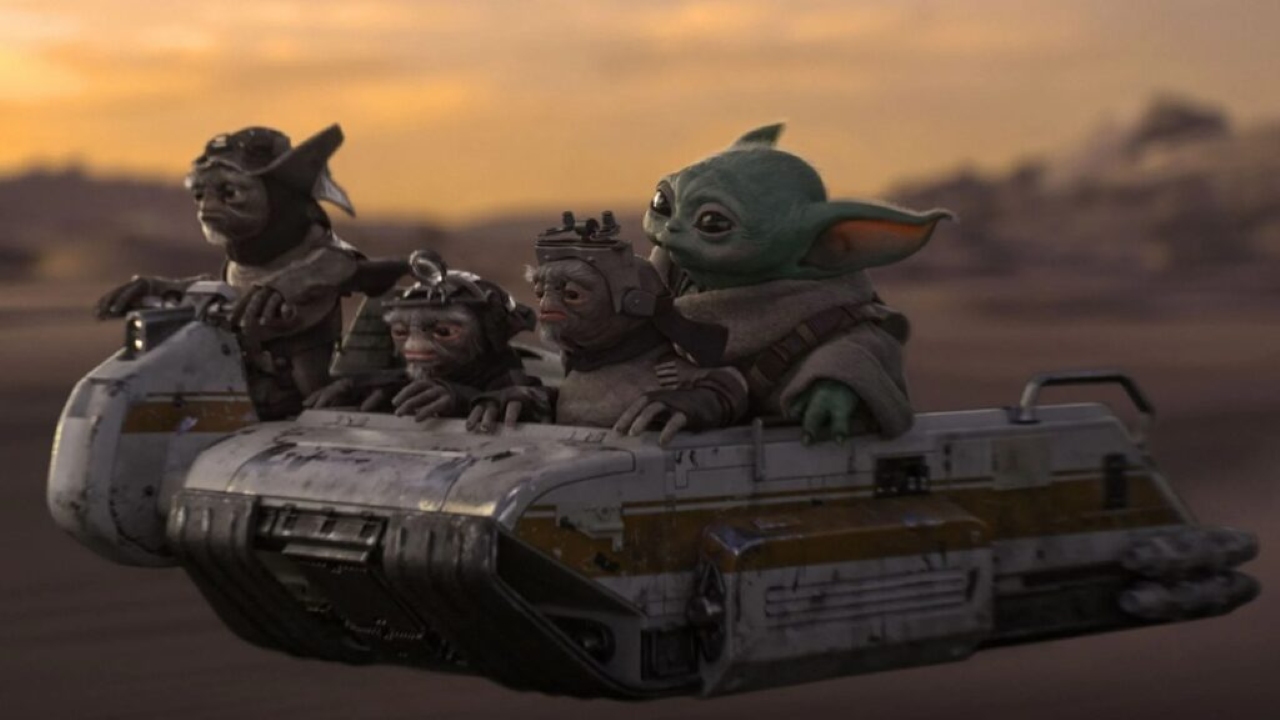
I liked The Mandalorian and Grogu more than I have any other Star Wars film this side of the 2000s – the sole other exception to this might be The Last Jedi. The characters of The Mandalorian and Grogu are a great combination and you cannot help but be charmed by almost everything that Grogu does. Indeed, the film is often one about contrasts between big and small – The Mandalorian and his gently paternalistic relationship with Grogu and especially the scenes towards the end with Grogu trying to heal the poisoned Mandalorian; the peculiarly touching friendship that grows between Grogu and Rotta; Grogu and the tiny mechanics known as The Azellans; the aid given to Grogu by a character known as the fisherman.
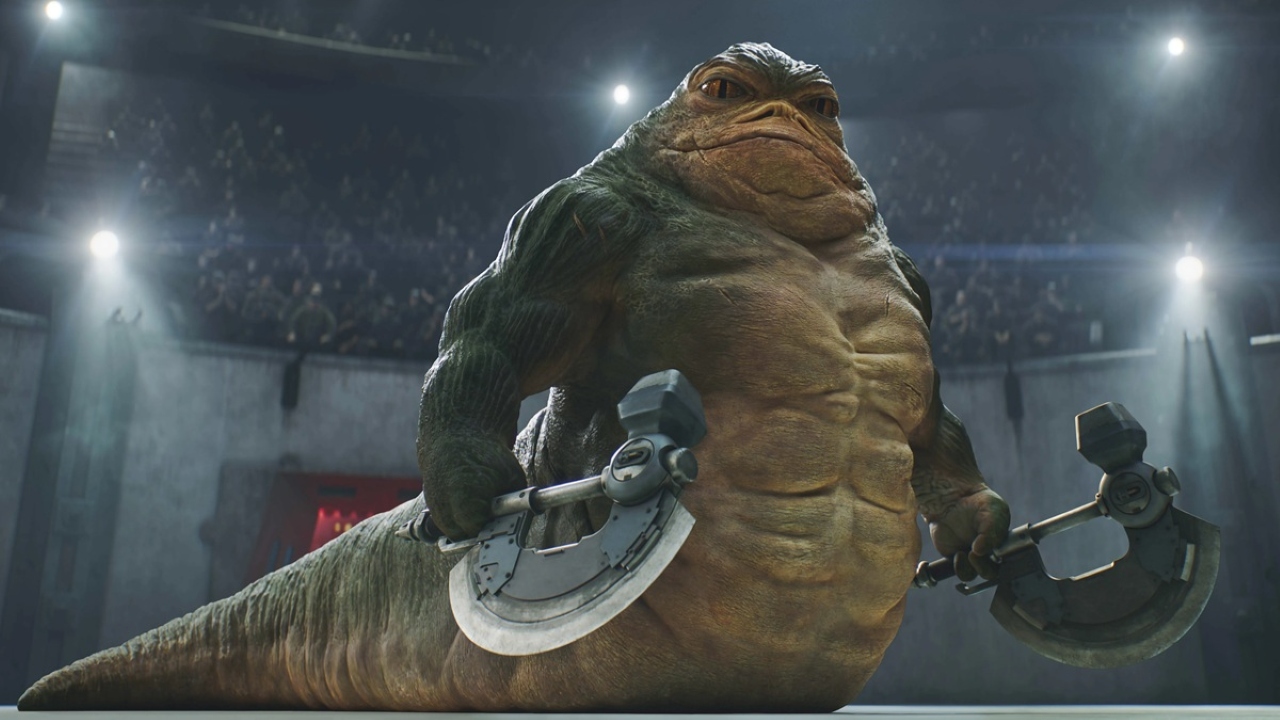
It is worth noting that the majority of characters in the film are non-human. Aside from the odd human actor like Sigourney Weaver and Jonny Coyne, almost all of the other characters are either puppets, animatronics or performance capture animation. (The Mandalorian is played by Pedro Pascal but the film sees fit to give credits acknowledgement to the suit and stunt performers so it hard to say how much of the role apart from the voice and brief unmasking scene was actually played by Pascal). The best of these characters is Rotta where the film carefully plays against the characterisation of Jabba the Hutt and gives us a genteel, honourable heir who has discovered himself as a pit fighter, making one of the more complex and interesting characterisations to appear in the Star Wars universe. With the pit fighting scenes, Favreau even manages to conduct a better version of Marvel’s Planet Hulk (2006-7) storyline – see Planet Hulk (2010) – than the one that was coopted by Thor Ragnarok (2017).
The Mandalorian and Grogu works for the very reasons the Disney Star Wars films don’t. Most of the directors who have signed on to make these films – looking at you J.J. Abrams – give the impression they are just fanboys who are writing fanfiction or playing at running around with X-wing models and lightsabres going pew-pew. Either that or making slavish callbacks to the continuity of the original series as with the J.J. Abrams films, Rogue One and Solo: A Star Wars Story.
By contrast, Jon Favreau gives the impression of being someone who has invested in creating his own mythology and characters within the Star Wars universe and finding elements of that that connected with audiences, all before launching a film of his own. It becomes a film that absorbs us once again in its universe and unique cultures and aliens the way that George Lucas originally intended and most of the Disney films seems to forget about. Just something like the scenes watching Grogu play with Rotta on a beach or going off to help the Azellans makes you realise that Favreau is investing care and attention in the characters and giving them a life all of their own rather than hurrying off to the next big effects set-pieces or piece of fanservice.
The original trilogy consists of Star Wars (1977), Star Wars Episode V: The Empire Strikes Back (1980) and Star Wars Episode VI: Return of the Jedi (1983). Sixteen years later, George Lucas returned to the series with Star Wars Episode I: The Phantom Menace (1999), followed by Star Wars Episode II: Attack of the Clones (2002) and Star Wars Episode III: Revenge of the Sith (2005). In 2012, Lucas sold Lucasfilm to Disney who produced a new trilogy of films with Star Wars Episode VII: The Force Awakens (2015), Star Wars Episode VIII: The Last Jedi (2017) and Star Wars Episode IX: Rise of the Skywalker (2019). Disney also created a series of live-action spinoff films with Rogue One (2016) and Solo: A Star Wars Story (2018), plus the tv series’ The Mandalorian (2019-23), The Book of Boba Fett (2021-2), Andor (2022-5), Obi-wan Kenobi (2022), Ahsoka (2023- ), The Acolyte (2024) and Skeleton Crew (2024-5).
Trailer here