

Crew
Director/Screenplay – Zak Hilditch, Producers – Ross M. Dinerstein, Mark Fasano, Joshua Harris, Kelvin Munro & Grant Sputore, Photography – Steve Annis, Music – Clark, Visual Effects – Siamese (Supervisor – Merlin Eden), Special Effects – JMB FX Studio, Prosthetics Designer – Jason Baird, Production Design – Clayton Jauncey. Production Company – Screen Australia/Gramercy Park Media/Screenwest/Lotterywest/The Western Australia Regional Film Fund/Adelaide Film Festival Investment Fund/The Penguin Empire/Campfire Studios/Peachtree Media Partners/Neon.
Cast
Daisy Ridley (Ava), Brenton Thwaites (Clay), Mark Coles Smith (Riley), Matt Whelan (Mitch), Chloe Hurst (Katie)
Plot
A US weapon has been accidentally released in Tasmania killing just about everybody on the island. Ava flies in in the aftermath, having volunteered for the body cleanup taskforce but really wanting to see if her husband Mitch is alive. Refused permission to travel south, she joins the work details gathering the corpses around the area. They are warned that some of the dead return to life. She witnesses this before the military come in to put the dead down. She is paired with Clay and persuades him to take a motorcycle he finds and set out on a two-hundred-mile journey to Woodbridge to the hotel where Mitch was at a conference. This involves travelling across an abandoned wasteland filled with resurrected dead and other dangers.
We Bury the Dead was the seventh film for Australian director Zak Hilditch. Hilditch made an impression with his fifth film, the standout End of the World film These Final Hours (2013). This gained him enough attention to be brought to work in the US with the Stephen King adaptation 1922 (2017), followed by Rattlesnake (2019). He returned to Australia to make We Bury the Dead.
The modern Zombie Film goes back to George Romero and Night of the Living Dead (1968). The genre saw a huge revival in the mid-2000s with works such as 28 Days Later (2002), Dawn of the Dead (2004) and Shaun of the Dead (2004). This was followed by a deluge of mostly low-budget zombie films and then a host of gonzo parodies and title mash-ups that threw zombies together with the most ridiculous things.
It got to a certain point, not unakin to the one I reached in the mid-2010s with the low-budget Haunted House Film, where I dreaded having to write up another zombie film because the genre and its permutations had become tediously overmined of all possibilities. That said, the last few years have been producing a number of strikingly original works in the genre with the likes of The Girl With All the Gifts (2016), Cargo (2017), The Cured (2017), The End? (2017), #Alive (2020) and Handling the Undead (2024).
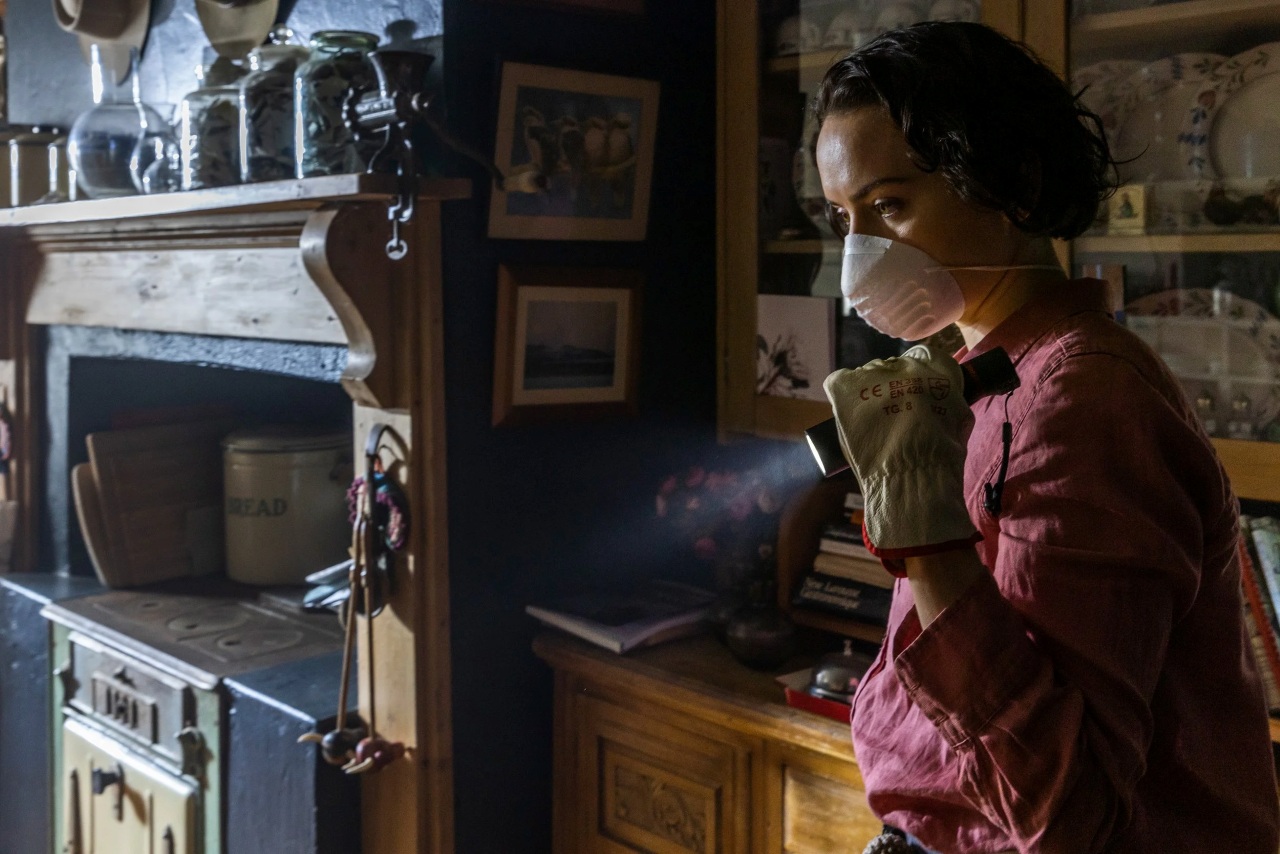
We Bury the Dead would have to join these. Like many of these others, it avoids the zombie film label. As we are introduced to the set-up, we are told people are helping clean up bodies after an incident, before the film eases in with the warning that some of them are coming back to life. Even so, what we get is not a full-on zombie film. It is seventeen minutes before we see any zombies and their appearances throughout is much more sporadic than you would expect. The dead get shot and battered in the head but there is not the gore-drenched extremes of other works in the genre – in fact, there is no flesh-eating, we are not even sure why the dead are coming back after the living.
Rather than a standard zombie film, We Bury the Dead is more about the human reactions to the zombie apocalypse. There is something of Zak Hilditch’s earlier These Final Hours to the film – of a Road Trip across a collapsing apocalyptic world. Hilditch and his photographers/visual effects teams create some fantastic shots – of Daisy Ridley and Brenton Thwaites travelling by motorcycle where the camera pulls back to show them heading down roads that stretch for miles filled with lines of abandoned vehicles; of their passing by Hobart amid thick yellow clouds of smoke where the horizon is lit with vast palls of smoke rent through with ruddy red.
We Bury the Dead becomes very much a personalised journey, one where the zombies are at the periphery of the film – not ever-present but not far away – and we see the internal journey undergone. This is less a film about the zombie onslaught than the ways that people react and what they project onto it. The middle of the film is taken over by Mark Coles Smith as an increasingly disturbed soldier who wants Daisy to re-enact a goodbye to his wife. For Daisy Ridley, the quest that drives the film seems to be finding a closure with what happened to her husband, while the ending the film arrives at is an unexpected one where this is turned inside out with surprising revelations.
Trailer here