

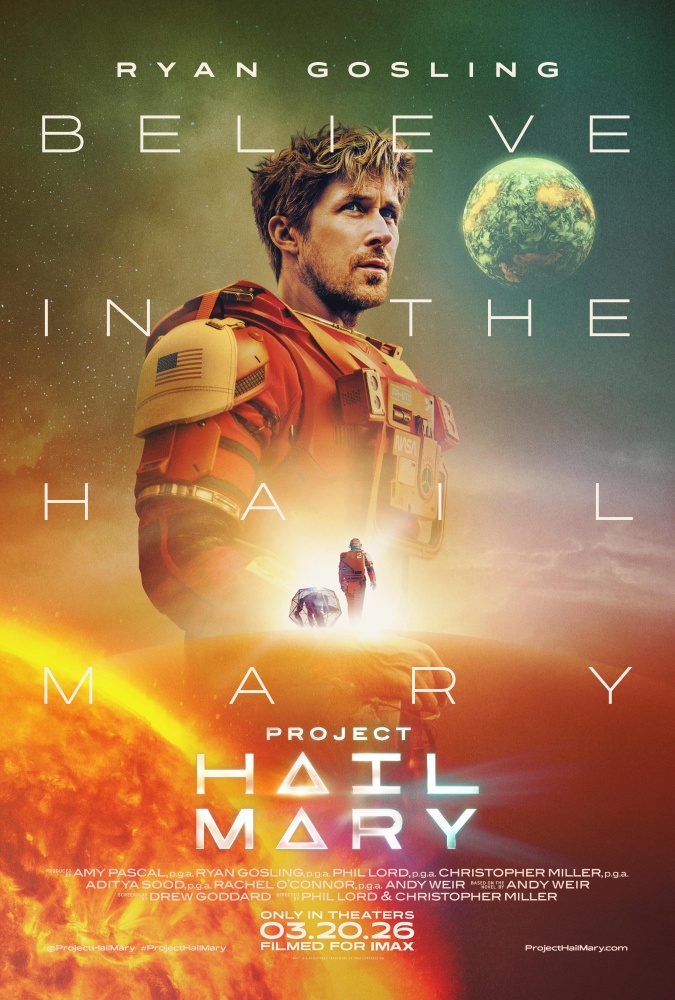
Crew
Directors – Phil Lord & Christopher Miller, Screenplay – Drew Goddard, Based on the Novel Project Hail Mary (2021) by Andy Weir, Producers – Ryan Gosling, Phil Lord, Christopher Miller, Rachel O’Connor, Amy Pascal, Aditya Sood & Andy Weir, Photography – Greig Fraser, Music – Daniel Pemberton, Visual Effects Supervisors – Paul Lambert & Mag Sarnowska, Visual Effects – Buf (Supervisor – Stephane Vogel), Framestore (Supervisors – Stuart Penn & Robert Winter), Sony Pictures Imageworks (Supervisor – Chris Waegner) & Wylie (Supervisors – Elliot Brennan & Patrick Heinen), Visual Effects/Animation – Industrial Light & Magic (Supervisor – Tristan Myles), Special Effects Supervisor – Chris Corbould, Creature Effects Supervisor – Neil Scanlan, Production Design – Charles Wood. Production Company – Pascal Pictures/Open Invite Films/Waypoint Entertainment/Lord Miller.
Cast
Ryan Gosling (Ryland Grace), Sandra Hüller (Eva Stratt), James Ortiz (Rocky), Lionel Boyce (Carl), Milana Vayntraub (Oleysa Ilyukhina), Ken Leung (Yao), Priya Kansara (Mary), Mia Souterio (Dr. Browne)
Plot
Ryland Grace wakes aboard the spaceship Hail Mary, finding his two fellow crew members dead. He struggles to remember how he came to be there. He was a former biologist who had been working as a schoolteacher. He was called in by a government consortium headed by Eva Stratt because of a paper he had written about variant possible alien lifeforms. Eva revealed that an invisible line of particles named the Petrova Line that stretches between Venus and the Sun was causing the sun to dim, something that will spell the end of all life on Earth within thirty years. Grace was instrumental in proving that this is being caused by living organisms he names astrophages. He has been placed aboard a space mission to Tau Ceti to discover why it is the only star unaffected by the astrophages, although this is a one-way mission from which he is not expected to return. The Hail Mary arrives at the location only to encounter an alien spaceship. Grace tentatively makes contact with the alien ship and befriends its inhabitant, a rock-like lifeform from the 40 Eridani A system. He finds a means to communicate and talk with the alien crewmember whom he nicknames Rocky. Grace and Rocky form a friendship as they try to find a solution to the astrophage problem.
Andy Weir was a former computer programmer and videogame designer who first wrote The Martian (2011), a novel he published online before it was picked up by an agent and publisher. In short course, this was then adapted into a hugely successful film The Martian (2015) from Ridley Scott starring Matt Damon. Weir has gone on to write two other novels since then with Artemis (2017), which takes place on a moon colony, and then Project Hail Mary (2021).
The film version of Project Hail Mary comes from Phil Lord and Christopher Miller, the duo that had a huge success as directors of the animated Cloudy with a Chance of Meatballs (2009), the live-action 21 Jump Street (2012) and its sequel 22 Jump Street (2014), and The Lego Movie (2014), as well as producing the tv series’ The Last Man on Earth (2015-8) and Spider-Noir (2026- ) and the animated films Storks (2016), Spider-Man: Into the Spider-Verse (2018), The Mitchells vs the Machines (2021), Spider-Man: Across the Spider-Verse (2023) and the live-action Cocaine Bear (2023) and The Sheep Detectives (2026). And surprise, surprise, Lord and Miller also have an option on filming Andy Weir’s one other novel to date Artemis.
Project Hail Mary has been a runaway success and is the second highest grossing film of 2026 at the worldwide box-office as of this writing. The most obvious work that it draws comparison to is The Martian. Both films have a number of similarities – they feature two ordinary guys who have a science specialty who via circumstances are left to survive on their own in space where the stories become works of hard science-based competency porn as the characters try to engineer survival solutions. There are some differences in the stories told – The Martian is about planet-based survival, whereas Project Hail Mary involves a deep space journey and a collaborative effort aimed at saving the world.
There are also quite a number of differences in the way that both films approach their stories and this can be best demonstrated by looking at the two directors. The Martian came from Ridley Scott, who has impeccable genre credentials as the director of defining works like Alien (1979) and Blade Runner (1982). Beyond that, Scott has a decades long career as a solid dramatist with works such as Thelma and Louse (1991), Gladiator (2000), Black Hawk Down (2001), American Gangster (2007) and All the Money in the World (2017), among a great many others. By contrast, Phil Lord and Christopher Miller come from a background in animation first in tv and then the Cloud with a Chance of Meatballs and The Lego Movie films. Their sole venture into live-action outside of tv comedy was as directors of the comedy 21 Jump Street and sequel. The nearest they have come to a work like Project Hail Mary was as the original directors of Solo: A Star Wars Story (2018) but they were fired from that.
The difference between the two directors is very evident in the way that both The Martian and Project Hail Mary tell their stories. Ridley Scott is a solid dramatist who has a great immersive sense of the world and background of the films he makes. Lord and Miller are primarily comedy directors more experienced in animation whose best effect comes in finding the humour of a scene. On screen, The Martian is a solid science-driven drama about one man attempting a titanic survival/rescue, while Project Hail Mary is a cute cuddly story about how a comically nerdy guy befriends a loveable non-anthropomorphic alien and they occasionally do some science stuff together.
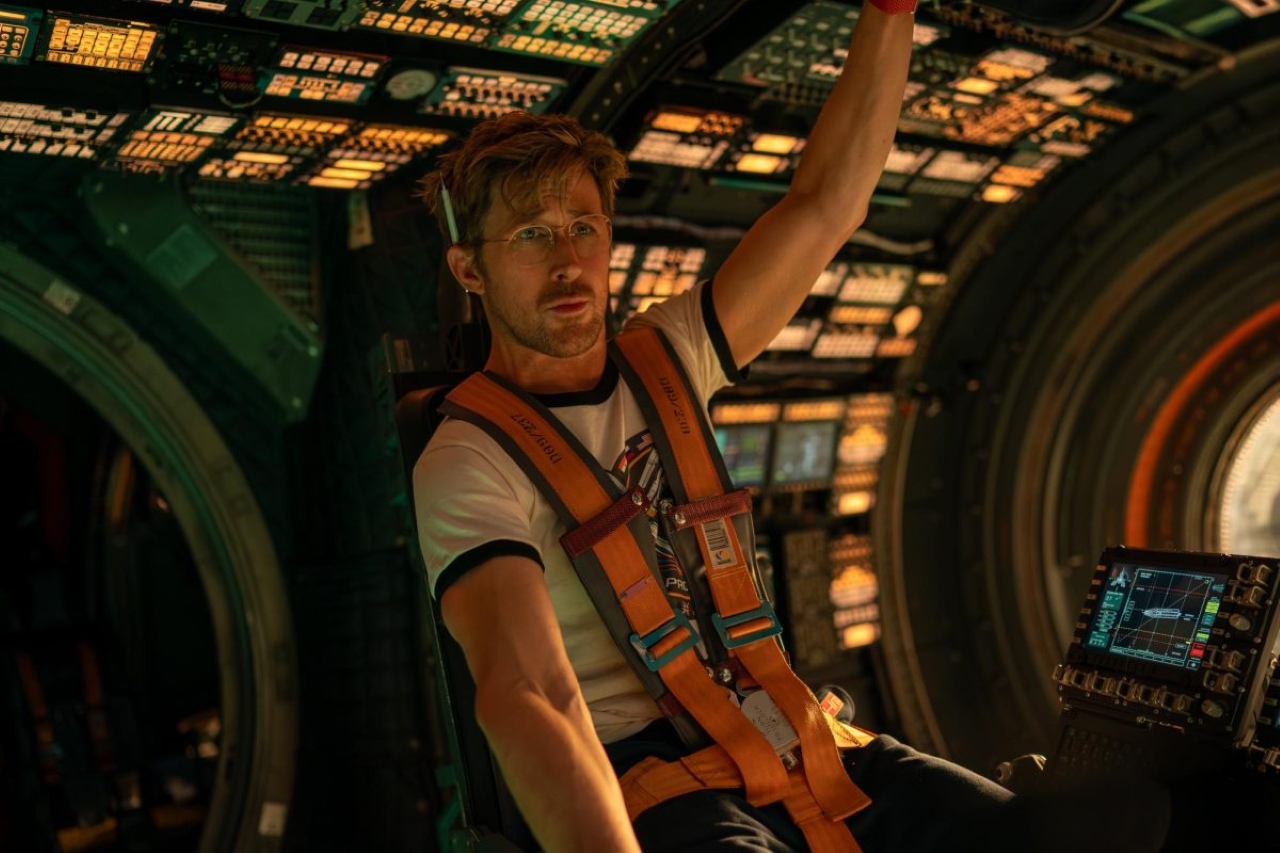
I look back and struggle to think of anything in The Martian that was a comedy scene – there’s probably something there but it doesn’t register in memory. On the other hand, Lord and Miller are giving us comedy from the moment Project Hail Mary opens with Ryan Gosling emerging from his sleeping cocoon and falling all over himself and the ship (which can even be construed as a parody of the hypersleep awakening in Scott’s Alien). In fact, being a science nerd who is a complete newbie in space is about the only characterisation that Ryan Gosling gets throughout and much of the film is a series of scenes of him bumbling and tripping over himself getting into a spacesuit or dealing with the on/off ship’s gravity. In fact, these go on so much so that you wonder if you are not in an only slightly more serious version of the NASA slapstick comedy RocketMan (1997). Ryan Gosling is a capable and good actor and even produces the film, but this is not going to go down as one of his memorable performances.
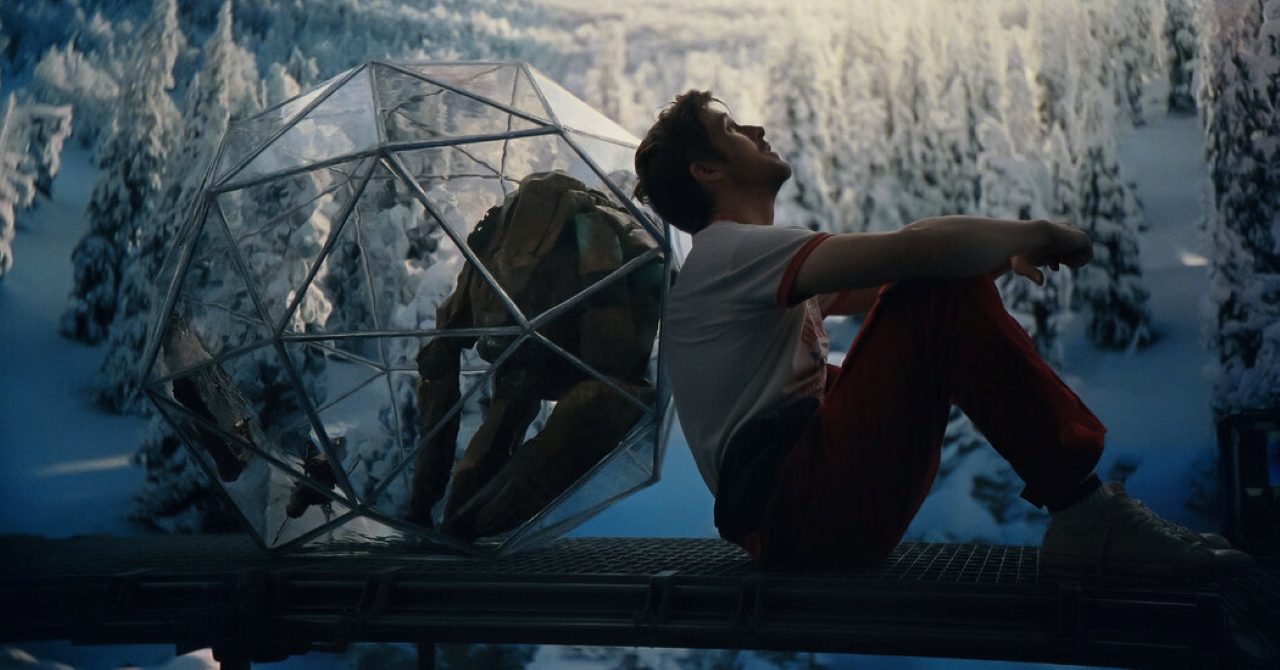
Equally, Lord and Miller run Project Hail Mary over with pop culture quotes, something that Scott never did. When Ryan Gosling and Rocky meet, the five musical notes from Close Encounters of the Third Kind (1977) play. There are multiple scenes with Gosling and Rocky bonding over sitting in what can only be described as a shipboard IMAX screen and at one point watching Rocky (1976), along with an obligatory reference to Creed (2015).
Where Project Hail Mary tends to work best is where the book version of the story works best. The scenes where Ryan Gosling is deducing the nature of the astrophages and the Petrova Line all work well. On the other hand, once we get on board the Hail Mary, the scenes we have in the book with Grace and Rocky coming together to find a way to communicate and then on a series of engineering solutions tend to get sidelined in favour of quirky comedy between the two characters. The stuff is there but it is no longer a “sciencing the shit out of it” as The Martian ingeniously became, what we get is an oddball buddy comedy about unlikely friends.
Drew Goddard who started out as a scriptwriter on Joss Whedon’s tv series Buffy the Vampire Slayer (1997-2003) and Angel (1999-2004), becoming a story editor on the latter, before jumping ship to the J.J. Abrams camp to write and produce numerous episodes of Alias (2001-6) and Lost (2004-10). Goddard wrote the script for the Abrams’ produced Cloverfield (2008), while Whedon produced his directorial debut with the culty horror meta-fiction The Cabin in the Woods (2012). Goddard went on to write the screenplays for World War Z (2013), The Martian and to create the tv series Daredevil (2015-8), one of the best of the modern Marvel Comics adapted works, and produce The Good Place (2016-20).
Trailer here