
Crew
Director/Screenplay – Chris Gorak, Producers – Jonah Smith & Palmer West, Photography – Tom Richmond, Music – tomandandy, Visual Effects Supervisor – Joe Bauer, Special Effects Supervisor – Peter Novitch, Production Design – Ramsey Avery. Production Company – Lionsgate/Thousand Words.
Cast
Rory Cochrane (Brad), Mary McCormack (Lexi), Tony Perez (Alvaro), Scotty Noyd Jr. (Timmy), Jon Huertas (Rick)
Plot
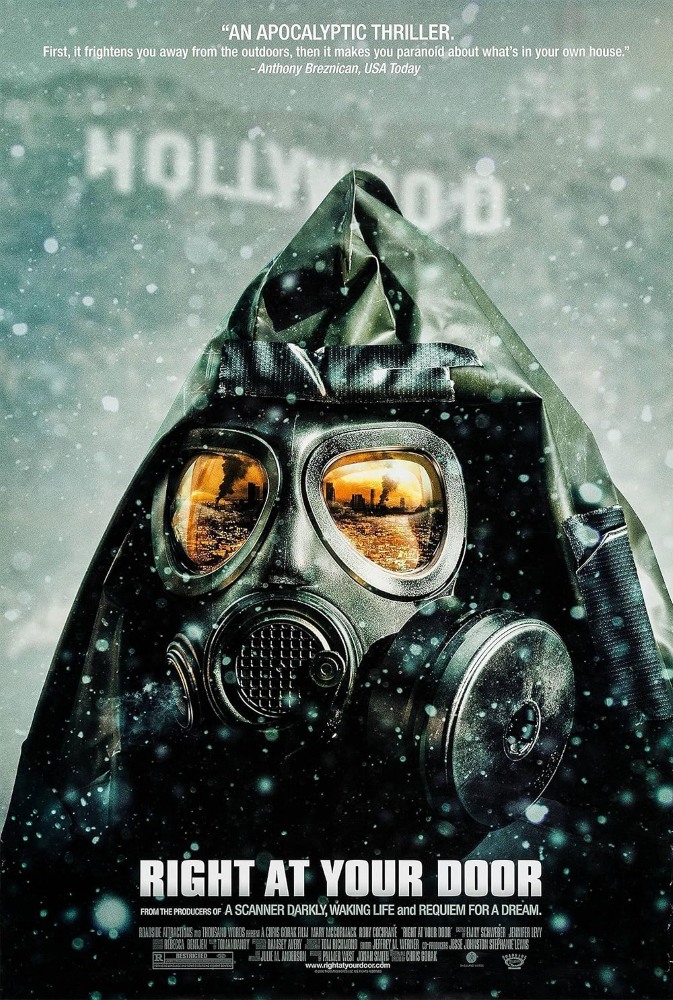
Husband and wife Brad and Lexi get up for their day as she heads off to work. Just then comes news that bombs have been detonated around Los Angeles. Brad can see a smoke cloud coming from downtown and rushes off to find Lexi, only to be turned back as police cordon off the area and begin shooting those who try to break through. Returning home, there are warnings across the news that dirty bombs have been detonated and are releasing deadly toxins. People are ordered to barricade themselves in their homes. Brad is joined by Alvaro, the gardener from next door who is unable to get home due to the curfew and has nowhere to go. Together they tape the house up to create a seal against the contaminant. However, not long after, Lexi returns home and Brad has to make the tough decision not to let her in for the sake of keeping away potential infection.
Right At Your Door was a directorial debut for Chris Gorak, Prior to this, Gorak had credits as art director and production designer on films ranging from Tombstone (1994), Fear and Loathing in Las Vegas (1998), Fight Club (1999), Minority Report (2002), Taken (2002), Blade Trinity (2004) and Lords of Dogtown (2005), among others. The only other film that Gorak went on to direct was the alien invasion film The Darkest Hour (2011) and he appears to have since fallen silent then.
It is important to remember that Right At Your Door was made only five years after 9/11. It was a time when the USA was still reeling at the notion that the country was under attack. People were on edge and seeing potential threats in every corner. One of those fears to emerge was that of the dirty bomb. This is a kind of low-tech nuclear weapon. It doesn’t create a nuclear detonation but is one where radioactive materials are mixed in with regular explosive materials and spread out to contaminate the nearby area when the bomb is detonated. This gained a high profile in May 2002 with the arrest of US citizen Jose Padilla who was accused of attempting to build a dirty bomb. This made news headlines, although it is worth noting that Padilla was never actually charged with making any dirty bombs and was convicted of other terrorist-related activities. Aside from Padilla, there is no known example of a dirty bomb.
That said, the device in Right At Your Door is not a dirty bomb as the conventional usage of the term goes. Various explanations are thrown around on the news reports in the film. This is something that would be expected in the mass confusion after such a situation, although this also allows the filmmakers to be vague about the nature of the bomb. We do get to see what looks like fallout or some contaminant falling in a heavy blanket across the lawn and backyard of the house. What this is though is not exactly made clear. However, by the end of the film it is being treated as a deadly bio-toxin rather than radioactive contaminant with people being advised not to let others into the house for risk of contamination. (If it was radioactive materials, the risk of cross-contamination should in most cases be to remove clothing (which apparently gets ride of 90% of it) and take a shower and thoroughly scrub down one’s body).
Despite its confusions about what a dirty bomb is, there is the sense that hangs over Right At Your Door that imminent Catastrophe is lurking with the ability to entirely upend everyday life, which is fairly much what most American citizens felt in the aftermath of 9/11. Chris Gorak does quite a good job of depicting such a fear-fraught state. He does an even more admirable job in managing to contain the entirety of the film (or at least about 95% of it) within the environs of a family home and its yard and the street immediately outside. The sole sections where he breaks this are when Rory Cochrane ventures out in his vehicle to find wife Mary McCormack but is turned away by police barricades and stops off at the hardware store on the way back. The rest of the time the nature of the catastrophe is economically conveyed by radio and tv and the visual effects of a smoke cloud in the sky from the downtown, as well as the contaminant falling all around the house.
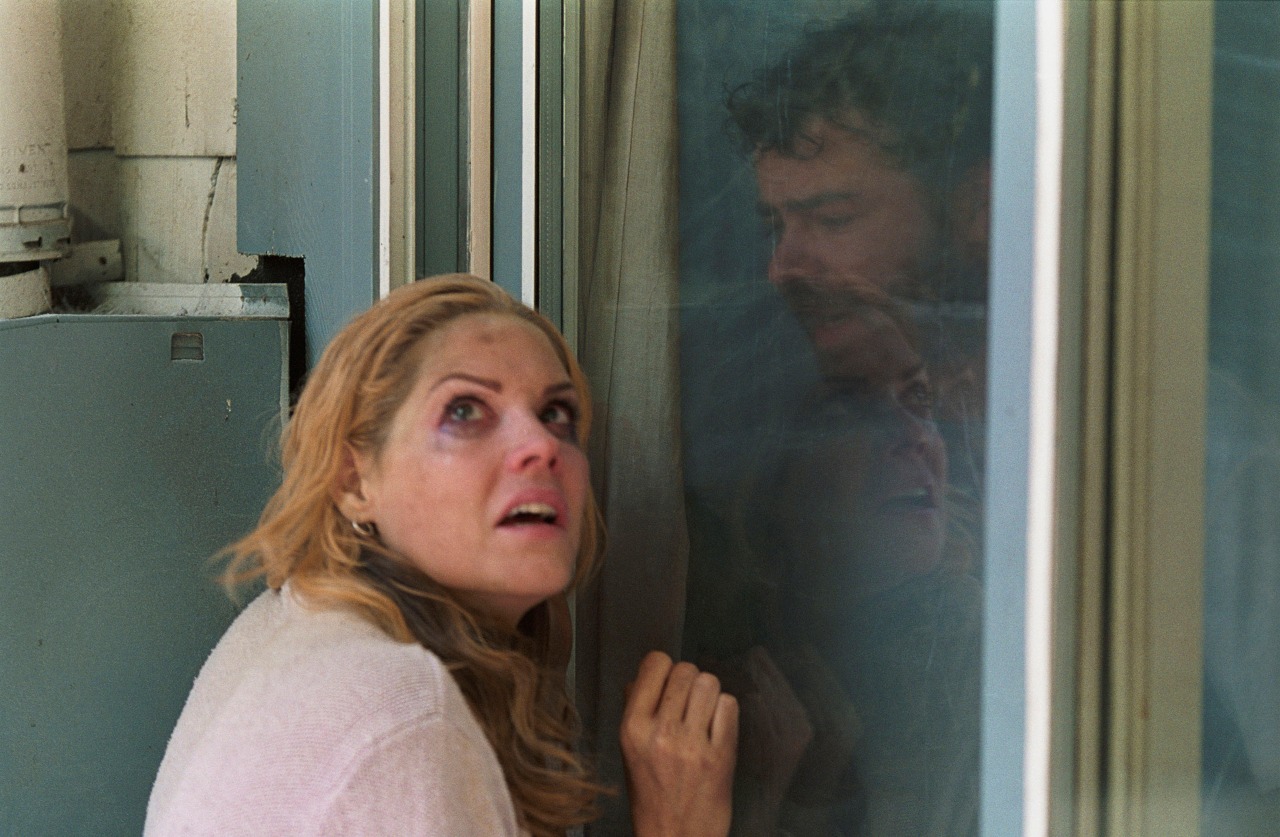
In the early sections, Chris Gorak gets the sense of panic and fear. The scenes where Rory Cochrane ventures out are all shot in frenetic visual confusion of handheld camerawork, followed by the scenes where he returns and cautiously agrees to allow Tony Perez inside and together they seal the house. The real drama of the story begins with what happens once they are sealed inside – only for wife Mary McCormack to return and Rory Cochrane to refuse to let her in, forcing her to stay outside on the portico as they wait for emergency services to arrive. This is the crux of Right At Your Door – the connection and desperation between the two of them – although it is one that the film kind of lets go sideways in its twist ending.
Trailer here