

Crew
Director/Screenplay – Ricky Kennedy, Developed by Ashley Barnes & Jerry Smith, Photography – Justin Herring, Music – Herbert Midgley, Visual Effects – Ricky Kennedy & Justin Herring, Production Design – Nancy Andrews. Production Company – Pineywood Pictures/The Brothers May/River Brave Productions.
Cast
Peyton Paulette (Dr Jack Fincher), Trey Cartwright (Professor Edward Yarborough), Michael Tubbs (Kevin Ulrich), Krista Ales (Dr Vanessa Byers), Bill Small (Dr Adam Lundquist), Brad Maule (Narrator), Garland Buffalo (General Douglas Sanborn), Jody Ryan (Dorothy Lister), Daniel W. May (Edward Page – Younger/Aden Page), Ben Everett (Richard Page), Roy May (Edward Page – Older), Fazia Rivi (Dr Helen Cagle), Elizabeth Anne Lestina (Anne Page)
Plot
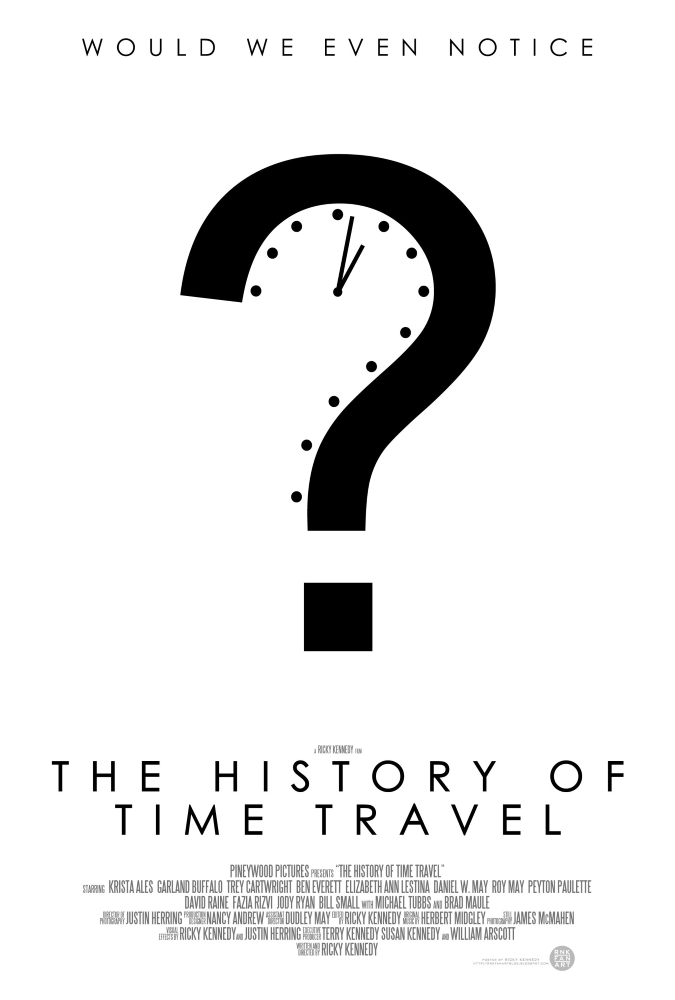
A documentary about the history of time travel. This began during World War II with Project Indiana backed by the US military. This was cut back following the war but project head Edward Page became obsessed with perfecting the process, particularly after the death of his wife from what was later determined to be polio. In the 1980s, after Edward had passed away, their only son Richard found his father’s plans for a working version of the time machine and built it. He then decided to go back and cure his mother of polio. In later years, he and his brother Aden, a doctor turned physicist too, determined to go back and save their mother who died giving birth to Aden. However, this and successive time travel journeys ended up having ripple effects through history.
The History of Time Travel was the first film for Ricky Kennedy, who had previously made a couple of short films and worked in various departments on other films. Kennedy subsequently went on to make the Christmas film A Year from Now (2021), which also has a Time Travel theme and concerns a woman who skips ahead through her life.
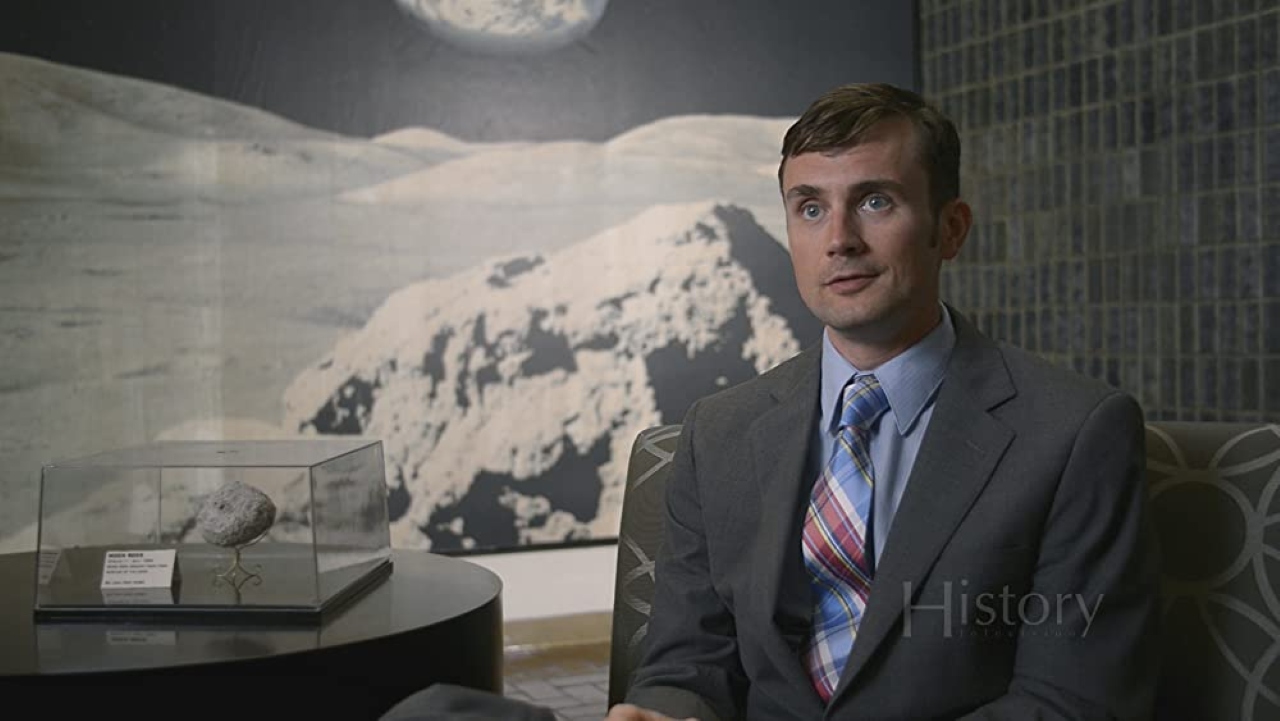
The film begins with a deceptive cleverness. It poses as being a real documentary (see Mockumentaries) with assorted interviews with experts knowledgeable about the subject. There are historical tie-ins, mention of the real-life Einstein-Szilard letter in between the creation of the fictional Project Indiana. The experts also sketch out for us with the use of diagrams the three main forms of time travel – the fixed timeline (which cannot be changed), the multiverse (where the actions of a time traveller causes a divergence in the historical path) and the closed loop (or what we call Time Paradox where a time traveller or object ends up caught in a causal loop).
With this established, The History of Time Travel starts to get clever on us – and in ways where you end up missing some of the subtleties if you are not paying attention. We go through the story of Edward Page and his lone experiments to perfect the time travel device following the death of his wife of what was later discovered to be polio. We then come to his son Richard who discovers working plans for the time machine in the 1970s after Edward’s death. There is some grainy film footage as we see Richard build the machine and experimenting with it before he makes plans to go back in time with the polio vaccine to save his mother.
This presumably works but we don’t find out what happened before the film next starts talking about Richard and his brother Aden continuing their father’s experiments. As the interviewees earnestly discuss this, you are going “Wait a minute – I thought it had said earlier that the mother died before she had wanted to have a second child and now everyone is talking about Richard’s brother. Furthermore, the mother is now said to have died giving birth to Aden.” It is then that you realise the considerable cleverness of the film where the mockumentary has switched while we weren’t looking and it is now taking place in an Alternate Timeline that would have resulted from Richard going back and giving his mother the vaccine. We then get the two brothers talking about going back to save their mother and Aden, a doctor, contemplating going back and saving her life while she gave birth to him, before another jump where we learn that the mother died some years later in a car crash and the two brothers making plans to go back and save her from that.
As these changes go on, we begin to notice subtle changes around us – the appearance and hairstyles of the various interviewees changes and in one jolt interviewee Bill Small is replaced by Krista Ales. If you look closely in the background, you notice that he was killed in the same car crash that the mother was. (The only interviewee who does not change in appearance throughout is interestingly enough the science-fiction writer). These changes come with subtle denotations – the different hair and fashion styles; the changing headlines in the newspaper in the glass case behind Trey Cartwright until we suddenly notice one that says ‘Nixon Killed’; or the shifting colours on the globe in the background presumably reflecting geo-political allegiances. Or else when the general is interviewed and framed photo of Obama in the background becomes an indistinct photo of a woman president.
The film then develops even more mind-boggling contortions when the Soviets steal the time travel device and start using it for espionage purposes, ending in an Alternate History where Yuri Gargarin becomes the first man on the Moon. This results in a series of twists where we see the basic scenario turned around on and repeating itself. There’s the very charming ending where we even see the film’s title go from The History of Time Travel to The Theory of Time Travel. There are few time travel films that are able to engage in this level of ingenious dexterity and do the essence of the genre right.
Trailer here