
Crew
Director/Screenplay – Dalton Trumbo, Based on the Novel Johnny Got His Gun (1939) by Dalton Trumbo, Producer – Bruce Campbell, Photography (b&w + colour) – Jules Brenner, Music – Jerry Fielding, Special Effects – Dick Williams, Production Design – Harold Michelson. Production Company – World Entertainers, Ltd..
Cast
Timothy Bottoms (Joe Bonham), Jason Robards (Joe’s Father), Kathy Fields (Kareen), Donald Sutherland (Christ), Diane Varsi (Fourth Nurse), Eduard Franz (Corporal/General Tillery), Kerry MacLane (Joe Age 10), Marsha Hunt (Joe’s Mother), Alice Nunn (Third Nurse), Marge Redmond (First Nurse), Jordean Russo (Second Nurse), Eric Christmas (Corporal Timlon), Donald Barry (Jody Simmons)
Plot
Joe Bonham has been brought back from service in World War II with both arms and legs blown off, along with the loss of his eyes, ears and mouth. He is in a state unable to hear, see or contact the rest of the world. Lying in a hospital bed, his mind wanders between the past and hallucination.
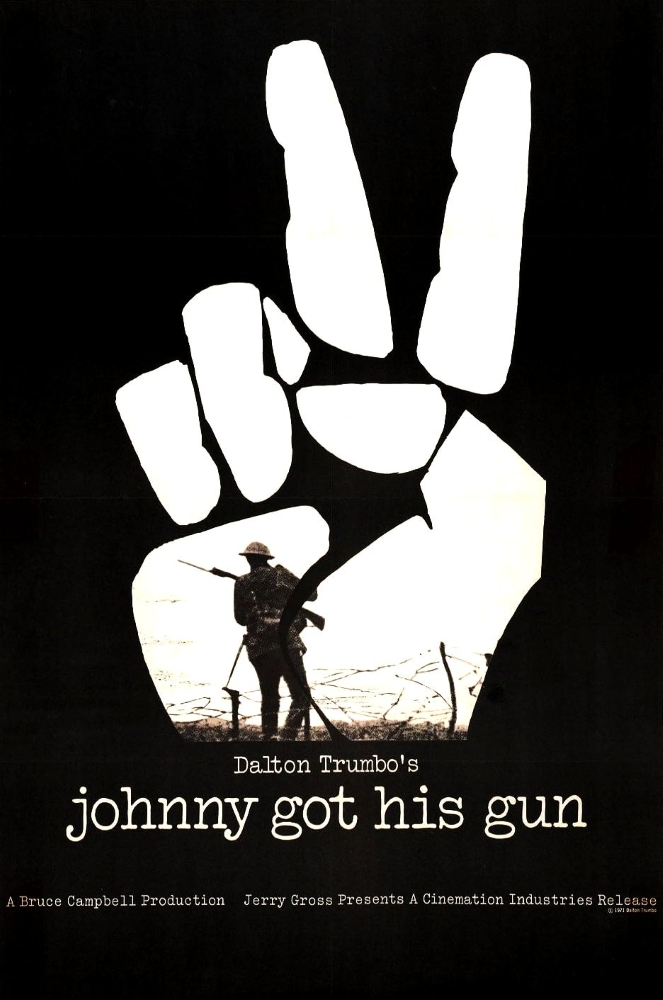
Dalton Trumbo (1905-76) was one of the great scriptwriters from Hollywood’s Golden Age. Beginning in the 1930s, Trumbo scripted a number of classic films, including A Guy Named Joe (1943), Exodus (1960), Spartacus (1960) and Papillon (1973), along with a good many others. Trumbo was also one of the Hollywood 10 who were blacklisted from the industry for Communist sympathies during the era of HUAC and the McCarthy witch hunts – Trumbo was a member of the Communist Party and had published articles sympathetic to Russia that regarded the US as the aggressor. During the period he was blacklisted, Trumbo continued to work on scripts but these were submitted under the names of other writers, which became a problem when his script won an Academy Award for Best Story for Roman Holiday (1953). Johnny Got His Gun was the only time that Trumbo directed, adapting his own anti-War novel Johnny Got His Gun (1939).
It took some years for Johnny Got His Gun to be made as a film. The book is set in World War I, but Trumbo has updated this to World War II for the film. 1971 is probably the only time the book could have been made as a film. This period was the tail end of the Vietnam War protests and “hell no, we won’t go” student crowd to whom the film’s subject of the grim cost of war would have struck home. This was also the era after the French New Wave had conducted some radical experimentation with surrealism and non-linear narrative and the language of what had worked there was starting to seep through and influence US directors of the day – in particular, the works of Robert Altman.
The Vietnam War era had also made a huge hit out of Kurt Vonnegut’s anti-war novel Slaughterhouse Five; or the Children’s Crusade (1969) – see the film version Slaughterhouse Five (1972). I found quite a degree of similarity between Johnny Got His Gun and Vonnegut’s non-linear storyline and his protagonist shocked by World War II slipping back and forward through the events of his own life. Although surprisingly for all that Johnny Got His Gun is aiming to be an anti-War movie, we get almost no scenes that take place during the War, while the key event that left Joe without limbs etc is never depicted, possibly for budgetary reasons.
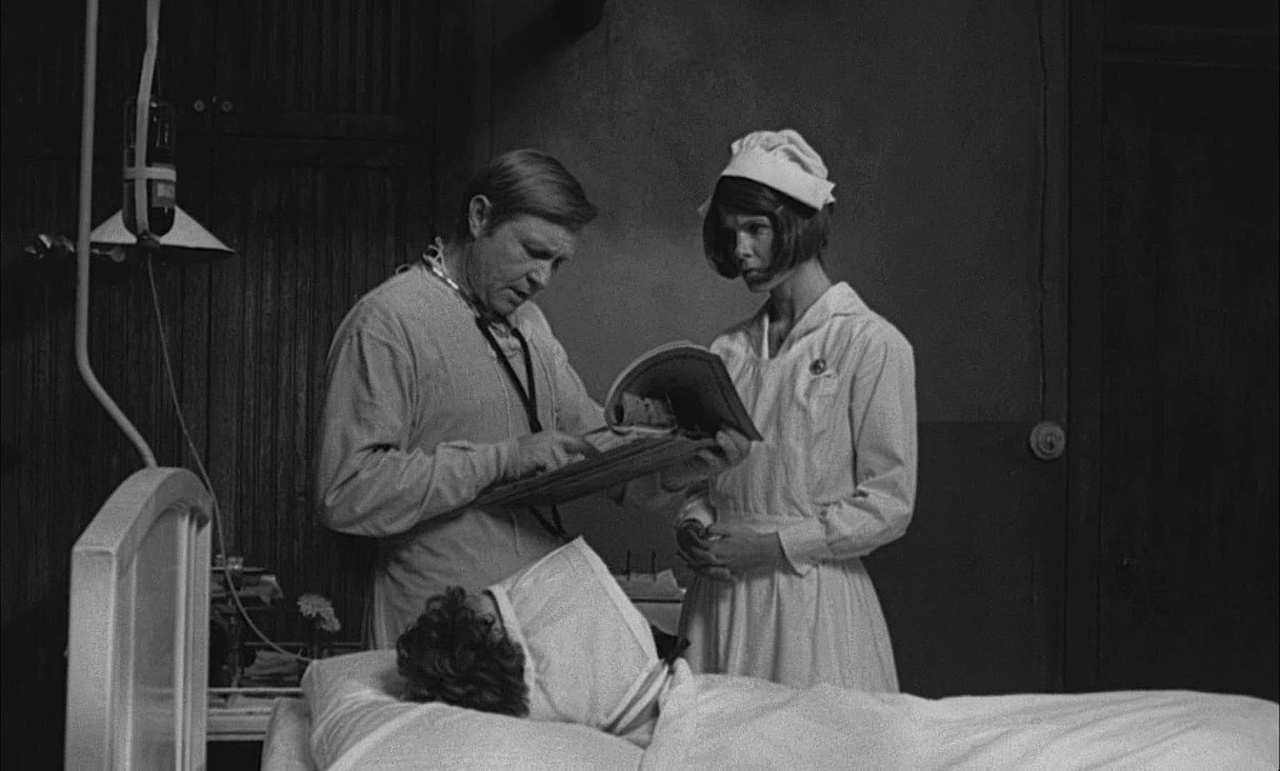
Johnny Got His Gun has a very non-linear plot. Apart from the scenes in the hospital that take place in black-and-white and follow a dramatic progression, everything else could be shown in random order. The film switches back and forward between the outside world, dream and memory of Timothy Bottoms’ past going back to his childhood. There are even questions he asks about what is dream and what is real. The most surreal of the scenes in the film are the ones set in the afterlife featuring a youngish Donald Sutherland as Jesus – a Jesus who sits around playing cards with assorted other soldiers who then go off to their assigned deaths at one point, or later pops up to dispense wisdom and advice to Timothy Bottoms from his carpentry shop.
The best scenes come two-thirds of the way through when Timothy Bottoms and one of the nurses (Diane Varsi) develop a means of communicating with she spelling out letters of words on his stomach and then he communicating through a series of Morse code nods, which is eventually relayed to the doctors. The problem with the initial scene where Varsi discovers she can communicate is that a quiet strong scene is killed by the choice of a loud and overly dramatic musical score. This does lead to the scene where the military officers come in and attempt to communicate with Johnny.
The final image of Johnny’s limbless body left in the room, prevented from his desire to be euthenised, with the voiceover pleading to die as the camera pulls back is one of the bleakest possible in all cinema history. This is then brought home with ominous effect as the film goes to with a list of the numbers that have been killed in combat since World War I.
Trailer here
Full film available here