
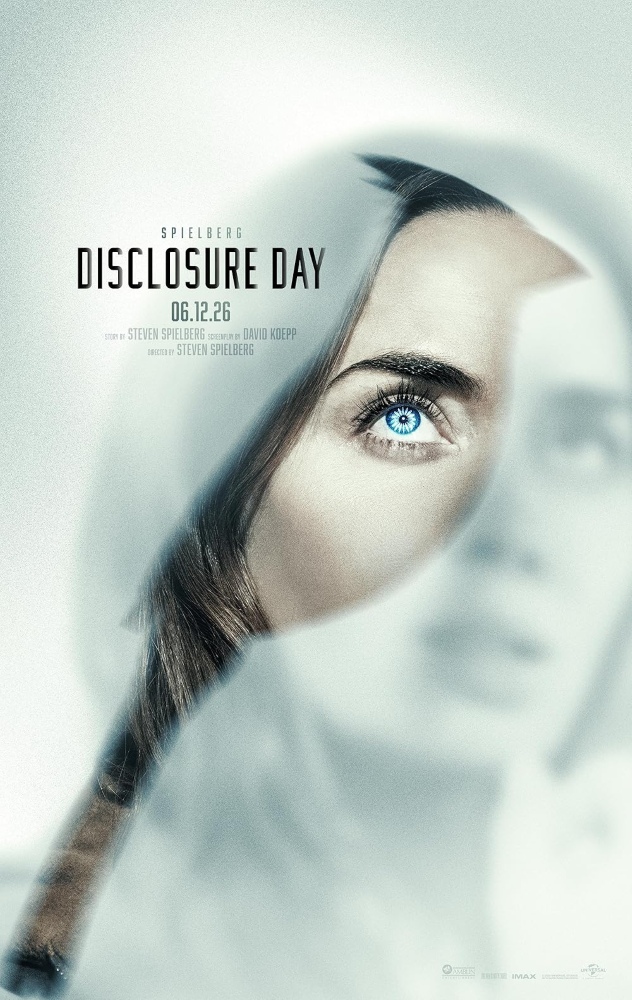
Crew
Director/Story – Steven Spielberg, Screenplay – David Koepp, Producers – Kristie Macosko Krieger & Steven Spielberg, Photography – Janusz Kaminski, Music – John Williams, Visual Effects Supervisor – Matthew Butler, Visual Effects – Digital Domain (Supervisor – Joel Behrens), Special Effects Supervisors – Conrad Brink & Daniel Sudick, Practical Alien Effects – Legacy Effects, Production Design – Adam Stockhausen. Production Company – Universal/Amblin Entertainment.
Cast
Emily Blunt (Margaret Fairchild), Josh O’Connor (Dr. Daniel Kellner), Colin Firth (Noah Scanlon), Eve Hewson (Jane Blankenship), Colman Domingo (Hugo Wakefield), Wyatt Russell (Jackson), Elizabeth Marvel (Sister Maura), Henry Lloyd-Hughes (Casper Boyd), Jeremy Shamos (Claypool), Jim Parrack (Cop)
Plot
Cybersecurity expert Daniel Kellner makes an escape from his employer Noah Scanlon of the Wardex Corporation, getting away with key data that he intends to broadcast to the world. He also has possession of an alien device he threatens to activate after Noah threatens Daniel’s girlfriend Jane Blankenship. They flee with Daniel being guided by Hugo Wakefield who urges him to avoid leaving any traces. Meanwhile, in Kansas City, tv weather girl Margaret Fairchild demonstrates an uncanny ability to read other people’s minds and then starts speaking in languages she doesn’t know, including breaking into a series of alien clickings on air. Her boyfriend Jackson takes her to be medically examined but she urges them to flee as she detects the arrival of Wardex people at the hospital. She sets out to find Daniel even though they have never met. At the same time, Noah makes all effort to find and locate Daniel, including the use of an alien device that allows him to enter the mind of Jane and turn her against Daniel.
Steven Spielberg is a household name and probably needs no introduction as the director of hits such as Jaws (1975), Raiders of the Lost Ark (1981), E.T. – The Extra-Terrestrial (1982) and Jurassic Park (1993), as well as critically acclaimed works such as Schindler’s List (1993), Saving Private Ryan (1998) and Lincoln (2012). A full list of Spielberg’s genre films is at the bottom of the page. Disclosure Day was Spielberg’s 38th feature film, released a few months after his 79th birthday. (See bottom of page for Steven Spielberg’s other genre films).
Disclosure Day has been referred to, including by Spielberg himself, as a thematic conclusion to the trilogy of alien contact films he made with Close Encounters of the Third Kind (1977) and E.T. – The Extra-Terrestrial. Some have interpreted it as an unofficial sequel to the events of Close Encounters – of what happens when the evidence of that contact is leaked to the public. (You can even see a brief image of Devil’s Tower among the video clips that are aired towards the end).
Close Encounters and E.T. have an incredibly rosy and optimistic view of alien contact – that the universe is waiting with open arms to greet humanity, be a friend and heal the wounds of family hurts. The requirement of this is that we welcome the universe with a childlike innocence. That same innocence is there in similar films that Spielberg executive produced such as Batteries Not Included (1987). However, by the mid-1990s, Spielberg’s view of alien contact was occluded by something much darker – the vision of alien abduction in works like Fire in the Sky (1993) and especially the dark government conspiracies of tv’s The X Files (1993-2002). Works that Spielberg’s name is attached to during this period seem to straddle a mix between the two views if not step all the way over – the comedic take of Men in Black (1997) and sequels, the tv mini-series Taken (2002), Cowboys & Aliens (2011) and the tv series Falling Skies (2011-5). The Spielberg directed War of the Worlds (2005) depicted a harsh and brutal alien invasion but the overall effect at the end was of cautiously positive family reconciliation. The alien that appears at the end of Indiana Jones and the Kingdom of the Crystal Skull (2008) also taps into a fringe science view of UFOs – Disclosure Day does too in one scene where Josh O’Connor seems to create a crop circle.
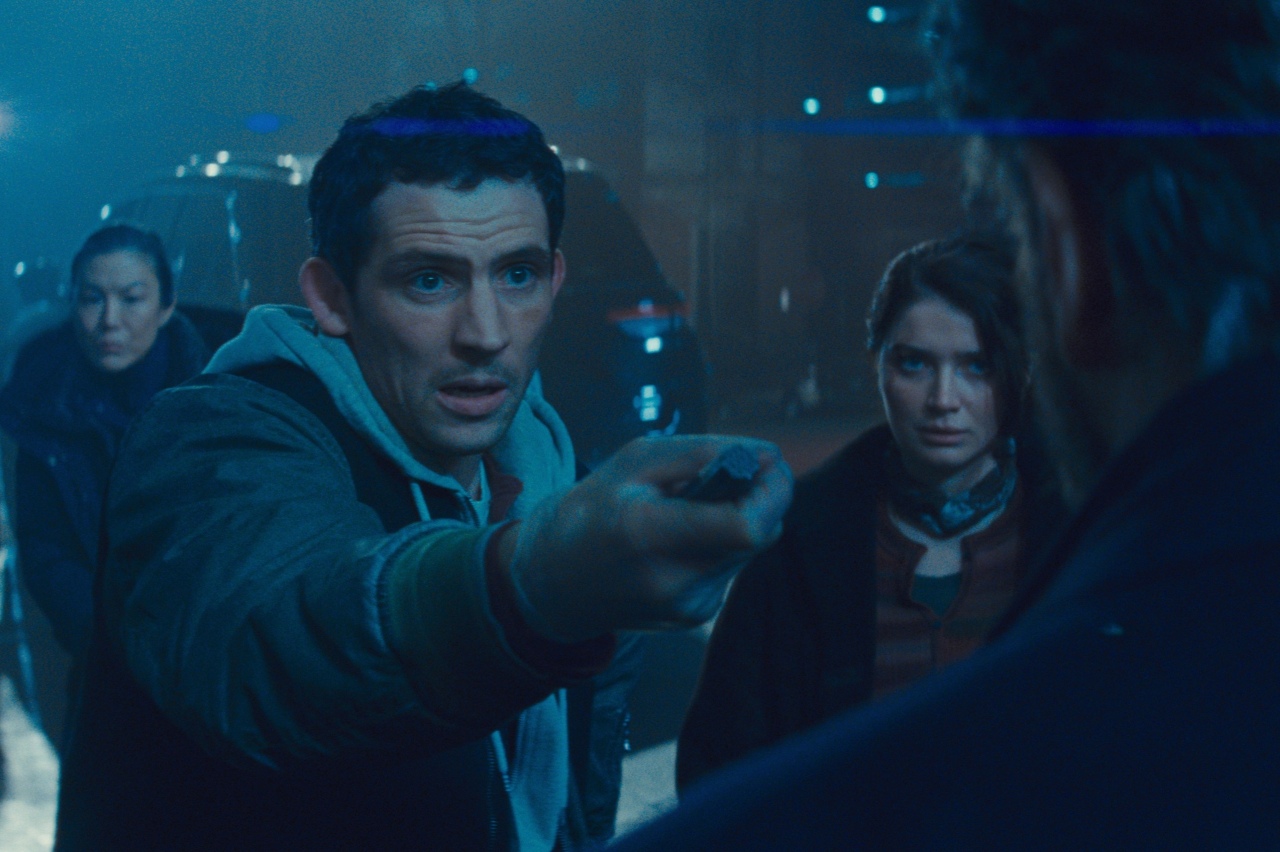
Disclosure Day feels like Spielberg belatedly leaving the rosy view of alien contact he patented and joining The X Files’ darkly paranoid and conspiratorial take on things. Certainly, this was an element that was present at the edges of both Close Encounters and E.T. – the government created a fake toxic gas spill scare to clear the area around Devil’s Tower in Close Encounters but the suggestion was that their intentions were never anything other than in the interest of the public good. E.T. is pursued by government men but when we meet Peter Coyote’s Keys, he is a benevolent, paternalistic figure just trying to understand the mystery. Cary Guffey and various flyers were abducted by the aliens in Close Encounters and Richard Dreyfuss carried off to the stars at the end but the experience was never seen as anything other than wondrous.
Not so when it comes to Disclosure Day. Here the entire thrust of the film is about the hazardous, life-threatening struggle to get the truth out to the public while pursued by sinister figures wielding a high degree of artillery. There is no benevolent coverup or secretly paternalistic figures here. (Spielberg has slightly shifted the blame – while it is still a government coverup, he has semi-displaced that onto the activities of a private corporation, although the difference is negligible). The central character of Josh O’Connor’s Daniel is not one of Spielberg’s child-like innocents seeking to be carried away by the universe as someone in the same camp as David Duchovny’s Fox Mulder in The X Files, who is certain the truth is out there and wants to communicate it to the world. (If anything, Disclosure Day feels like a version of Paul Schrader’s original script for Close Encounters that was rejected by Spielberg that had Roy Neary as a Project Blue Book employee who has an alien encounter and determines to get the truth out to the world despite the official efforts to silence him).
While Disclosure Day feels like a Spielberg who has embraced the modern The X Files conspiratorial view of alien contact, he has not entirely left behind the old Spielbergian optimism. There is a flashback scene where Emily Blunt and Josh O’Connor experience alien abduction. He is seen reacting to trauma in the present, but the experience is intended as a benevolent one where the aliens take the form of animals because they don’t want to scare us. Contrast this to Fire in the Sky and various episodes of The X Files where the experience is seen as a deep violation and inexplicable in nature.
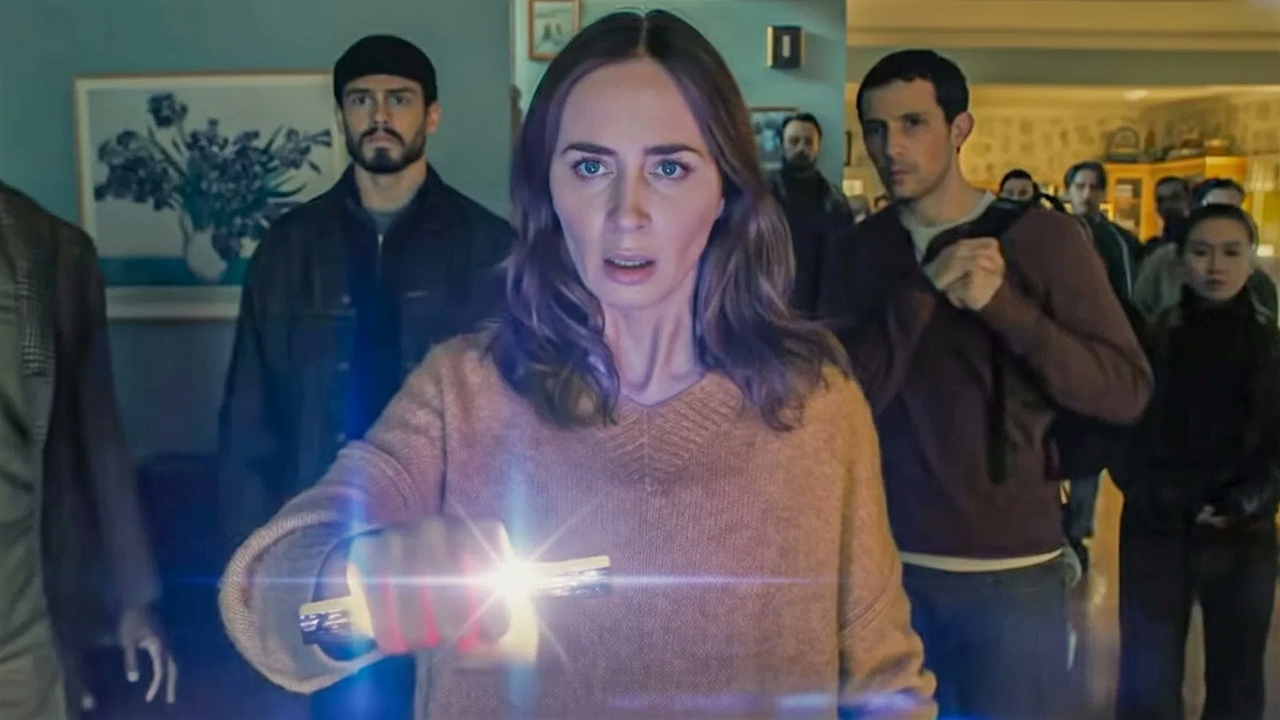
Similarly, the ending here [PLOT SPOILERS] where the truth is finally broadcast is seen as a conceptual breakthrough for the entire world – the screening of the footage is not unakin to the moment of awe when the UFOs appear at the end of Close Encounters. This is especially so at the climactic moment where a grey alien is brought out and embraces Emily Blunt and Josh O’Connor. Which is direct callback to the tall thin grey that appears out of the mothership in Close Encounters and the hug goodbye that Elliott and E.T. share in E.T. Emily Blunt’s final word “Listen”, which comes against the backdrop of international tension teetering on a war that is seen on the news throughout, seems very much a plea of universal understanding.
Although what does get me about such a scene is just how wedded Spielberg is to an old analogue view of media and the belief that people would place implicit trust in tv networks. While they are still a major factor in news transmission, what you cannot help but think is what is missing from the occasion is a vast army of pundits, podcasters and social media influencers that would immediately leap on board the situation. Not to mention, how the broadcast would immediately get dismissed as fake news, taken apart in minute detail by conspiracy bloggers or have influencers try to jump aboard the bandwagon and use it to peddle something.
Spielberg makes quite a satisfying film. I am not always a fan of some of his work from the 2000s on. While he has made some great films during this period – A.I. (Artificial Intelligence) (2001), Minority Report (2002), Catch Me If You Can (2002), Munich (2005), Lincoln (2012) – some of these also fall into never-quite-rans such as The Adventures of Tintin (2011), War Horse (2011), The Post (2017), Ready Player One (2018), West Side Story (2021) and his single worst film The Terminal (2004). Despite a lukewarm critical reception in some areas, Disclosure Day shows us that Spielberg still has the goods.
One of the extremely good things about Disclosure Day is the script from David Koepp, a regular Spielberg collaborator since Jurassic Park. This throws us in in media res with Josh O’Connor under threat as he tries to make an escape and then crosscutting to Emily Blunt suddenly spouting different languages and able to read the minds of a cop and coworkers as she heads to work, before breaking into a series of alien clickings while on air. It is a bewildering cold open (and a fine performance from Blunt) that spins you around and makes you wonder what is going on.
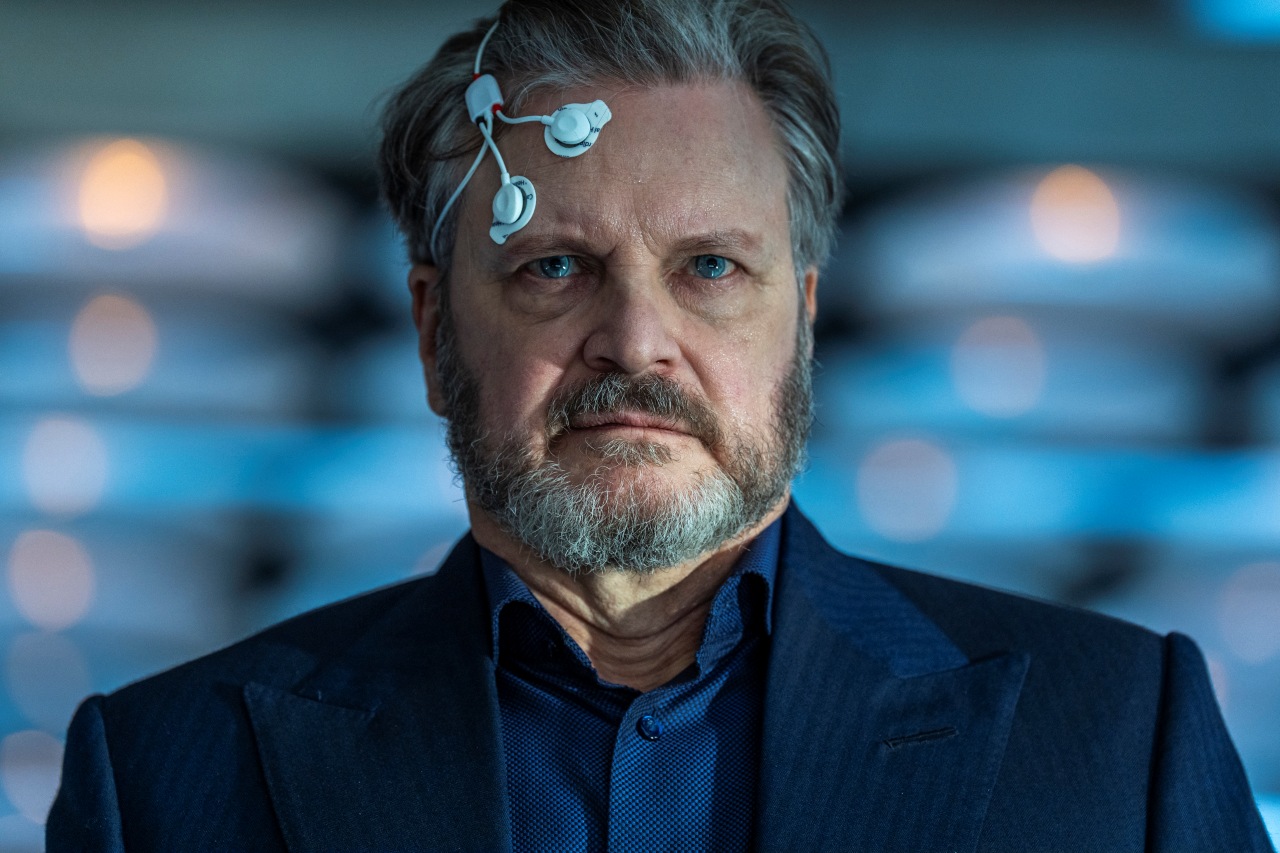
Thereafter the film becomes a cross-country chase, cutting back and forward between three main storylines – Josh O’Connor and Eve Hewson on the run, of Emily Blunt on her quest, and of the pursuing Colin Firth and his armed heavies – with quite an adeptness and a number of surprise twists and turns. If anything, what Koepp’s script reminds of is a Stephen King novel like Firestarter (1980), Doctor Sleep (2013) or The Institute (2019), which focus on individuals with psychic powers on the run usually from government agencies where the plot keeps crosscutting between different strands as we follow the characters, their interactions and the unexpected twists as they come together. Like he did in Minority Report, Spielberg also takes great delight in showing the use of advanced surveillance tech in tracking people.
Spielberg is one fine form. He creates some great and gripping sequences. One of the finest of these is when Colin Firth uses the alien artefact to remotely enter and influence the mind of Eve Hewson as she sits at the kitchen table in the farmhouse. Some of the best moments in the film are those showing the powers in action, especially a scene where Emily Blunt simply walks onto a secure Air Force base and then out again by reading and projecting the inner desires of all who challenge her. Another is where Emily uses the device to make their presence in an entire warehouse seem invisible even as heavies start bumping into walls and firetrucks. Spielberg delivers a seat-edge car chase sequence with Emily Blunt, Josh O’Connor racing to get aboard a train as the car they are in is being dragged along the tracks. And the climactic scene is an unexpectedly emotional one.
Steven Spielberg’s other genre films are:– Duel (1971), LA 2017 (1971), Something Evil (tv movie, 1972), Jaws (1975), Close Encounters of the Third Kind (1977), Raiders of the Lost Ark (1981), E.T. – The Extra-Terrestrial (1982), Twilight Zone – The Movie (1983), Indiana Jones and the Temple of Doom (1984), Indiana Jones and the Last Crusade (1989), Always (1989), Hook (1991), Jurassic Park (1993), The Lost World: Jurassic Park (1997), A.I. (Artificial Intelligence) (2001), Minority Report (2002), War of the Worlds (2005), Indiana Jones and the Kingdom of the Crystal Skull (2008), The Adventures of Tintin (2011), The BFG (2016) and Ready Player One (2018). Spielberg has also acted as executive producer on numerous films – too many to list here. Spielberg (2017) is a documentary about Spielberg.
Screenwriter David Koepp has written a number of high-profile films including Apartment Zero (1988), Bad Influence (1989), Death Becomes Her (1992), Carlito’s Way (1993), Jurassic Park (1993), The Paper (1994), The Shadow (1994), Mission: Impossible (1996), The Lost World: Jurassic Park (1997), Snake Eyes (1998), Panic Room (2002), Spider-Man (2002), War of the Worlds (2005), Zathura: A Space Adventure (2005), Indiana Jones and the Kingdom of the Crystal Skull (2008), Angels & Demons (2009), Jack Ryan: Shadow Recruit (2014), Inferno (2016), The Mummy (2017), Indiana Jones and the Dial of Destiny (2023), Presence (2024), Jurassic World: Rebirth (2025) and Cold Storage (2026), based on his own novel. As director. Koepp has also made the collapse of civilisation drama The Trigger Effect (1996), the medium film Stir of Echoes (1999), the Stephen King adaptation Secret Window (2004), the comedy Ghost Town (2006), Premium Rush (2012), Mortdecai (2015) and the malevolent house film You Should Have Left (2020).
Trailer here