
Crew
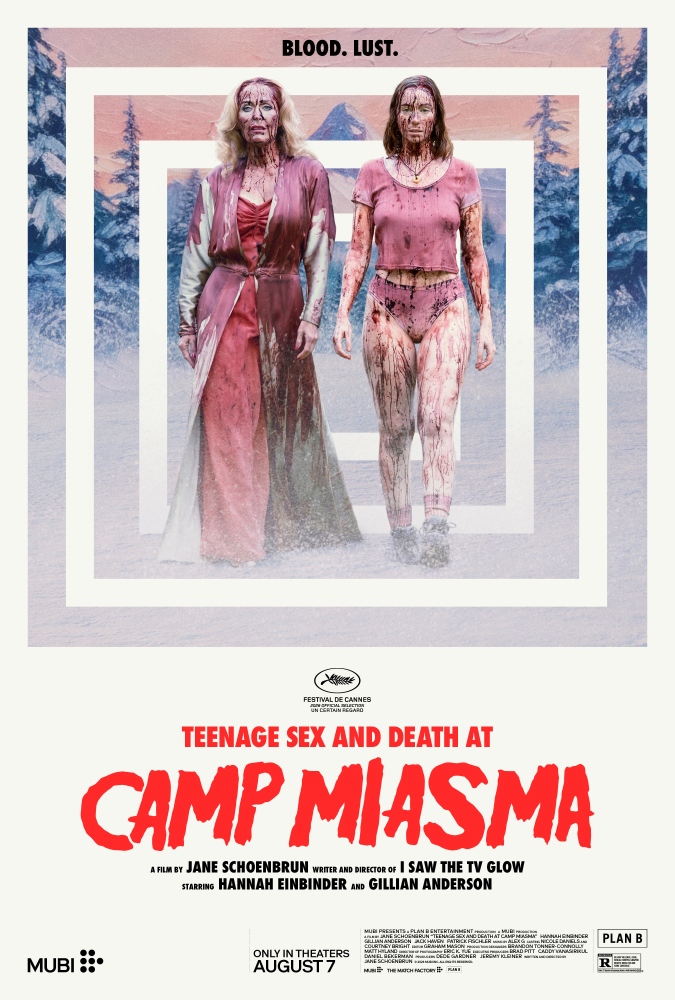
Director/Screenplay – Jane Schoenbrun, Producers – Dede Gardner & Jeremy Kleiner, Photography – Eric K. Yue, Music – Alex G, Visual Effects – Niche VFX (Supervisor – Fenner Rockliffe), Special Effects Supervisor – Kyle T. Moore, Makeup Effects – Amazing Ape Productions Ltd. (Designer – Werner Pretorious), Makeup Effects/Prosthetics – Caroline J. Mills, Production Design – Matt Hyland & Brandon Tonner-Connolly. Production Company – Plan B Entertainment/Mubi.
Cast
Hannah Einbinder (Kris Williams), Gillian Anderson (Billy Presley), Jack Haven (Little Death), Amanda Fix (Young Billy), Jasmin Savoy Brown (Mari), Aren Buccholz (Thor), Arthur Conti (Alex), Kevin McDonald (Anthony/County Sheriff), Zach Cherry (Will), Eva Victor (DJ Ella Glastic), Quintessa Swindell (Julie), Dylan Baker (Jeffrey), Jess McLeod (Tracy), Willy McGee (Male Executive), Luise Weard (Queer Assistant), Sarah Sherman (Kris’s Agent)
Plot
Kris Williams is a film director who has had a Sundance-acclaimed queer horror hit. She has been assigned to conduct a reboot of the long-running Camp Miasma slasher series featuring the gender-conflicted masked killer Little Death. Trying to find a way to make the material relevant, Kris goes in search of Billy Presley, the Final Girl from the first film. Kris saw the film when she was eight years old and has been haunted by the expression on Billy’s face. Kris travels to a small town in the Pacific Northwest in search of Billy, finding the abandoned Camp Tivoli, the location for Camp Miasma, where Billy now lives in seclusion. Kris appeals to Billy in search of how to approach the reboot. The two are attracted. Billy puts forward the theory that what is in the lake, the original Little Death, views all of them as a movie.
Teenage Sex and Death at Camp Miasma comes from trans director Jane Schoenbrun. Schoenbrun had initially appeared with the amateur film A Self-Induced Hallucination (2018) and then made their professional debut with the horror film We Are All Going to the World’s Fair (2021). The work that propelled Schoenbrun’s name to something to pay attention to was the Lynchian I Saw the TV Glow (2024), which won a host of festival awards and was nominated on numerous Best of the Year lists. It is a measure of how much Schoenbrun’s name has grown that Teenage Sex and Death at Camp Miasma comes with no less than Brad Pitt listed as an Executive Producer and the film produced via his Plan B production company.
With Teenage Sex and Death at Camp Miasma, Jane Schoenbrun is making a homage to the Slasher Film. This was a genre that emerged in the 1980s following the hits of Halloween (1978) and Friday the 13th (1980). These produced a number of sequels (and still are four decades later), along with a huge number of copycats. The main slasher fad burned itself out around 1984-5 but then underwent a revival with Wes Craven’s Scream (1996), which affectionately homaged the originals and created a Meta-Fiction where the characters were constantly seeing what was happening in term of genre cliches. This has led to the much more creative mini-genre of the meta slasher that is constantly deconstructing the genre with the likes of Cherry Falls (2000), Behind the Mask: The Rise of Leslie Vernon (2006), Stage Fright (2014), The Final Girls (2015), Last Girl Standing (2015), Lost After Dark (2015) and tv’s Scream Queens (2015-7).
It is evident that Camp Miasma is a stand-in for the Friday the 13th series The opening montage is a work of art in itself – the titles we see have a Part II, A New Beginning, a Takes Manhattan and a Miasma X. There are also amusing asides about a Camp Miasma boardgame and a videogame merchandising spinoffs (as Friday the 13th series also produced). The scene where two bodies on a bed are impaled in the midst of sex is directly modelled on Friday the 13th Part 2 (1981).
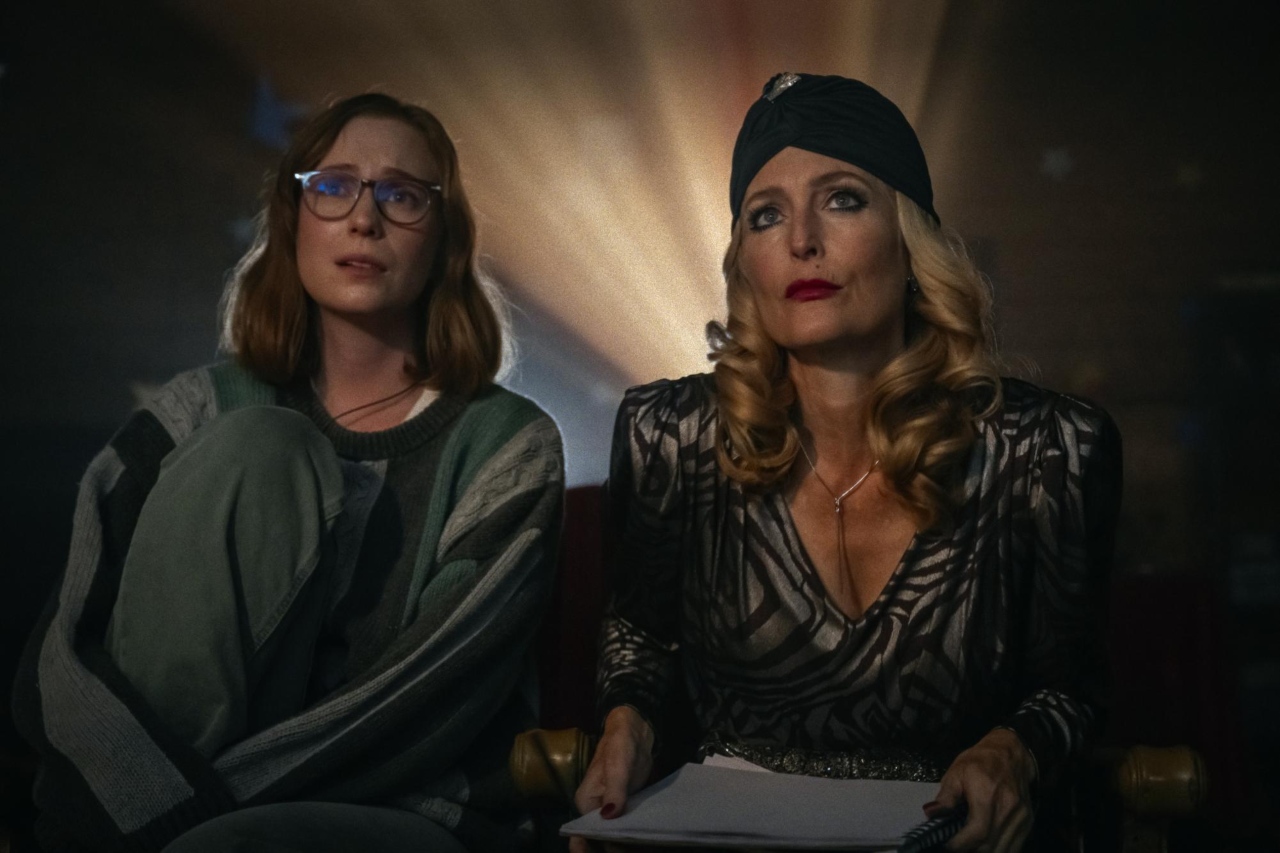
However, it is not just the Friday the 13th series that Jane Schoenbrun is taking on in Camp Miasma, they extend their homage to the entire slasher genre itself. As a trans filmmaker, Schoenbrun clearly identifies with the gender-conflicted character played by Felissa Rose in Sleepaway Camp (1983), which they make into the traumatised drowned child that Jason was in Friday the 13th. Schoenbrun’s referencing of the genre is meticulous. There are references to Pamela Springsteen in the Sleepaway Camp sequels. Hannah Einbinder drops a line about not wanting to be Me-Tooish, which Gillian Anderson responds to with “Honey, I auditioned for The Burning (1981). You know who created that? You don’t scare me.” This is a reference that only a dedicated fan of the slasher film is going to pick up on – namely that The Burning was the first producing credit of Harvey Weinstein (to be strictly correct it was Weinstein’s brother Bob who was the co-creator of that film and Harvey only produced, nevertheless …).
It is interesting to speculate how much of Camp Miasma is being quasi-autobiographical on Jane Schonbrun’s part. Do a Google image search on Schoenbrun and there seems a striking similarity between them and the bespectacled Hannah Einbinder in the film. And like Hannah’s character, Schoenbrun identifies on the LGBTQ spectrum and is a director where both of their films premiered and were acclaimed at Sundance. And like Hannah, Schoenbrun is also in a polyamorous relationship. There’s a devastatingly brilliant piece of writing in the middle of the film where Gillian Anderson asks Hannah to tell about herself and she goes off into a tangent about being a Sundance-acclaimed filmmaker who made her first film for $6 amid lines like “The execs all butter you up. They tell you your perspective is so fresh. They call you the voice of a generation.” It almost feels as though Schoenbrun were writing from real life experience.
The same speech has some hilarious lines that devastatingly skewer the problems with modern horror with her talk of zombie franchises and how executives are only willing to put money on known factors and yet how many of these franchises have problematic pasts and so need filmmakers such as herself to transform them. It is worth noting that in the week just before I watched Camp Miasma that a trailer was released for the Friday the 13th prequel tv series Crystal Lake (2026- ), which gives all indication of being exactly the same zombie IP that Schoenbrun puts a finger on here.
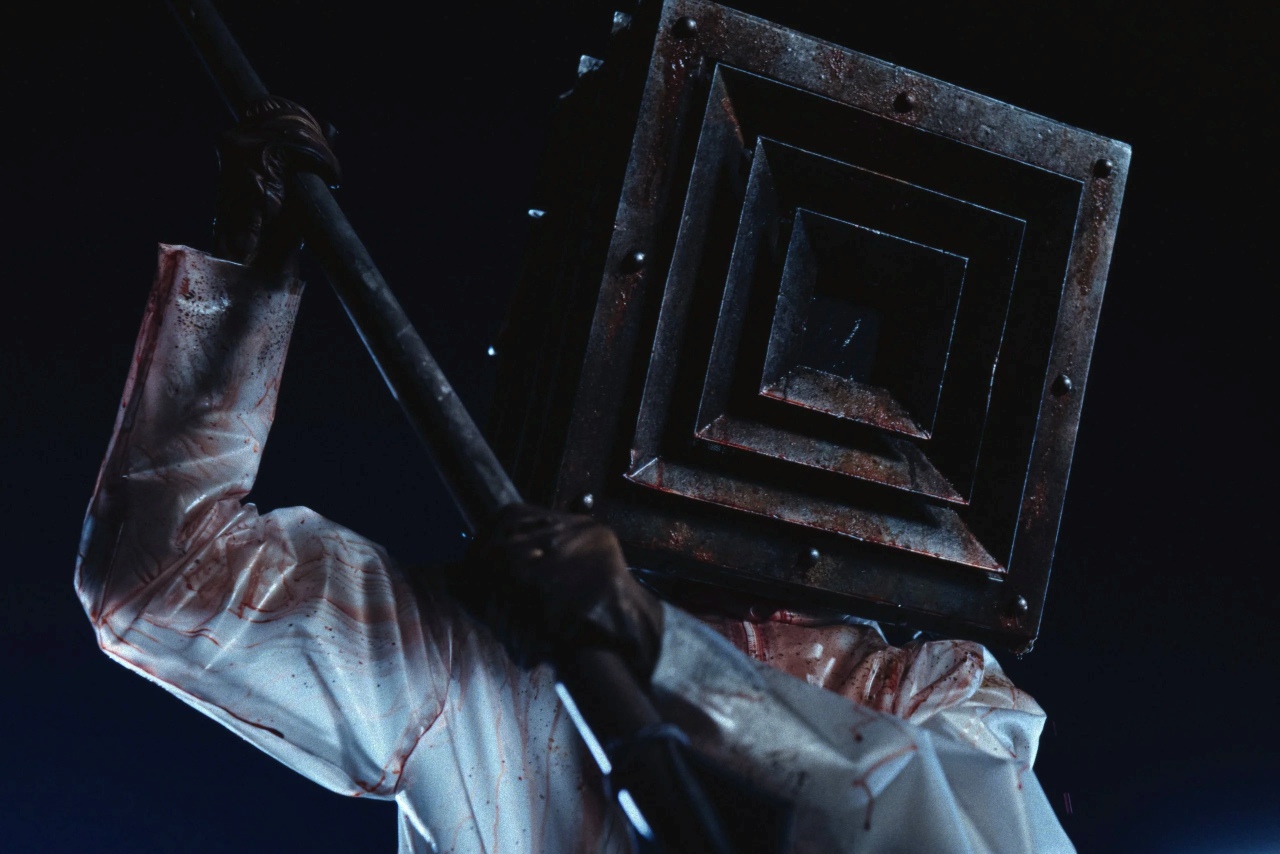
I liked very much what Jane Schoenbrun did with Camp Miasma. It is a film packed with more ideas and metaphors than you can necessarily absorb in a single viewing – it is certainly one film I have had to think about more than any other in recent memory. I liked its tsking in the deconstructions of modern horror, before Gillian Anderson’s reminding Hannah Einbinder that she is intellectualising it, taking too much of an academic approach to the genre and that it was always “about two very simple things – flesh and fluids.”
There’s a fascinatingly original aspect where Gillian Anderson posits how Little Death is treating all of them as being characters in a movie, which leads to an hilarious scene where Hannah Einbinder melts down during a Zoom conference call – and comes replete with reference to Wes Craven’s New Nightmare (1994). We see several scenes subsequently where Little Death is in his lair beneath the lake and is putting videotapes into an organic machine to play. On the other hand, what exactly does such a metaphor mean? Is Little Death a stand-in for the audience? Or is it a more oblique way of saying that Little Death is an allegory for the slasher genre that plays its audience? I wasn’t quite sure what Schoenbrun was saying here.
The other interesting metaphor that Schoenbrun is playing with is the idea of sexuality in the slasher film. This point is made direct in naming the masked killer Little Death (the English translation of a French nickname for the orgasm). This gets turned on its head in some fascinating ways. Ones where both Hannah Einbinder seems to be responding to the sexuality in the slasher film with some excitement and arousal – she is excited about the look she saw in the young Billy’s eye and even greets the appearance of Little Death by saying “I’m a big fan” and then stripping down to her t-shirt and panties and running just like a Final Girl. This is even more so with Gillian Anderson’s character. She recounts the story of losing her virginity, but this seems to blur between being her story and the scene with her character in the film. In the end, both she and Hannah lie down on a bed together to be impaled by Little Death, which becomes akin to a sexual act, before the two are reborn to walk off into the town covered in blood.
The reading I take from this comes down to Hannah Einbinder embracing the flesh and fluids, enjoying the sexual thrill of the slasher film, as opposed to the intellectual, academic approach. This would seem to be the case at the climax where Little Death emerges and slaughters Hannah Einbinder’s lover, the lover’s boyfriend, her agent and the people from the conference call. In effect, it is Little Death dismissing those who represent the woke aspects and those seeking to give the franchise a relevant reimagining. Hannah and Gillian embrace the sexuality in the franchise, are killed but this becomes their rebirth and awakening. In the final scene, they pass through regular society – the small town, while covered in blood – indifferent to the reaction of onlookers. At least that’s what I think Camp Miasma is about. It is such a dense knot of metaphors and ideas that I am sure there are other equally valid interpretations.
There is some fantastically good casting. There is a very nice performance from Hannah Einbinder, all quiet intellectual strength and shy nervousness. Her quietly excited line “And don’t forget nubile” and the scene where she appears to Gillian Anderson in her boxers is perfect. After her stardom in the 1990s, Gillian Anderson retreated to England making only occasional supporting appearances in films. She returns here and it is great to see her in Camp Miasma at age 55 sinking her teeth into a role that has some meat on it and one that is substantially different from what she has done before. And naturally the film makes reference to her playing a recluse and Sunset Blvd. (1950) on more than one occasion.
Trailer here