


Crew
Director/Screenplay – Mari Okada, Producer – Manabu Ohtsuka, Photography – Yusuke Tannawa, Music – Masaru Yokoyama, Art Direction – Kazuki Higashiji. Production Company – Mappa.
Plot
In 1991, an explosion occurs at the steel mill in the town of Mifuse and strange lights are seen in the sky overhead. Afterwards the residents find they are all trapped in living the same winter day over and over. Sagami leads them, claiming that this is a punishment from the gods, that the mill is a sacred machine and that they must never vary their day from what it was. Masamune Kikuiri is a high school student with ambitions to be an artist. One day he encounters a wild girl at the mill. He and fellow classmate Mutsumi Sagami befriend the girl, calling her Itsumi. It is believed that Istumi has come into the town from outside and that her moods are capable of affecting the smoke wolves that emerge from the fissures surrounding the town to devour townspeople.
Maboroshi was the directorial debut of Mari Okada, one of the few women in Japan working as a director in Anime. Okada has written a great deal for animated tv and films since the 1980s. These include numerous series such as Vampire Knight, Black Butler, Lupin the Third, Mobile Suit Gundam and including films such as Anthem of the Heart (2015) and A Whisker Away (2020), along with a great many others.
Groundhog Day (1993) popularised the idea of the timeloop film. The surprise is how popular its premise of a person forced to repeat the same day over and over has become. See variations such as Repeaters (2010), Edge of Tomorrow (2014), Happy Death Day (2017), Boss Level (2020), Palm Springs (2020) and The Map of Tiny Perfect Things (2021), among others. Around the same time as Maboroshi, the Japanese also made another variant on the timeloop film with the horror film Re/Member (2022). (I have a more detailed listing on such films here at Timeloop Films).
Maboroshi is somewhat different to Groundhog Day et al. People are stuck in a timeloop, although it is not the same day repeated over – while these others have one (occasionally more) person stuck in a single day and forced to live it over and over again, here everybody lives the same day and their memories progress as normal. The effect is more akin to the out of time effect in Brigadoon (1954), albeit told from the villagers’ perspective, where they are caught in a timeslip and can see out on the rest of the world as the normal progression of time takes place.
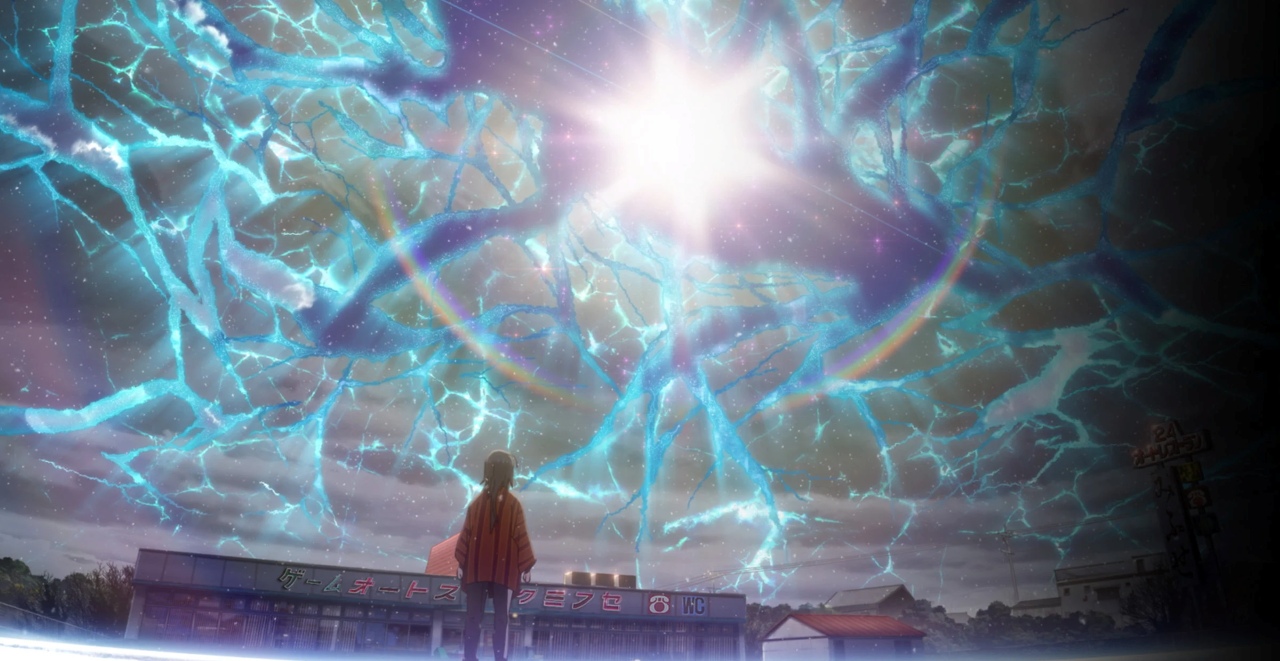
Mari Okada’s pace is unhurried. The film has a 111-minute runtime and Okada takes us through the town politics and strange new religion/fear-driven conformity that has emerged, the cautious attraction between Masamune and Mutsumi, and the mystery surrounding the wild child Itsumi. The backgrounds have an often realist beauty and there are times that Okada conjures a simple emotional magic – like the images of Itsumi dancing around the outside of a locomotive carriage.
Unlike most other anime, Maboroshi is not a work where everything is clearly spelled out for us. You are left trying to grasp at what is going on, or answers to larger questions of who Itsumi is and how she got there. It is not clear what exactly has happened to the town – are they in some kind of timeloop? A time pocket? Or even are they dead as the end seems to indicate? I was left going back over the film a second time in search of answers but was no clearer. The film teases at answers but ultimately leaves none of these clear.
Trailer here