

Crew
Director – Nobuo Nakagawa, Screenplay – Ichiro Miyagawa & Nobuo Nakagawa, Producer – Mitsugu Okura, Photography – Mamoru Morita, Music – Chumei Watanabe, Production Design – Haruyasu Kurosawa. Production Company – Shintoho.
Cast
Shigeru Amachi (Shiro Shimizu), Utako Mitsuya (Yukiko Yajima/Sachiko), Yoichi Numata (Tamura), Torahiko Nakamura (Professor Yajima), Fumiko Miyata (Fumi Yajima), Hiroshi Hayashi (Gozo Shimizu), Kimie Tokudaji (Ito Shimizu), Akiko Ono (Yoko), Akiko Yamashita (Kinuko), Kiyoki Tsuji (Mrs Shiga), Jun Otomo (Ensai Taniguchi), Tomohiko Otani (Dr Kusama), Koichi Miya (Journalist Akagawa), Hiroshi Shinguji (Detective Hariya), Hiroshi Izumida (Kyoichi ‘Tiger’ Shiga)
Plot
The university student Shiro Shimizu proposes to his professor’s daughter Yukiko Yajima. Shortly after, Shiro and his friend Tamura are driving when they hit the drunken Yakuza thug Tiger Shiga. Tamura urges them to drive away rather than confess to the crime. Shiro is subsequently troubled by guilt. While riding in a taxi with Yukiko, the taxi crashes and Yukiko is killed. Afterwards, Shiro goes to visit his ailing mother at the Tanjoen hospital. There Tiger’s girlfriend comes seeking vengeance but accidentally trips and falls into a gorge, while managing to accidentally shoot Tamura. Everyone gathered at the hospital appears to have some guilty secret. All of the people at the hospital are given poisoned sake and Shiro is then strangled. He ends up on the other side of the River Sanzu in the afterlife where he is judged by the Lord of Hell. Shiro learns that Yukiko became pregnant before she was killed. As he tries to save Yukiko’s soul, Shiro e passes through the different realms of Hell where people suffer tortures based on the sins they conducted in their corporeal lives.
Jigoku is an interested early example of the Japanese horror film. It comes from Shintoho, a studio who were stuck down the bottom end of the market at the time – the equivalent of where studios like AIP were in the US during the same era. They resorted to making a good deal of sensationalist material in order to get by, some of which strayed over into the horror genre. Director Nobuo Nakagawa gained a name making a number of horror films during this period, including the likes of The Vampire Moth (1956), The Ghosts of Kasane Swamp (1957), Black Cat Mansion (1958), M.P. and the Ghost (1958) and a version of the popular ghost story Ghost Story of Yotsuya (1959).
Two-thirds of Jigoku is taken up by a mundane plot about a hero and the guilt he experiences after fleeing from a hit-and-run where he killed someone and then the death of his fiancée in a car crash in which they were passengers. The film is shot in the style of Japanese kitchen sink realism of the era, however the plot becomes increasingly more surreal. After the first section dealing with the two deaths, the hero (Shigeru Amachi) heads off to an old people’s hospital in the boondocks where in a plot possibly influenced by Vertigo (1958), which came out around the same time, he meets a woman (Utako Mitsuya) who is a double for his dead fiancée and seems to take up with her.
The hospital interlude goes on for a long time and you wonder where it is all going, least of all what is has to do with the venture into Hell that is promised. The plot becomes increasingly stranger in its melodrama – the hero is pursued to the hospital by the girlfriend (Akiko Ono) of the gangster he killed in the hit-and-run, but she accidentally trips and falls off a bridge as she goes to shoot him, followed by the hero picking up her gun and accidentally shooting his best friend and partner in crime (Yoichi Numata) who also goes plunging off the bridge. The deaths pile up, including the mistress of a doctor at the hospital being strangled by the doctor after she develops lust for the hero. Everybody at the hospital is fed with a meal infected with rancid fish and killed, the visitors at the bar are fed poisoned sake and the mother of the dead gangster then strangles the hero. Not a huge amount of this makes much sense.
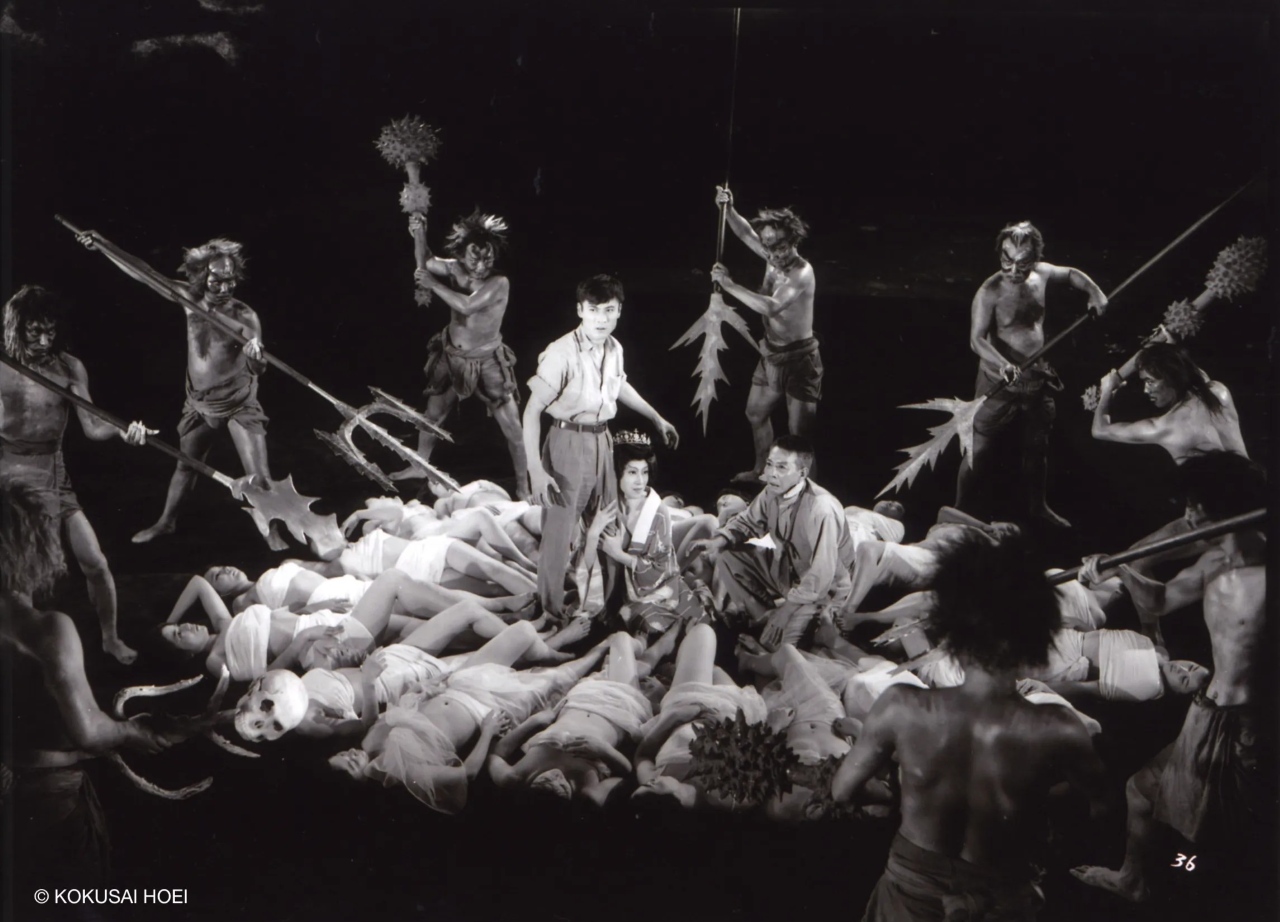
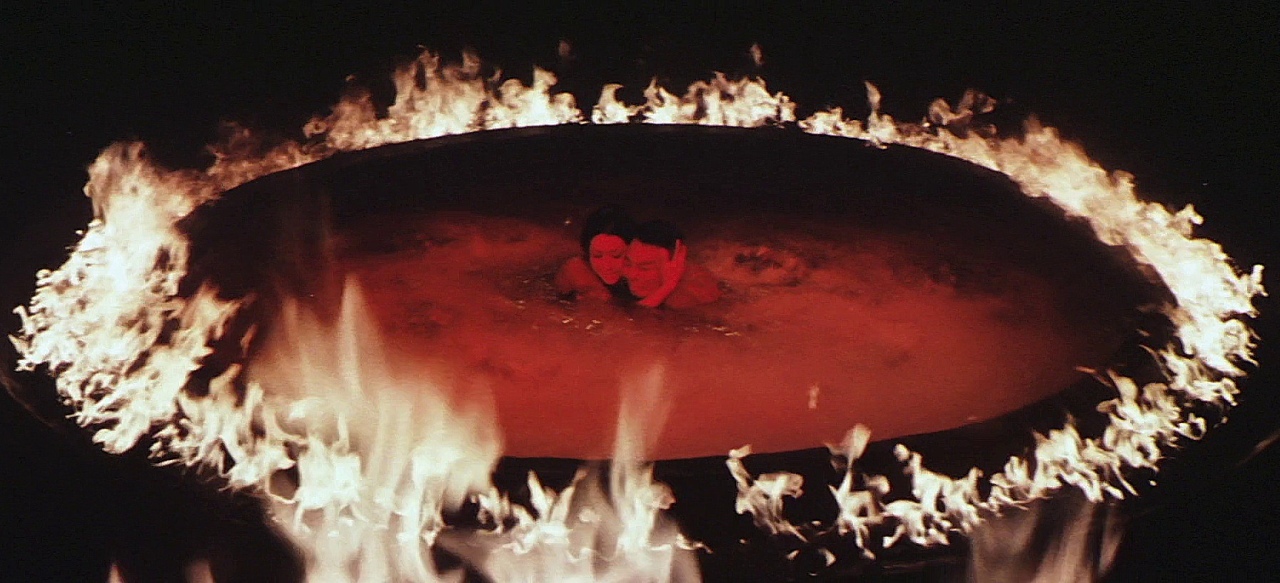
This then takes us to the final third of Jigoku where the hero and all the principal characters end up in Hell. It is very much a Christian rather than an Eastern version of Hell that the film depicts where all the imagery has been borrowed from Dante’s Inferno (1308-21, published 1472) with images of people suffering in torment as they are given physical punishments that befit the sins they conducted in life.
Nobuo Nakagawa plays it up for as much lurid potential as possible. The credits, for instance, open against a montage of near-naked woman’s bodies, which are half-hidden by their poses or screens, all accompanied by a wonky fusion score. There are amazing colour contrasts created during the Hell sequence – rivers that are scarlet red or flow against skies of pink, with almost all of the characters in green greasepaint faces. Hell is an amazing realm (albeit produced on a low-budget) of solarized skies and the characters running around what looks like an empty soundstage.
These scenes contain striking images – of people doomed to wandering around and around on the same path; others drowning in a river of red pus and their own bodily fluids; the hero forced to run across seas of heads, feet and hands; people boiled in giant cauldrons. Things become progressively more outlandish – the corrupt detective has his hands chopped off; another sinner is flayed until his skin is removed from his skeleton; a woman’s body is removed from her head; a body is cut apart using a giant-sized saw. Amidst this, the hero labours to save the soul of his unborn daughter and that of the girl he loves.
Trailer here (no subs)