

Crew
Director – Lucio Fulci, Screenplay – Elisa Briganti, Cesare Frugoni, Lucio Fulci & Dardano Sacchetti, Story – Elisa Briganti & Dardano Sacchetti, Producers – Maurizio Amati & Sandro Amati, Photography – Giuseppe Pinori, Music – Riz Otolani, Miniature Effects – Alvaro Passeri, Production Design – Giacomo Calo‘ Carducci Franco Vanorio. Production Company – Regency Productions srl.
Cast
Jared Martin (Drake), Fred Williamson (Abdul), Eleonora Brigliadori (Sarah Newman), Claudio Cassinelli (Cortez), Howard Ross (Raven), Al Cliver (Kirk), Donald O’Brien (Monk), Cosimo Cinieri (Professor Towman), Haruiko [Hal] Yamanouchi (Akira), Penny Brown (Sybil), Valerie Jones (Susan Harper)
Plot
In the year 2072, Drake is one of the top stars in the world as the champion in the gladiatorial sport of Killbike. Cortez, the head of World Broadcasting Services, is determined to get better ratings. He devises a new game of Killbike where tough criminals are recruited from prisons to be placed in gladiatorial combat at The Coliseum in Rome with the promise of freedom to the winner. Cortez then has hired men kill Drake’s new wife Susan and have Drake convicted as the killer so that he can be recruited for the games.
Mad Max 2 (1981) was a huge hit when it came out, a massively adrenalised action film that took place following the collapse of civilisation. It created a wave of copycat films, all featuring crazies engaged in car chases in a post-apocalyptic wasteland and emulating the same junkyard chic. (For greater detail see After the Holocaust Films). Nobody latched onto making low-budget Mad Max copies like the Italians who in quick succession made the likes of Endgame (1983), The Exterminators of the Year 3000 (1983), The New Barbarians (1983), Rush (1983), 2019: After the Fall of New York (1983), Warrior of the Lost World (1983), 2020: Texas Gladiators (1983), The Final Executioner (1984) and Rage (1984).
Rome 2072 is one of these Mad Max copycats from director Lucio Fulci (1927-96). At the time, Fulci was prolific in the horror genre, having made a number of extremely gory zombie films with the likes of Zombie – Flesh Eaters (1979), City of the Living Dead/The Gates of Hell (1980), The Beyond/The Seven Doors to Death (1981)and The House By the Cemetery (1981). These gained him a cult following. (See below for a list of Lucio Fulci’s other genre films).
While Rome 2072 is slotted in with the other Mad Max copies, it feels more like it is an exploitation copycat of Rollerball (1975). which depicted a future where players participate in to-the-death gladiatorial combat sports. Rollerball actually earned more at the box-office than Mad Max 2 did in its theatrical run, but it was Mad Max 2 that became the most influential of the two – Rollerball did produce several copies but not immediately and nowhere near the whole sub-genre of copies that Mad Max 2 did. Rome 2072 is in effect a marriage between the two – a Rollerball copy construed in the aftermath of Mad Max where the contestants duel on over-ornamented armoured motorbikes.
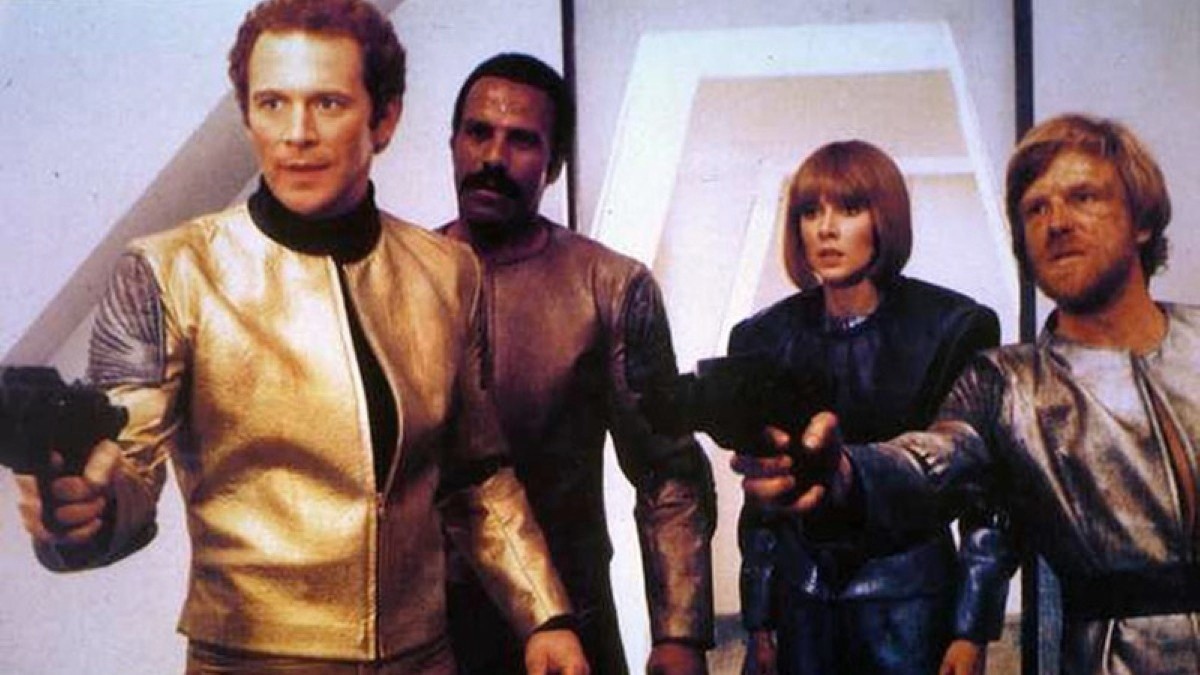
Almost all of Lucio Fulci’s work was in horror and the only occasion he ever visited science-fiction was with Rome 2072. As with his fantasy film Conquest (1983), Fulci feels like an awkward fit for the genre and does nothing more than copy the moves of the abovementioned others. He noticeably lacks interest in the action scenes. While others of these Italian copycat films are fired up when it comes to B-budget action, the motorcycle gladiatorial combat sequences here are perfunctory at best.
The plot of the film is also structured wrong. A film like this leaves you wanting it to get to the chase and pit the hero against various opponents in the arena as Rollerball and all other gladiatorial combat films do. By contrast, Rome 2072 spends most of its time with Jared Martin and the other contestants imprisoned, where they team up to conduct a breakout and then a plot where Martin sets out to prove that he has been framed, gaining the help of Eleonora Brigliadori who goes off to confront the controlling A.I. The combat sequences are only grafted on right at the end and not particularly germane to the outcome of the story. There is no to-the-death struggle to any of them, no elimination game and no scenes where Jared Martin must face off against an opponent.
Some of the technology looks quaint viewing when viewing Rome 2072 today – an electronic key that slots into a door looks about the size of a cellphone. There is what could be considered a prototype Virtual Reality device where lasers probe Jared Martin’s brain and project his aggressive thoughts onto a tv screen. The models for the New Coliseum and the city of Rome look very obviously like they are models.
Lucio Fulci’s other genre films are:– Perversion Story (1969), Lizard in a Woman’s Skin (1971), Don’t Torture a Duckling (1972), Dracula in the Provinces (1975), The Psychic (1977), Zombie – Flesh Eaters (1979), City of the Living Dead/Gates of Hell (1980), The Beyond/The Seven Doors to Death (1981), The Black Cat (1981), The House By the Cemetery (1981), The New York Ripper (1981), Manhattan Baby/Eye of the Evil Dead/The Possessed (1982), Conquest (1983), Murderock (1984), The Devil’s Honey (1986), Aenigma (1987), The Ghosts of Sodom (1988), Touch of Death/When Alice Broke the Mirror (1988), Zombi 3 (1988), Demonia (1990), A Cat in the Brain/Nightmare Concert (1990), Hansel and Gretel (1990), Voices from Beyond (1991) and Door to Silence (1992). Aenigma: Lucio Fulci and the 80s (2017) and Fulci for Fake (2019) are documentaries about Fulci.
Trailer here