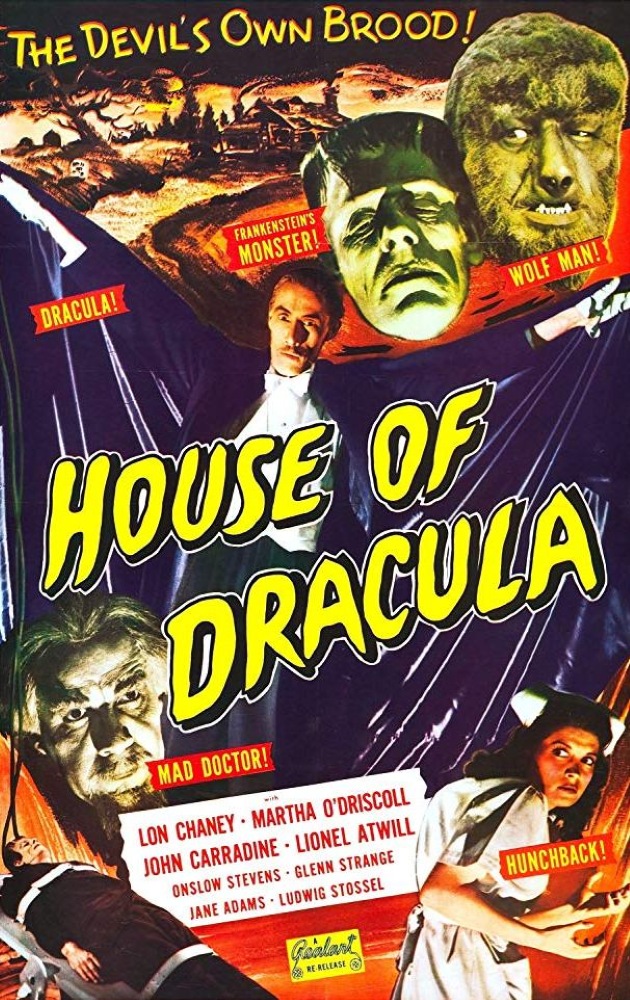
House of Dracula (1945)
The third of Universal’s monster bashes, a successor to the previous House of Frankenstein. These Universal crossovers felt contrived in their reasons to bring the monsters together but this works better than the others
The Science Fiction Horror and Fantasy Film Review
Monster Movies concern creatures that go amok, causing damage and threat to the social order. Monsters can range from vast titans like Godzilla and King Kong, giant robots, aliens and Giant Animals to human-sized monsters such as zombies or Mutations or smaller menaces such as Animals Amok and swarms of regular-sized Bugs. Some common monsters have been spilled over and been given their own pages – see Vampires, Frankenstein Films, Zombies, Werewolves and Mummies.
Monsters can be created by science, be supernatural or mythological in nature, of alien origin, from other dimensions or from beneath the ground or ocean. A monster is usually blind in its rampage, having the intelligence of an animal or some instinctual drive (monsters are rarely capable of speech). Its rampage can be due to hunger and the need for some type of sustenance, to breed, or else it can be hurt or because humanity has awakened it or disturbed its natural territorial domain. It can cause mass devastation or work on a smaller scale (such as hunting people in a contained space).
There have been many other monsters that are not Monster Movies. Not all Giant Animals are monsters, while many films treat monsters sympathetically and are about friendships or misunderstandings. There is another whole field of Children’s Monster Movies.
There is another body of monsters that appear in fantasy such as Dragons or mythological creatures like the Cyclops or giants. These are covered under a separate entry Monstrous Encounters. Here the monsters being encountered do not necessarily threaten the social order (or if they do it is rarely depicted beyond a few villages being attacked), rather they are nemeses that are fought and vanquished by heroes. There is a world of difference between a Godzilla film and its spectacles of mass destruction and the adventures of Sinbad, St George or Siegfried and the dragon.
A subcategory is the Japanese Monster Movie, which does engage in mass destruction spectacles but treats monsters as combatants in gigantic wrestling matches with defined heroes and villains where Godzilla or Gamera is usually portrayed as being the defender of Japan from other monsters.
The third of Universal’s monster bashes, a successor to the previous House of Frankenstein. These Universal crossovers felt contrived in their reasons to bring the monsters together but this works better than the others
The second of Universal’s team-ups of their in-house monsters and superior to the first of these, Frankenstein Meets the Wolf Man. Despite some imaginative moments, the script has a stitched-together improbability
The first film in which Universal teamed-up their in-house monsters, leading to several other monster bashes throughout the decade. For all that, this fails to make any interesting use of the title set-up
The fourth of Universal’s Frankenstein films where Lon Chaney Jr inherits the role of the monster and makes it into a stumbling brute that lacks the pathos of Boris Karloff. The plot recycles what has now become the cliches of the series
Perhaps the greatest of all monster movies, one that has attained iconic status. A masterpiece of stop-motion animation, it imbues Kong with character and attains a delicate fairytale-like atmosphere
The 1933 King Kong is a landmark classic Yhis sequel was quickly produced soon after its success,. While the original created a monster movie fairytale, this plays everything for maximum cuteness – it is essentially King Kong mounted as a children’s film
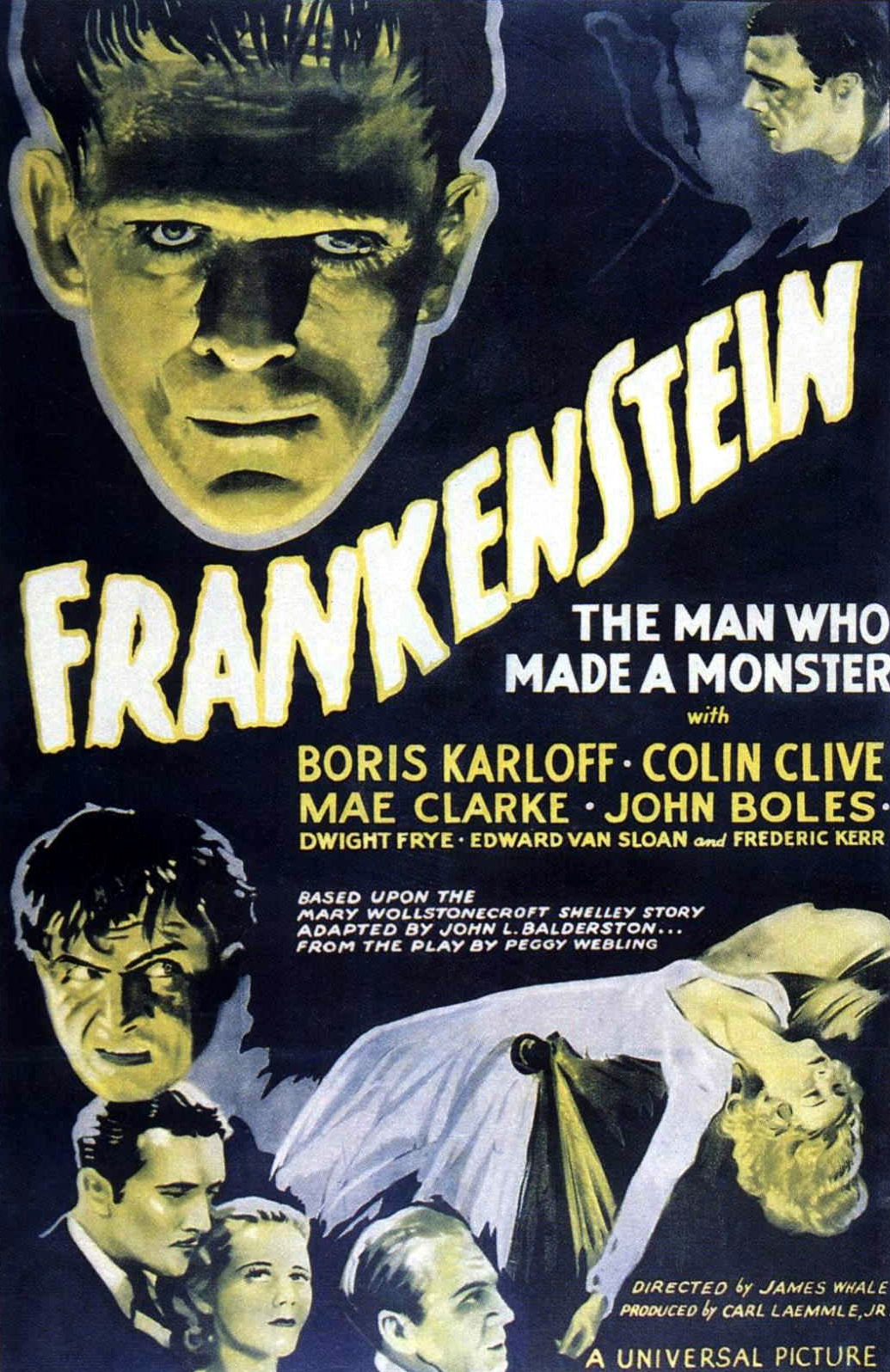
The classic version of Mary Shelley’s tale that left the indelible image of Boris Karloff as the dull monster with bolts in its neck. Director James Whale draws on German Expressionist designs to create one of the landmark classics of the genre
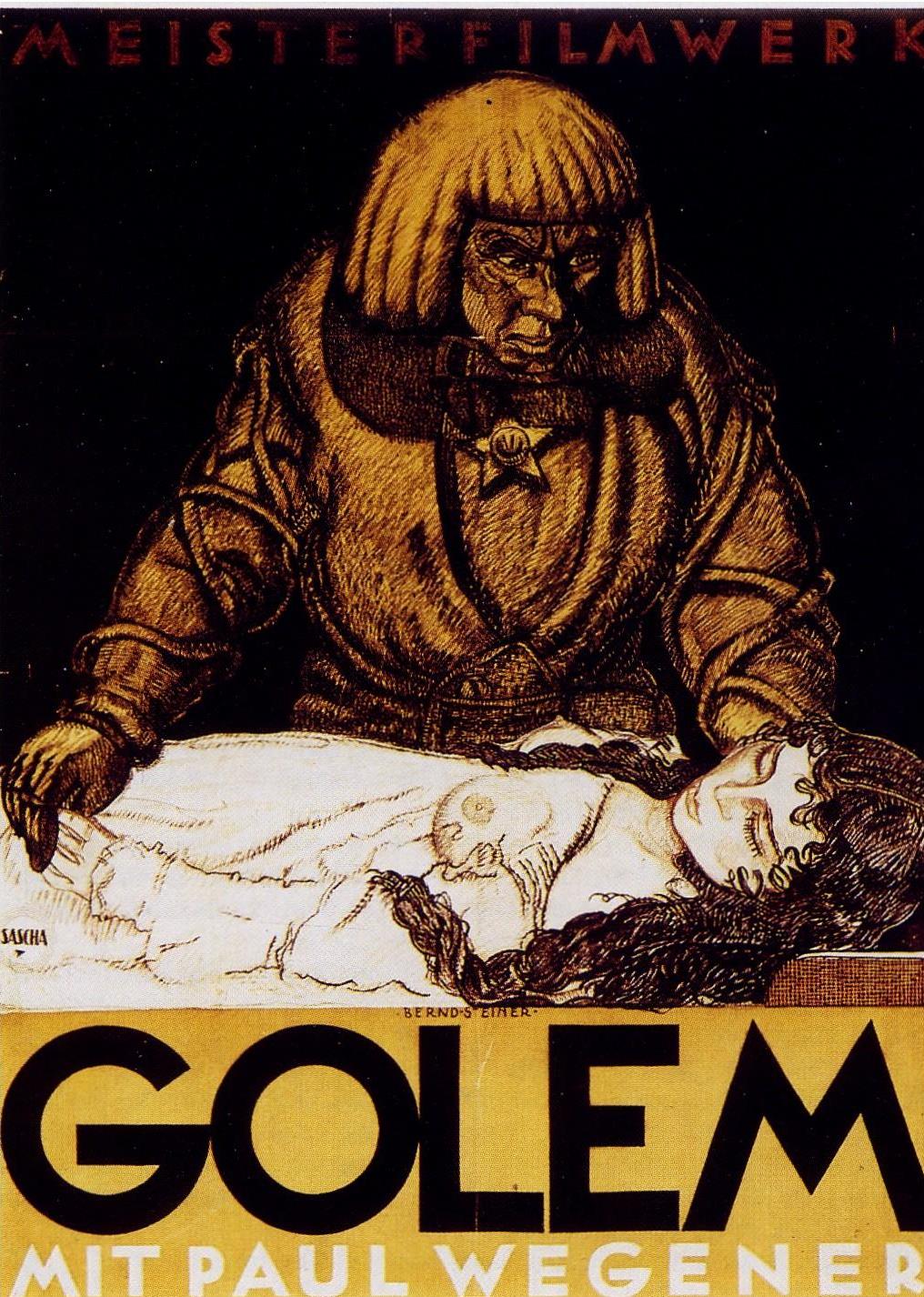
Classic silent film from the German Expressionist period in which a rabbi brings to life a creature made of clay (played by Paul Wegener), which then proceeds to go amok