

Crew
Director/Screenplay – Sabu, Producers – Satake Kazumi & Yoshiki Kumazawa, Photography (b&w + one scene colour) – Daisuke Soma. Production Company – Amuse Soft/Dub.
Cast
Ayaka Komatsu (Shara), Makoto Togashi (Shizuko Teramoto), Toru Tezuka (Dr Teramoto), Riku Onishi (Kenichi Teramoto), Okito Serizawa & Taro Suruga (Workmen)
Plot
A zombie is delivered to the home of Dr Teramoto with instructions about how to handle it, including not to feed it meat, and the inclusion of a pistol should it turn on them. He is certain that the zombie is safe as it has a low viral load and has not yet turned feral. They name the zombie Shara. His wife Shizuko puts Shara to work scrubbing the tiles in the forecourt each day. Shara has a strange influence on the household, with first the workmen on the grounds and then Dr Teramoto making sexual use of her. When their son Kenichi accidentally drowns, Shizuko does the unthinkable and turns to Shara as the only means to save him.
The mid-2000s brought a huge revival of the Zombie Film with films such as Resident Evil (2002), 28 Days Later (2002), Dawn of the Dead (2004) and Shaun of the Dead (2004). As time went on, a need for some novelty turned the zombie to the gonzo zombie film, including a whole series of bizarre title mashups with the most unlikely things. Japan has made its own series of zombie films during this period, although it was ahead of the game before English-language filmmakers in making a direct beeline for the gonzo zombie film with the likes of Stacy (2001), Tokyo Zombie (2005), Attack Girls’ Swim Team vs. the Undead (2007), High School Girl Rika, Zombie Hunter (2008), Big Tits Zombie (2010), Helldriver (2010), Schoolgirl Apocalypse (2011) and Zombie Ass: The Toilet of the Dead (2011). Not to mention the completely unique One Cut of the Dead (2017).
Sabu is a Japanese director who has made a reasonable output of low-budget films, most of which are in the crime and comedy genres. A number of these venture into genre territory with the likes of the fantasy films Chasuka’s Journey (2015) and Happiness (2016), the ghost story Dancing Mary (2019) and My Blood & Bones in a Flowing Galaxy (2020). This Sabu should not be confused with the Indian actor Sabu who found Hollywood fame in the 1940s in films such as The Thief of Bagdad (1940) and Jungle Book (1942).
Sabu shoots Miss Zombie in black-and-white – probably the only zombie film to do so since Night of the Living Dead (1968) – all except for one scene right near the end that briefly switches into colour. It becomes apparent that this is an aesthetic choice – in the modern era, black-and-white is the look that has become associated with sober realism. And that in effect is the emphasis of Miss Zombie.
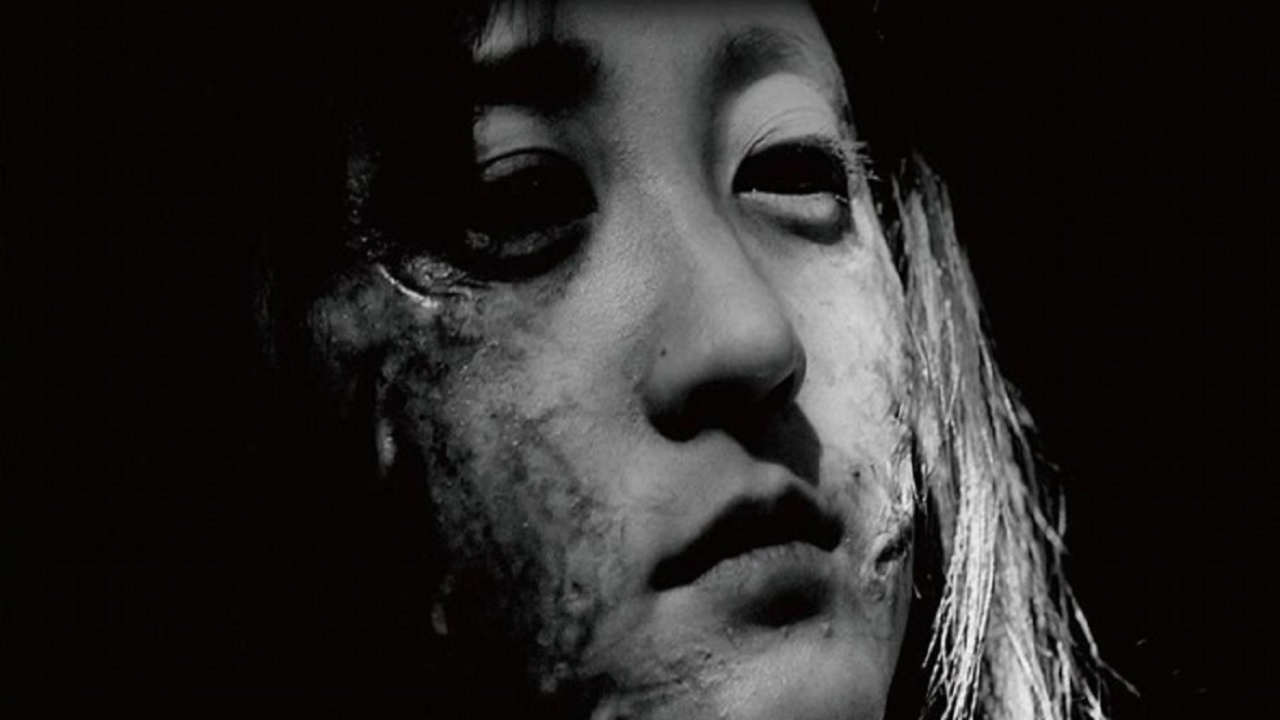
Sabu rejects much of the baggage of the zombie film and imagines a world where zombies have been tamed somewhat. The idea of the zombie as domestic servant was used as a gag at the end of Shaun of the Dead and was spun out as the basis of a full-length film with the Canadian-made Fido (2006). Both of these were comedies; by contrast, Sabu plays the idea of the domesticated zombie completely seriously.
Sabu’s unhurried, kitchen sink realism has undeniable effect. We watch Ayaka Komatsu’s zombie girl as she performs the same monotonous task – scrubbing the same stretch of tiled forecourt – every day. What becomes fascinating is watching her gradual humanism – taking on the idea of using a hose after one of the workmen shows her how; she in her living quarters as she eats the discarded food Makoto Togashi gives her and then places the flowers Makoto gives her in a vase.
Miss Zombie becomes as much a study in Ayaka Komatsu’s gradual humanising as it is in the way those around the house react to her. From young Kenichi’s guileless befriending her to the workmen and later the husband who make use of her sexually. Or her slow shuffle home through the streets as children pelt her with stones and youths stab her shoulder with knives, which she reacts to with blank impassivity. Of course, the savage twists that Sabu then begins to place on the material is when Kenichi is drowned and Makoto turns to Ayaka to save him and Mayoko’s distraught reactions at afterwards seeing that he prefers to regard Ayaka as his mother instead of her. A remarkable little film.
Trailer here