


Crew
Director/Screenplay – Guillermo del Toro, Based on the Novel Frankenstein; or, The Modern Prometheus (1818) by Mary Shelley, Producers – J. Miles Dale, Guillermo del Toro & Scott Stuber, Photography – Dan Laustsen, Music – Alexandre Desplat, Visual Effects Supervisor – Dennis Berardi, Visual Effects – Herne Hill (Supervisor – Avo Burgess), Industrial Light & Magic (Supervisor – Ivan Busquets, Animation Supervisor – Adrian Millington) & Ticket VFX, Model Unit – Magic Camera Company (Supervisor – Jose Granell), Special Effects Supervisors – Geoff Hill, Dominic Tuohy & Andrew Verhoeven, Creature Design – Mike Hill, Prosthetic Makeup Effects – Mike Hill Creations, Animatronics – Visionary Effects, Wolf Puppets – Amazing Ape & Blodeau Canada Taxidermy, Production Design – Tamara Deverell. Production Company – Double Dare You Productions/Demilo Films/Bluegrass 7.
Cast
Oscar Isaac (Victor Frankenstein), Jacob Elordi (The Creature), Mia Goth (Elizabeth Harlander/Claire Frankenstein), Christoph Waltz (Heinrich Harlander), Felix Kammerer (William Frankenstein), Lars Mikkelsen (Captain Anderson), Charles Dance (Leopold Frankenstein), David Bradley (Blind Man), Christian Convery (Young Victor Frankenstein), Nikolaj Lie Kaas (Chief Officer Larsen), Kyle Gatehouse (Young Hunter), Ralph Ineson (Professor Krempe), Peter Millard (Professor Stokefeld), Pater MacNeill (Professor Maurus)
Plot
It is 1857. A Danish ship is trapped in the Arctic icepack. The crew rescue a man out on the ice but then the ship is then attacked a tall man of ferocious strength and near invincibility. He is driven off and shot, believed dead. The first man introduces himself as Victor Frankenstein and tells his story to the captain Anderson. As a child, he grew up with a fascination with medicine taught by his father. He entered med school in Edinburgh but his experiments in reviving corpses had him thrown out. Heinrich Harlander, whose niece Elizabeth was engaged to Frankenstein’s younger brother William, offered funding to set up a laboratory in Austria. There Frankenstein succeeded in building a creature patched together from body parts of corpses taken from the battlefield and brought it to life. However, when it proved unresponsive, he burned it and the laboratory down. The creature now returns and tells the captain its own story of how it survived in the wild, learned to speak and then returned to its creator seeking vengeance for its cursed and hideous existence.
It all began with Frankenstein; or, The Modern Prometheus (1818), written by Mary Shelley when she was still only in her teems. The book was a popular success and was adapted to the stage beginning in 1823. The Frankenstein film has been with us for 125 years now. The first of these was Thomas Edison’s Frankenstein (1910) but the work that popularised the Frankenstein film was Universal’s Frankenstein (1931) starring Boris Karloff as the monster, which led to a series of sequels. UK’s Hammer Films conducted their own successful take beginning with The Curse of Frankenstein (1957), which led to a long-running series of sequels starring Peter Cushing as Frankenstein. Since then there have been numerous remakes of the story, sequels, parodies, comedy takes, sons, daughters and monster team-ups, even erotic Frankenstein films and several films about the writing of the book. (See bottom of the page for other adaptations of the book. For a more detailed listing of all the Frankenstein films see Frankenstein Films).
This is a new version of Frankenstein from Guillermo Del Toro. Del Toro has grown from a director making horror films on the festival circuit with the likes of Cronos (1993) and The Devil’s Backbone (2001), gradually moving over to mainstream success with Blade II (2002) and Hellboy (2004) to gain increasing wider acclaim from the arthouse hit of Pan’s Labyrinth (2006). Del Toro’s The Shape of Water (2017) won him an Academy Award as Best Director and Picture, while Gullermo Del Toro’s Pinocchio (2022) won the award for Best Animated Film. (See bottom of the page for a full list of Guillermo Del Toro’s films).
Most of the adaptors of the Frankenstein story beginning with Frankenstein: The True Story (1974) and especially from the 1990s onwards, have endeavoured to take the story back closer to the way Mary Shelley wrote it. Del Toro does too but with some changes to the original. Mary Shelley had a prologue where Frankenstein is found by a ship in the Arctic and tells his story to the British captain. By contrast, Del Toro has a Danish ship and not only Frankenstein on board but the creature attacking the ship and crew and then telling his story, whereas Shelley had no appearance from the creature in either the pro- or epilogue.
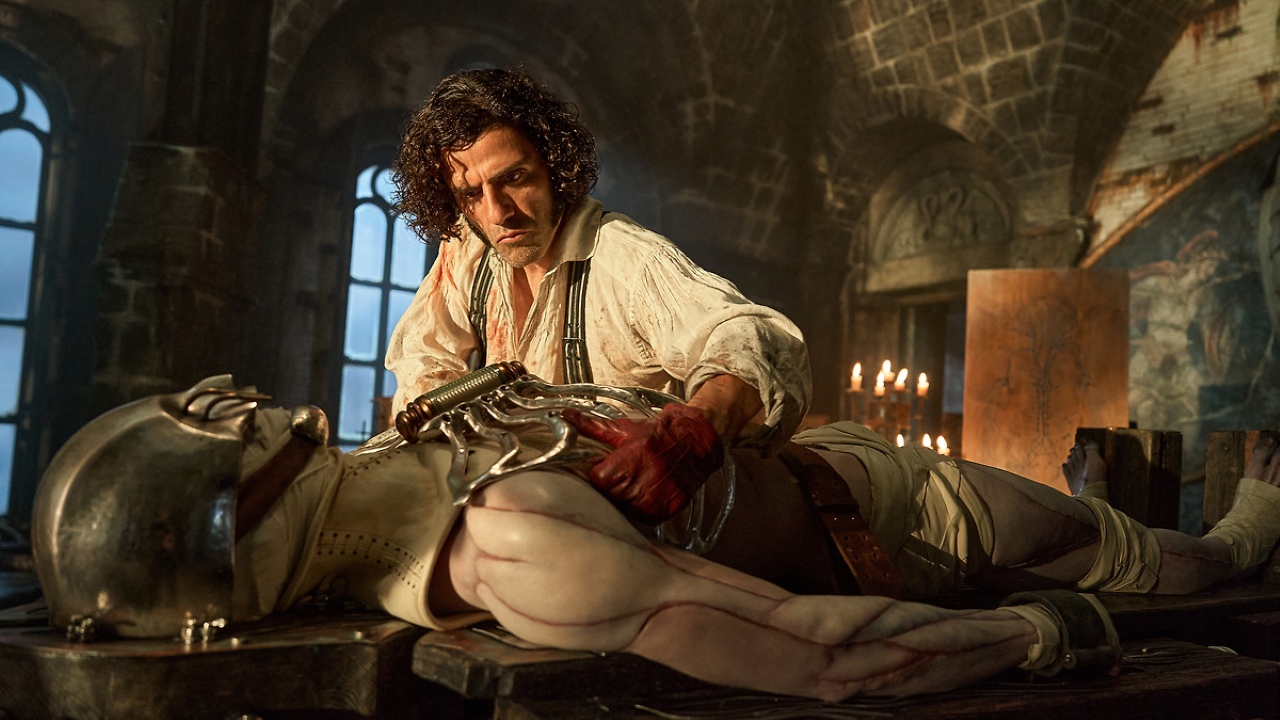
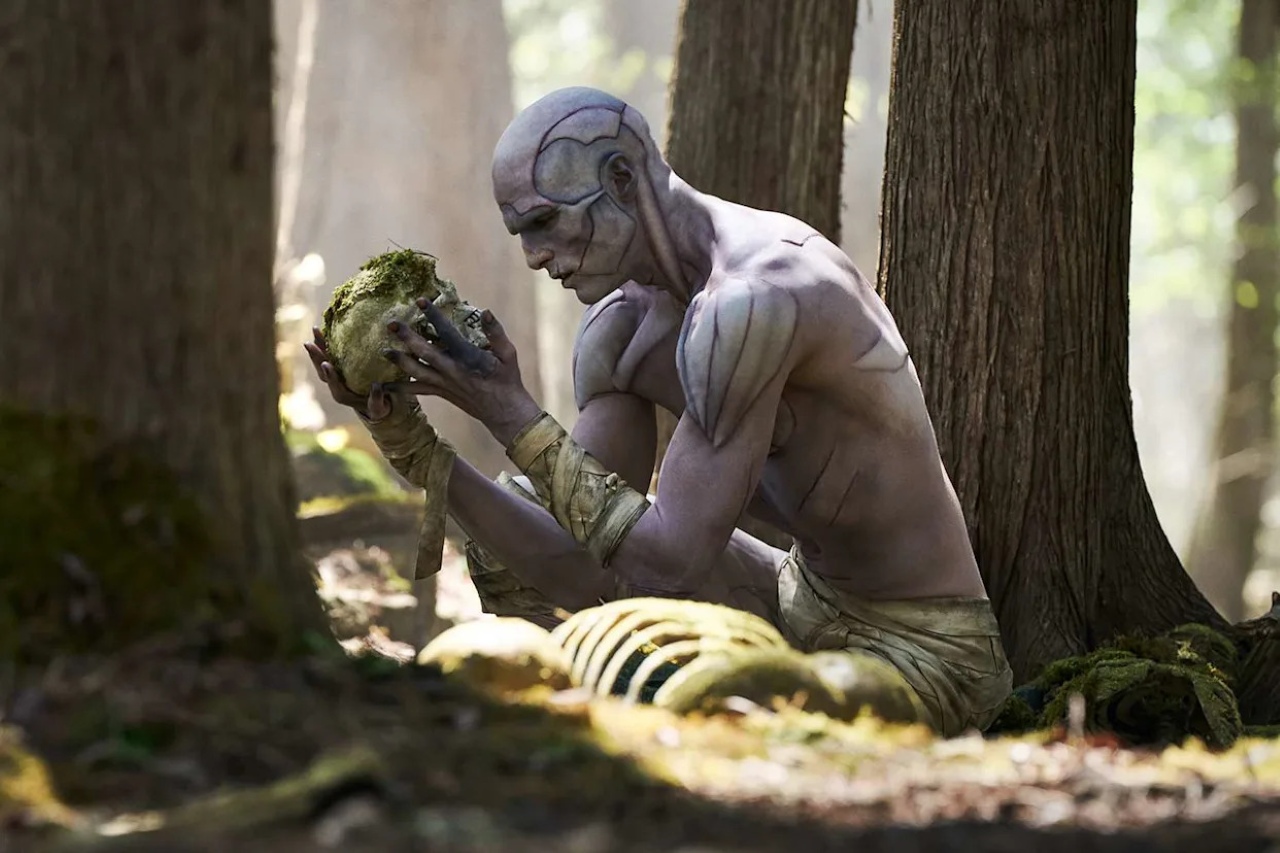
Another difference is that Elizabeth and Frankenstein’s brother William have quite different roles here than they do in the book and all the other film versions. Here Elizabeth is William’s rather than Victor’s fiancée, although Frankenstein displays an attraction to her. In the book, William is Victor’s younger brother and is always portrayed as a child whose only role is to be killed by the creature, whereas here William has a much more active role and has grown up and gone on to have success as a financier. Dropped has been the character of Frankenstein’s assistant Henry Clerval, who was replaced by the hunchback Igor in the Universal films.
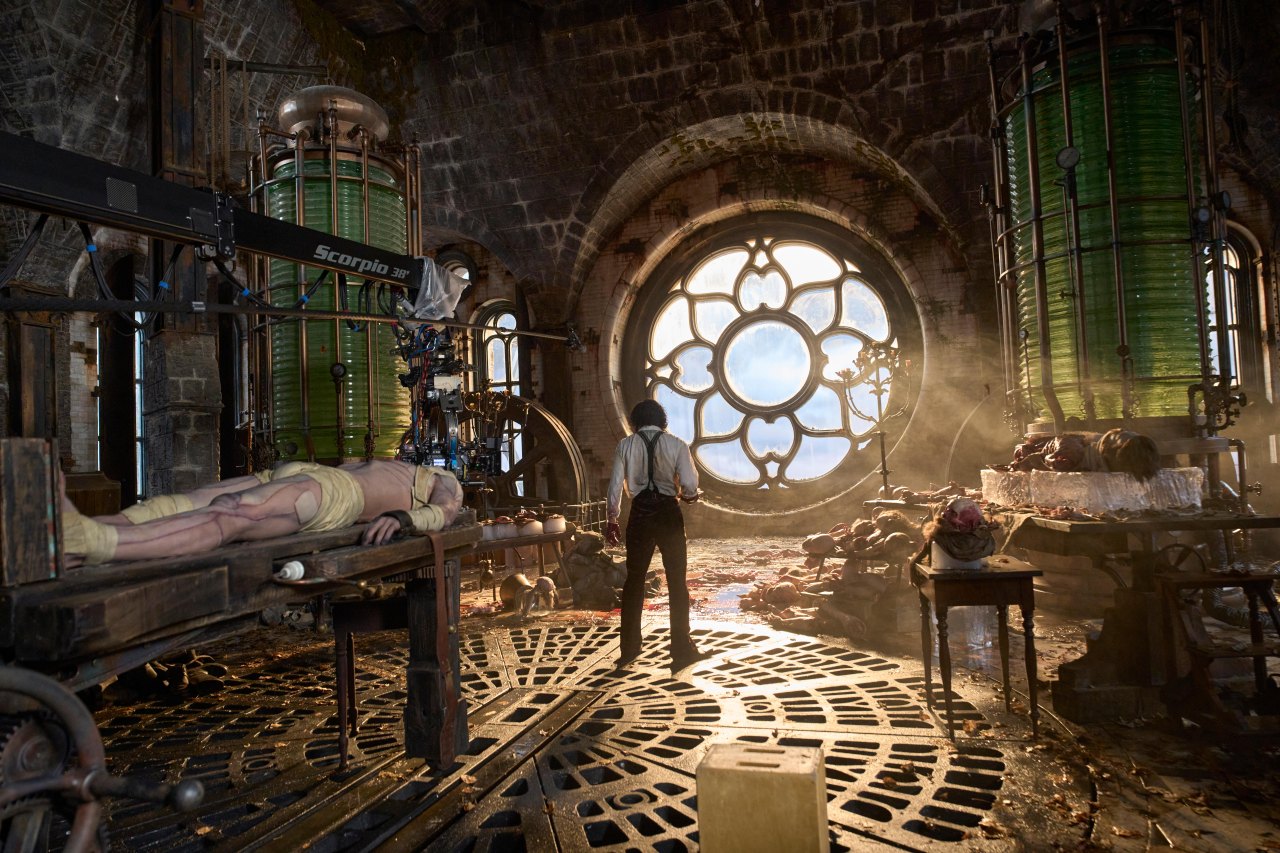
The other noticeable difference over the other film versions is the lack of a creation sequence, which became a highlight of notedly the Universal and Hammer films. We see various machinery assembled in Frankenstein’s laboratory, but Del Toro avoids depicting any harnessing of the lightning storm – the reason being that Shelley actually avoided any explanations in the novel.
Del Toro’s films from the 2010s onwards become increasingly fascinated with the visual look. In particular, Crimson Peak (2015) and Nightmare Alley (2021) become works where Del Toro’s focus is on a synthesis of production design, costuming and cinematography to create something extraordinary. Frankenstein maintains that synthesis to the extent that every shot almost looks like one that you could hang on your walls. The Frankenstein dining room is exquisitely dressed and lit like some classical artwork, while the young Frankenstein sits on a couch beneath a painting, both of which extend the full length of a wall; the library is a work of wonder stretching as far as the eye can see; the young Frankenstein has statues of angels that he prays to in his bedroom. Frankenstein’s first laboratory is the size of a warehouse and filled with bric-a-brac. The main lab has giant-sized roundel windows, steam machinery and giant embossed faces in the wall. Even the blind man’s cottage has an interior that makes it the size of a hall. The funerals come with people buried in biers with ceramic death masks fitted over the top and carried by courtiers in top hats with black flowing trains. The costuming is exquisite – in particular, Mia Goth’s outfits in turquoise or of her as the mother waiting on the steps of the house in veils of flowing red.
Guillermo Del Toro turns the story into something dynamic and exciting. The visuals make it into an extraordinary work where every scene is a feast for the eye. He has an eye for the dramatics and pumps scenes up into something far more dynamic than they were on the page. Not just that but you feel that Del Toro has researched every margin note in the script, has sought to tie the story to something historic or ground the characters in a believability for the era. It is one of the occasions where you can say that he breathes new life into an oft-told story.
Other adaptations of Frankenstein are:- the famous Thomas A. Edison Frankenstein (1910), the lost Life Without Soul (1915) and the lost Italian The Monster of Frankenstein (1920); the classic Universal adaptation Frankenstein (1931) with Colin Clive as the Baron and Boris Karloff as the monster; Hammer’s excellent The Curse of Frankenstein (1957) with Peter Cushing as the Baron and Christopher Lee as the monster, a film that spun out its own series of sequels (see for which); a 1968 Thames tv production with Ian Holm as both the Baron and the monster; Hammer’s unfunny comic remake The Horror of Frankenstein (1970) with Ralph Bates as the Baron and Dave Prowse as the monster; Frankenstein (tv movie, 1973) starring Robert Foxworth as the Baron and Bo Svenson as the monster; the tv mini-series Frankenstein: The True Story (1974), which returned much more to the book, and featured Leonard Whiting as the Baron and Michael Sarrazin as the monster; the Swedish-Irish production Victor Frankenstein (1977) with Leon Vitali as Frankenstein and Per Oscarsson as the monster; the tv movie Frankenstein (1984), with Robert Powell as the Baron and David Warner as the monster; the little-seen tv movie Frankenstein (1986) with Carl Beck as Frankenstein and Chris Sarandon as the monster; David Wickes’s dull tv movie Frankenstein (1992) with Patrick Bergin as the Baron and Randy Quaid as the monster; Kenneth Branagh’s quite faithful, big-budget Mary Shelley’s Frankenstein (1994) with Branagh as the Baron and Robert De Niro as the monster; the tv mini-series Frankenstein (2004) with Alec Newman as Frankenstein and Luke Goss as the monster; Danny Boyle’s stage version of Frankenstein (2011) with Benedict Cumberbatch and Jonny Lee Miller alternating the role of Frankenstein and creation; the low-budget Frankenstein: Day of the Beast (2011) with Adam Stephenson as Frankenstein and Tim Krueger as the monster; and Victor Frankenstein (2015) with James McAvoy as Frankenstein.
Guillermo Del Toro’s other genre films include:- the vampire film Cronos (1993), the intelligent bug film Mimic (1997), the Spanish Civil War ghost story The Devil’s Backbone (2001), the exhilarating vampire action film Blade II (2002), the comic strip Hellboy (2004), the greatly acclaimed, awards-winning fantasy film Pan’s Labyrinth (2006), Hellboy II: The Golden Army (2008), the giant robot film Pacific Rim (2013), the ghost story Crimson Peak (2015) and the amphibian man romance The Shape of Water (2017), which won Del Toro an Academy Award as Best Director, the fake clairvoyant film Nightmare Alley (2021), and as co-director of the stop-motion animated Guillermo Del Toro’s Pinocchio (2022). Del Toro has also produced wrote/produced Don’t Be Afraid of the Dark (2011), Scary Stories to Tell in the Dark (2019), The Witches (2020) and the tv series Guillermo Del Toro’s Cabinet of Curiosities (2022) and co-wrote The Hobbit: An Unexpected Journey (2012), The Hobbit: The Desolation of Smaug (2013) and The Hobbit: The Battle of the Five Armies (2014). Del Toro has also produced other genre works like Chronicles (2002), Hellboy Animated: Sword of Storms (2006), Hellboy Animated: Blood and Iron (2007), The Orphanage (2007), While She Was Out (2008), Julia’s Eyes (2010), Splice (2010), Don’t Be Afraid of the Dark (2011), Kung Fu Panda 2 (2011), Puss in Boots (2011), Rise of the Guardians (2012), Mama (2013), The Book of Life (2014), Kung Fu Panda 3 (2016), Pacific Rim: Uprising (2018) and Antlers (2021), as well as the tv series The Strain (2014-7) based on his novel. Sangre Del Toro (2025) is a documentary about Del Toro.
(Winner Best Film in this site’s Top 10 Films of 2025 list. Winner for Best Director (Guillermo Del Toro), Best Adapted Screenplay and Best Production Design, Nominee for Best Cinematography at this site’s Best of 2025 Awards).
Trailer here