
Crew
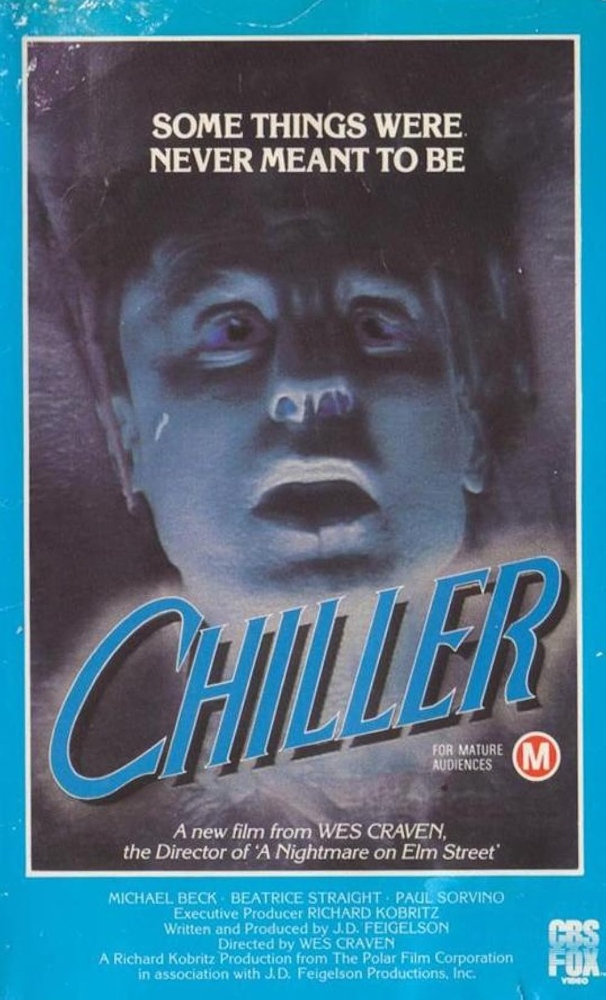
Director – Wes Craven, Teleplay/Producer – J.D. Feigelson, Photography – Frank Thackery, Music – Dana Kaproff, Special Effects Supervisor – Ken Pepiot, Makeup Effects – Stan Winston, Art Direction – Charles Hughes. Production Company – Polar Film/J.D. Feigelson Productions, Inc..
Cast
Michael Beck (Miles Creighton), Beatrice Straight (Marion Creighton), Paul Sorvino (Reverend Felix Penny), Jill Schoelen (Stacey), Dick O’Neill (Clarence Beeson), Laura Johnson (Leigh Kenyon), Alan Fudge (Dr Phil Stricklin), Craig Richard Nelson (Dr Glen Collier), Ned Wertimer (Mr Hanna)
Plot
Miles Creighton’s body has been placed in a commercial cryogenic storage facility by his mother Marion after his death due to liver failure ten years ago. The body now abruptly revives. Miles is taken into surgery and given a liver transplant and gradually comes back to life. He is happily reunited with his mother. Miles takes his position as CEO of the company his father started. However, his behaviour is now cold and he fires the family friend who has been overseeing the company and cancels all of the companies’ charity donations, while making one executive his lover and beating her. The family priest Reverend Penny believes that Miles has returned to life without his soul.
Wes Craven (1939–2015) was one of the key horror directors in 20th Century cinema. Craven gained fame with the raw and savage The Last House on the Left (1972) and The Hills Have Eyes (1977). However, the work he will always be associated with was A Nightmare on Elm Street (1984), a key work of 1980s horror. In the 1990s, Craven revitalized horror again with the wittily meta-fictional Scream (1996) and sequels.
Craven wasn’t always the genius of the groundbreaking horror he is held up to be – or perhaps more so there are times when his output was uneven. A look at his films from the late 1970s to around 1990 shows that for every The Last House on the Left, The Hills Have Eyes or A Nightmare on Elm Street there were flops like Swamp Thing (1982), Deadly Friend (1986) and The Hills Have Eyes Part II (1985). (See bottom of the page for a full listing of Wes Craven’s other genre films).
And then there were Craven’s ventures into television with TV Movies with the likes of Summer of Fear (1978), Invitation to Hell (1984), Chiller and Night Visions (1990), as well as episodes of the revived The Twilight Zone (1985-9). Most of these look rushed and are well below quality and the standard of Craven’s better works. Your only real assumption is that Craven was simply being a jobbing director for hire and it was not until the association with the A Nightmare on Elm Street phenomenon where he became a name that allowed the quality of his work to improve. Certainly, when it comes to Chiller, there is nothing much to see and cite it as a lost Craven classic.
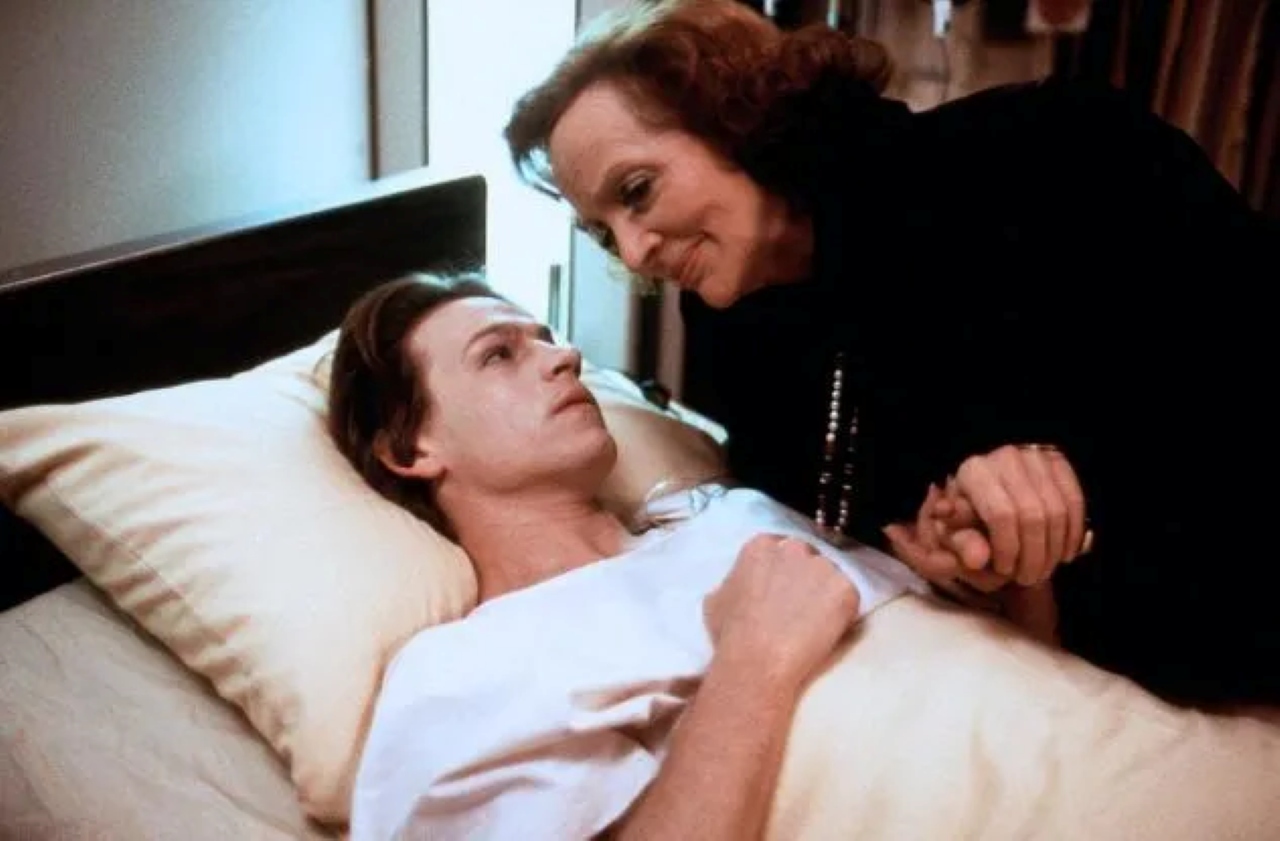
Cryogenics has a long association with genre material, usually in SF cinema – I have an essay on the subject here at Cryogenics and Suspended Animation. Chiller is, as far as I know, the first and only occasion where we have seen cryogenics used in a horror context. All of that said, the film mostly uses cryogenics as a raison d’etre upon which to hang the story. Once Michael Beck is revived, the film has no further interest in the topic (apart from an epilogue that shows other cryogenic capsules awakening). Rather what we have is a horror standard about a man Resurrected from the Dead who returns lacking his soul. In other words, this has more in common with say a work like Pet Semetary (1989) than it does a science-fiction work about cryogenics. Michael Beck’s resurrection is pitched with a wild alarmism – the idea that waking up a frozen person will cause them to come back without their soul and become totally amoral – that is surely to cryogenics what the Frankenstein film is to transplant surgery.
In effect, Chiller becomes a gender-swapped version of the German novel Alraune (1911) about a woman who is born by artificial insemination and as a result grows up without a soul and turns into an evil man-eater. This underwent a string of adaptations mostly during the silent era with the Hungarian Alraune (1918), the German Alraune (1918), Alraune (1928) and one sound version Alraune/Daughter of Evil (1930). Chiller swaps resurrection from the cryo cylinder for artificial insemination but Michael Beck is the same figure, ruthlessly operating his company as CEO, enjoying killing dogs, pressuring a female employee to become his lover and then beating her, and killing those in his way.
As said, Chiller gives all impression that Wes Craven was acting as no more than a director for hire and is lacking in anything of the eerie touches and fascinating ideas he brings to his better works. The plotting is dull and plodding. Characters are introduced and positioned into place and then very predictably become victims to Michael Beck. It is a film that you cannot help but think would have been made much more interesting if it had not been made as a tv movie – scenes like Beck either beating or engaging in a sadomasochistic relationship with Laura Johnson, his peeping in on Jill Schoelen showering or where he catches priest Paul Sorvino’s coat in his car door and drives off dragging him behind are all ones that are left implied. It would have made a far more interesting film if Craven had been freed from tiptoeing the tv standards line and allowed to go for the R-rating.
Wes Craven’s other genre films are:– the brutality and revenge films The Last House on the Left (1972) and The Hills Have Eyes (1977); the suburban witch film Summer of Fear/Stranger in Our House (1978); Deadly Blessing (1981) about murders around a religious cult; the comic-book adaptation Swamp Thing (1982); Invitation to Hell (tv movie, 1984); A Nightmare on Elm Street (1984); The Hills Have Eyes Part II (1985); Deadly Friend (1986) about a teen inventor who revives his girlfriend from the dead; The Serpent and the Rainbow (1988), a strikingly beautiful film about Haitian voodoo; Shocker (1989) a campily incoherent film about an undead executed killer; Night Visions (tv movie, 1990); The People Under the Stairs (1991); Wes Craven’s New Nightmare (1994); the Eddie Murphy vampire comedy Vampire in Brooklyn (1995); the slasher deconstruction trilogy of Scream (1996), Scream 2 (1997) and Scream 3 (2000); the werewolf film Cursed (2005); the dispossessed soul slasher film My Soul to Take (2010); and Scre4m/Scream 4 (2011). Wes Craven has also written the scripts for A Nightmare on Elm Street III: The Dream Warriors (1987), Pulse (2006) and The Hills Have Eyes II (2007), and produced Mind Ripper (1995), Wishmaster (1997), Carnival of Souls (1998), Don’t Look Down (1998), Dracula 2000 (2000), Feast (2006), The Breed (2006), The Hills Have Eyes (2006), The Last House on the Left (2009), The Girl in the Photographs (2015) and the tv series Scream: The Series (2015-9). He also created the tv series The People Next Door (1989) and Nightmare Cafe (1992).
Trailer here
Full film available here