

Crew
Director/Screenplay – Alexandre O. Philippe, Producer – Kerry Deignan Roy, Photography – Robert Muratore, Music – Jon Hegel, Animation – Dizzy Giant (Designer/Animator – Dan Sharkey). Production Company – Dark Sky Films/Exurbia Films/Exhibit A Pictures.
With
Alexandra Heller-Nicholas, Stephen King, Karyn Kusama, Takashi Miike, Patton Oswalt
Alexandre O. Philippe is a director who specialises in Documentaries about genre films and fandom. Philippe has previously made Earthlings: Ugly Bags of Mostly Water (2004) about Star Trek fandom; The People vs George Lucas (2011) about Star Wars fandom; The Life and Times of Paul the Psychic Octopus (2012) about the octopus that has made accurate predictions about the outcome of the World Cup; Doc of the Dead (2014) about the zombie film phenomenon; 78/52 (2017) about the making of Psycho (1960); Memory: The Origins of Alien (2019); Leap of Faith: William Friedkin on The Exorcist (2019); The Taking (2021) about the use of Monument Valley in Westerns; Lynch/Oz (2022) on the peculiar motifs from The Wizard of Oz (1939) that run through David Lynch’s work; and You Can Call Me Bill (2023), an interview with William Shatner; and subsequently Kim Novak’s Vertigo (2025).
Chain Reactions is a documentary about The Texas Chain Saw Massacre (1974). Chain Reactions was made for and released to the US Shudder network on the fiftieth anniversary of the original film. It also comes co-produced by Texas Chain Saw co-writer Kim Henkel.
Philippe is not interested in delving into the making of Texas Chain Saw, which has been covered in detail by other documentaries. Rather he has taken a similar approach that he did with Lynch/Oz and interviewed five people who talk about their memories of Texas Chain Saw, offer analysis and tell about the influence of the film on them. (One of the interviewees Karyn Kusama is a repeat Philippe attendee and also appeared in 78/52 and Lynch/Oz). Similarly, Philippe intersperses the interviews with scenes from the original and makes comparisons – placing almost duplicate shots from films like Days of Heaven (1978), various Australian films and Tobe Hooper’s early film Eggshells (1971), alongside ones from Texas Chain Saw.
The first of the interviewees is actor/comedian Patton Oswalt. Oswalt starts by talking about the influence of watching Nosferatu (1922) at an early age and then of learning about Texas Chain Saw in the pages of Fangoria magazine, which created a fascination with it. (Like all of the interviewees, Oswalt is not someone who saw the film during its original 1974 theatrical release but in subsequent re-release or on VHS). He points to a number of thematic aspects of the film, of how the backwoods family are ones that cannot be reasoned with. He draws analogy around the images of the sun that open the film and the various shots throughout of people looking up at it – it is as though it is driving people crazy and we have stepped over into an apocalyptic world. He talks of his admiration of how director Tobe Hooper in effect takes the film inside a slaughterhouse and doesn’t flinch at what he shows.
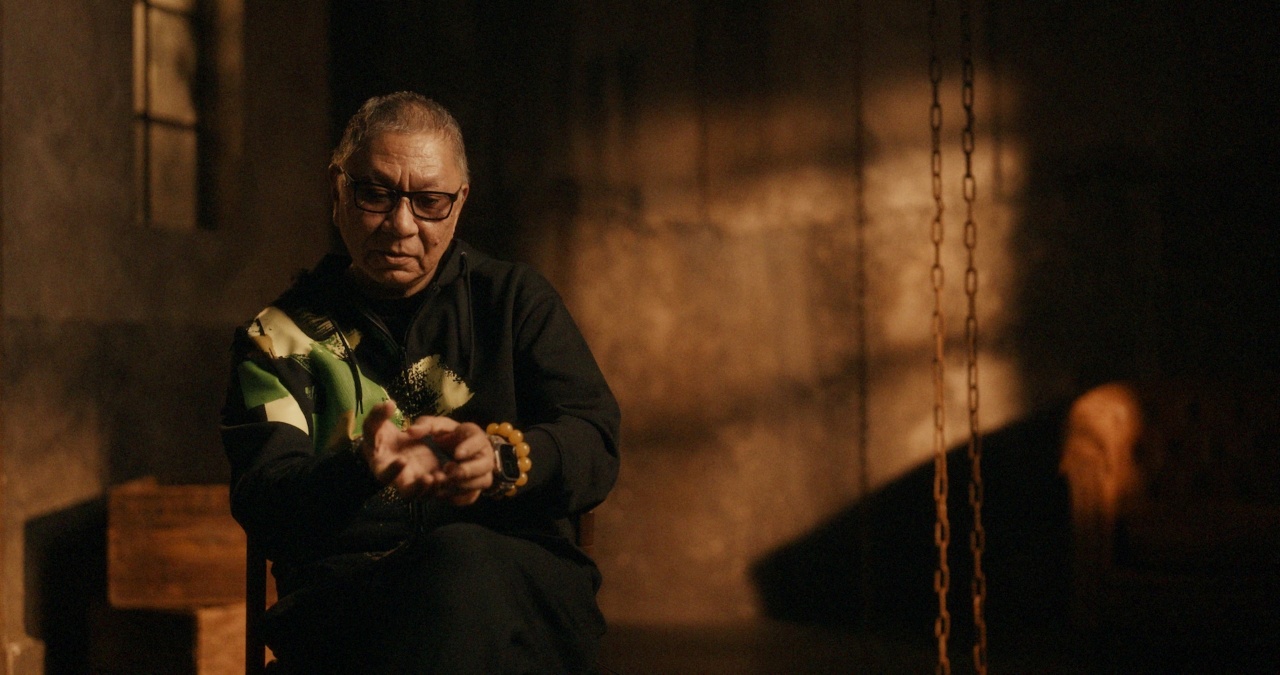
Next up is Takashi Miike, the Japanese director known for out there, boundary-pushing works like Audition (1999), Ichi the Killer (2001) and Visitor Q (2001), among others. Miike recalls how as a boy of fourteen growing up Osaka, he travelled three hours to see Charlie Chaplin’s City Lights (1931) but it was sold out and he ended up watching Texas Chain Saw instead and was changed by it. When Miike launched his own career with films like Audition and Ichi the Killer, he drew from the influence of Texas Chain Saw and says how he was driven by a desire to create a film that conducted a visual equivalent of creating pain in a viewer.
The third interviewee is Alexandra Heller-Nicholas, an Australian film critic and writer. She was born the year that Texas Chain Saw came out and relates much of her fascination with horror to growing up near where The Picnic at Hanging Rock (1975) was filmed and an early prank played on her by her parents. Hers is one of the most fascinating interviews. Texas Chain Saw was banned in Australia until the 1980s and she never saw it until a video screening in the 1990s. The interesting thing that comes out is how she watched the film via multiple generation copies that had made from a bad print had caused the colour in the video copy to degrade into something with the colour yellow predominant – Philippe even screens video footage of that alongside a digitally restored copy and the difference is marked. As a result, she has come to associate the colour yellow with the film. She relates this look to the famous Ash Wednesday (one of the worst Australian bushfires in 1983) and to other similar Australian works such as Wake in Fright (1971), Razorback (1984), Wolf Creek (2005), The Proposition (2006) and even Mad Max: Fury Road (2015) and their depiction of the Australian Outback in similar visual tones.
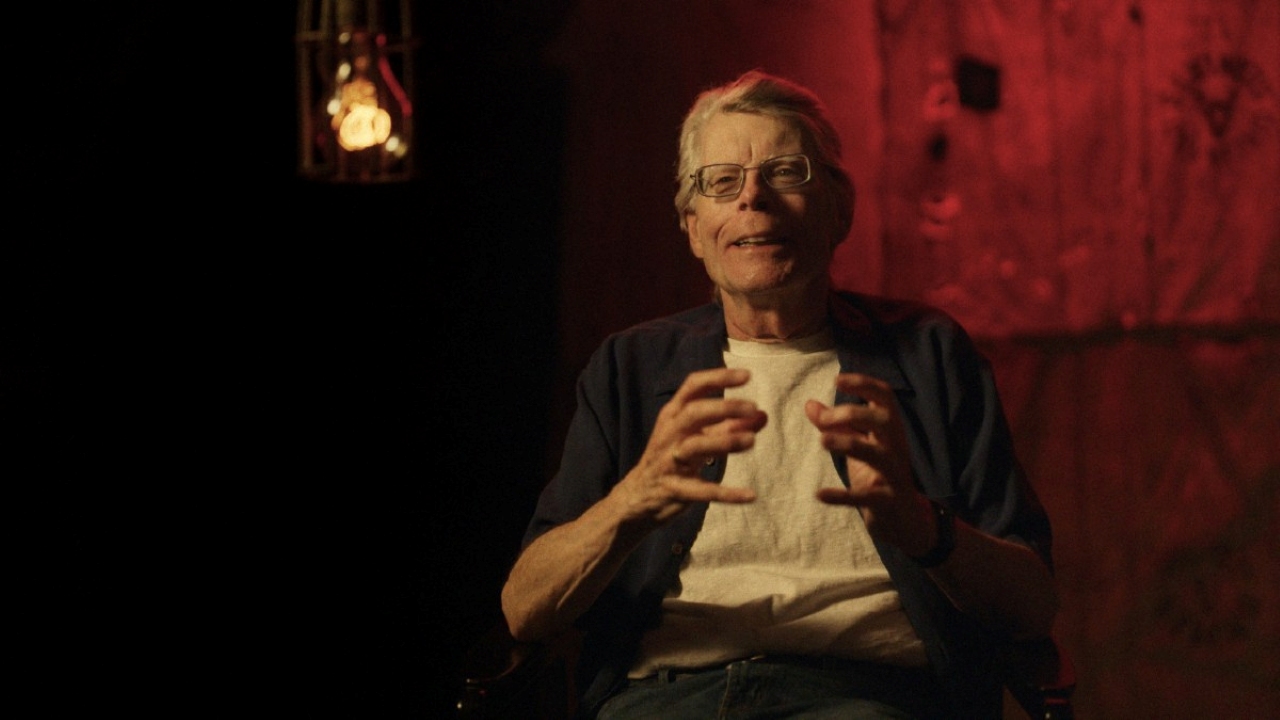
The fourth interviewee is horror writer Stephen King. He talks about his own beginnings as a horror writer and how he was inspired by 1950s films like Earth Vs. the Flying Saucers (1956) with its UFO attack on Washington D.C. and similarly wanting to locate his horror elements in the real world. He felt that Texas Chain Saw achieved this – he points to the graveyard scene early on in the film where the locals are real people, not extras. He praises the same sense of realism in other classic works like Night of the Living Dead (1968), The Evil Dead (1981) and The Blair Witch Project (1999) and how they are works made outside of the influence of studios – he personally hates it when producers hand him notes as they are only censoring the work and making it more homogenised. The best horror is the sense that something can still be dangerous and push across taboo lines.
The final interviewee is director Karyn Kusama, known for films like Aeon Flux (2005), Jennifer’s Body (2009) and The Invitation (2015). She postulates an analysis of Texas Chain Saw that it represents two versions of America – the privileged white kids vs the rural family whose livelihood has collapsed and turned in on themselves. And of the family being what she calls ‘failed patriarchy.’ She sees much of this as prophetic of 2020s America. She, like Patton Oswalt, sees the family as pathetic yet also cannot not feel but feel sympathy for them no matter how horrible they are.
Trailer here