

Crew
Director – Eric Lange, Screenplay – Serge Bromberg & Eric Lange, Photography – (France) Emmanuel Fraise, Music – Leon Rousseau. Production Company – Steamboat Films/Lobster/Arte.
With
Leonard Maltin (Narrator). With:- Costa-Gavras, Michel Gondry, Laurent Mannoni, Beatrice de Pastre, Randy Haberkamp, Heather Linville
Georges Melies was one of the founding fathers of cinema. Born in Montreuil in 1861, died 1938, Melies discovered film not long after cinema’s founding fathers the Lumiere Brothers did. Between 1896 and 1913, Melies made a massive body of short films – the IMDB lists 532 of these. The most famous work he is associated with it the early science-fiction film A Trip to the Moon (1902).
There have been documentaries about Melies before with The Magic of Melies (2002) and The Extraordinary Voyage (2011), even a dramatisation of the later years of his life with Martin Scorsese’s Hugo (2011). Of these, I was impressed with The Melies Mystery the most of all for the depth in which it delved into Melies’s life. It is a very well researched Documentary that goes all the way back to his childhood and upbringing, showing the forces and interests that shaped him, before his decision to abandon the family shoemaking business to buy the Robert-Houdin magic theatre in 1888. We even get audio recordings of not only Melies speaking but also one of the Lumiere Brothers, the creators of the very first motion picture with The Arrival of a Train (1895).
Melies discovered filmmaking through his friendship with the Lumiere Brothers and quickly built his own camera (although was not successful in patenting it) and began to make films. Some of these we see – simple slice of life pieces. It was not until Melies had a reel jam in his camera and in playing it back saw a carriage seem to turn into a hearse that he discovered trick effects. These quickly became the opportunity for Melies the stage magician to export his illusions onto short films, in so doing ending up creating the rudiments of most of the forms of effects in use today.
The Melies Mystery takes us through Melies’s heyday, his construction of a glass studio in his garden at Montreuil, through to his decline as films started to become more realist in tone and move away from his trick effects. There were also problems with distribution he experienced – in the very early days, films were shown in tents rather than theatres and sold as showground attractions with barkers hustling people inside. Melies was an independent who financed his own films and was unable to compete as distribution chains began to form.
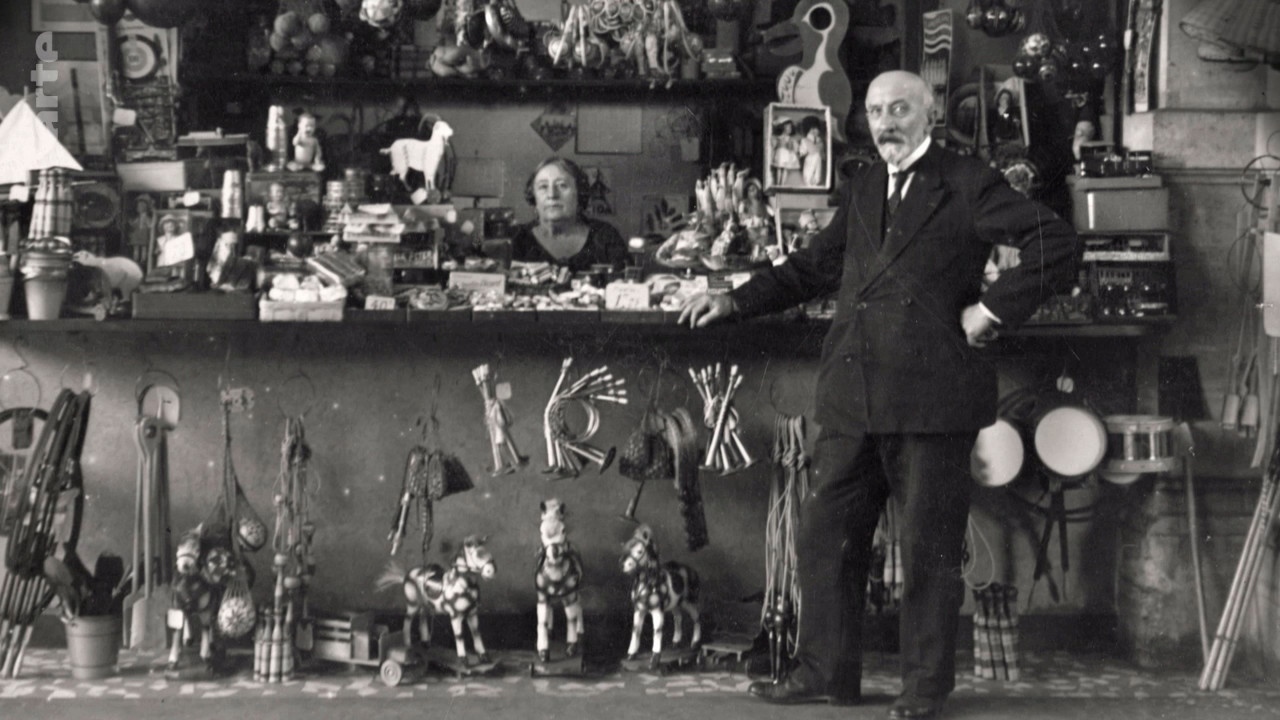
For me and a film like Hugo, it was a mystery why Melies burned the negatives of all his films, as opposed to the less interesting mystery the film’s title takes up about how copies of them ended up in the US Library of Congress vaults. The film gives an answer to the former mystery – that Melies went into bankruptcy, was forced to close his studio and had nowhere to store the negatives and so burned them in a fit of pique – what is referred to as an “act of creative suicide” by one of the interviewees.
For many years there were only a surviving handful of Melies films in circulation – as the film notes, when it came to the Melies centenary in 1961, there were only prints of sixty of his 530 films available. Extensive searches of vaults and libraries over the years turned up a good many more – by the early 2000s, this had expanded to 200, but more than half of his entire filmography was still missing.
The story of how a treasure trove of Melies films was uncovered is a fascinating story in itself. Enter the previously unknown figure of Meiles’s brother Gaston. Melies had sent Gaston to the US to oversee distribution of his films there, only for Thomas Edison to shut them out of his newly formed distribution chain Motion Picture Patents Company because the films were not US-made. Gaston countered this by trying to shoot some films of his own in America adopting the styles that were becoming popular. These were unsuccessful and so Gaston gave up and toured the South Pacific for several years shooting travelogues, making more than eighty films before his death in 1915.
When he departed for the South Seas, Gaston had placed the negatives of the Melies films in a friend’s basement. When these were not claimed with Gaston’s death, the friend sold them. These eventually ended up in the hands of Leon Schlesinger, producer of the Looney Tunes films. Melies attempted to get these back for many years but was unsuccessful. With Schlesinger’s death in 1949, these were handed over to the US Library of Congress where they remained forgotten until a chance rediscovery in 2016. An extensive restoration process of the badly degraded prints has begun and is ongoing at the time The Melies Mystery was released. Already it has brought to life unseen, incomplete and pristine versions of Melies films, which can only be a vast boon to cinema history.
The partnership of Serge Bromberg and Eric Lange had made the previous Melies documentary The Extraordinary Voyage, as well as other documentaries such as The Birth of the Tramp (2013) about Charlie Chaplin, Sydney, The Other Chaplin (2017) and The Invention of Cinema: Cinema Finds Its Voice (2021) about the advent of sound cinema.
Full film available here