


Crew
Director – Yim Phil-sung, Screenplay – Kim Min-sook & Yim Phil-sung, Story – Kim Min-sook, Producers – Choi Jae-won & Seo Woo-sik, Photography – Kim Jee-yong, Production Design – Ryu Seong-hee. Production Company – CJ Entertainment/Barunson Film Division.
Cast
Jeong-myeong Cheon (Lee Eun-soo), Eun Won-jae (Kim Man-bok), Shim Eun-kyung (Kim Young-hee), Ji-hee Jin (Kim Jung Soon), Hee-soon Park (Deacon Byun Ji-wan), Lydia Park (Kyeong-suk), Kyeong-ik Kim (Father), Jang Young-nam (Mother)
Plot
Lee Eun-soo is driving home to his pregnant girlfriend who is close to giving birth when his car skids and crashes on the road. After he comes around, a girl Kim Young-he guides him to a strange house in the middle of the forest where she lives with her parents and two siblings. There is no phone and Eun-soo is forced to spend the night. However, when he tries to leave in the morning he cannot find his way out of the forest. Everyone in the house tells him it is not possible to do so. He returns from one attempt to leave and finds the parents gone, leaving a note telling him to look after the children. He settles in, later being joined by a deacon and his mistress. Eun-soo soon finds there is something strange about the children and that they have an ability to cause what they wish to become manifest.
The story of Hansel and Gretel was written down and published by the Brothers Grimm in 1812. Most people are probably familiar with the story of how two children are abandoned in the woods and come across a house made of gingerbread where they are welcomed in by a witch before discovering that she intends to cook them. There have been a number of film versions of the story – two West German versions made in 1954, Hansel and Gretel: An Opera Fantasy (1954), Cannon Films’ Hansel and Gretel (1987), Hansel and Gretel (2002), Witchslayer Gretl (2012), The Asylum’s horror take Hansel & Gretel (2013), Hansel and Gretel Get Baked (2013), Hansel and Gretel: Warriors of Witchcraft (2013), Hansel & Gretel: Witch Hunters (2013) and Osgood Perkins’ remarkable adult Gretel & Hansel (2020). None of these were as astonishing as Matthew Bright’s amazing modernisation Freeway II: Confessions of a Trickbaby (1999). Also worth checking out is Francois Ozon’s modernised Criminal Lovers (1999), which reinterprets it as a gay love story, and Alex van Warmerdam’s modernisation Grimm (2006).
What should be said is that, despite the title, this South Korean film is not an adaptation of Hansel and Gretel. The fairytale is about two children lost in the woods who are ensnared and enslaved by a witch. By contrast, this is a film about an adult man (and other adults) who become lost in the woods where they are trapped at a house by malevolent children and can never leave. The fairytale does feature in the film as a children’s book and is seen as some allegory, but beyond the basic set-up of people trapped at a house in the woods, that is as far as the film goes as an adaptation.
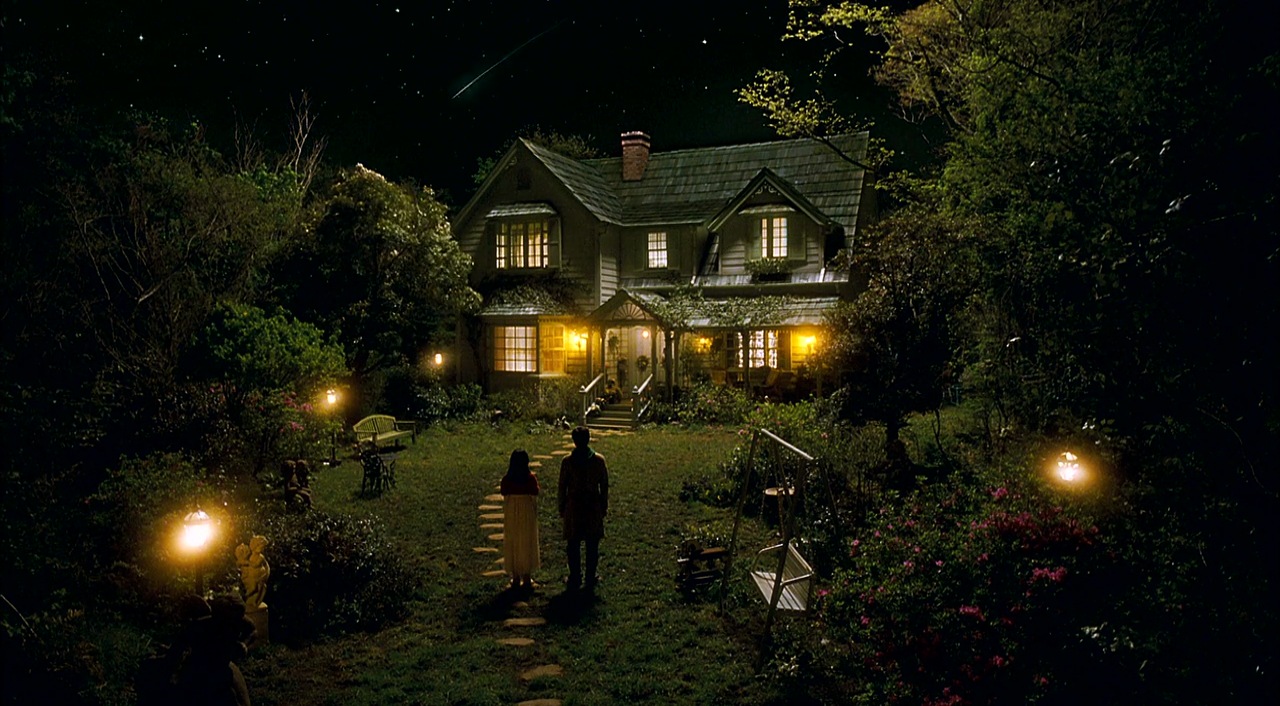
The film has a bizarrely sinister set-up from the child-like over-ornamented house with toys, dolls and jewellery everywhere where things seem off about the children and parents without it being clear what. There is the suggestion that the meat they are eating might be human flesh. There is the undeniably chill moment where Jeong-myeong Cheon is telling the girls a fairytale, which morphs into his own story, and Eun Won-jae finishes it for him “And he fell in love with the fairies. And they lived happily ever after” where Cheon asks “what if they are bad fairies?” which abruptly turns into threats about removing his limbs.
On the other hand, the film is very confusing when it comes to its explanation. The backstory and flashbacks to the actual parents and Santa Claus, something to do with the Hansel and Gretel book and the mystery door in the middle of the forest are all puzzling elements where nothing is clear at all. Not to mention where Jeong-myeong Cheon discovers the children’s birth certificates and finds that they were born in the 1960s, leaving you wondering what agency is keeping them preserved as children.
Trailer here