

Crew
Director/Screenplay – Joko Anwar, Producer – Gope T. Samtani, Photography – Ical Tan Jung, Music – Bemby Gusti, Tony Merle & Aghi Narottama, Makeup Effects – Darwyn Tse, Art Direction – Allan Sebastian. Production Company – Rapi Films/CJ Entertainment.
Cast
Tara Basro (Rini Suwono), Endy Arfian (Tony Suwono), Nasar Anuz (Bondi Suwono), M. Adhiyat (Ian Suwono), Bront Palare (Bahri Suwono), Arswendy Bening Swara (Ustad), Deimas Aditya (Hendra), Egi Fedly (Budiman Syailendra), Ayu Laksmi (Mawarni Suwono)
Plot
Bahri Suwono and his wife Mawarni live in their house in the countryside with their four children. They are struggling financially because Mawarni is ill. Marwani then dies. Bahri is forced to leave to take work to stop them losing the house. Left behind, the children experience various ghostly phenomena. The daughter Rini comes to believe that Mawarni went to local devil worshippers who were able to perform rituals that gave her the child she wanted. However, the price of this is that the shepherds have now risen from the graveyard to claim the children.
The Indonesian horror film Satan’s Slave (1980) was a reasonable hit in its day and has even been called a cult film. This is a remake – although it rehashes the same plot as the original, it poses as being a prequel. Neither of these films should be confused with the British horror film Satan’s Slave (1976) from Norman J. Warren.
Satan’s Slave 2017 was quite a hit and is listed as the highest grossing Indonesian film of all time, so I determined to find what the sensation was about. The remake was made by Joko Anwar who emerged to some success with the romantic comedy Joni’s Promise (2005). Anwar has made other horror films such as Dead Time: Kala (2007), The Forbidden Door (2009), Impetigore (2019) and Grave Torture (2024), as well as the Indonesian superhero film Gundala (2019).
There is nothing particularly original about any of the material. It cycles through familiar horror tropes and jumbles a number of them together – the devil worship cult coming for a destined sacrifice; hauntings with the apparent ghost of the departed mother (Ayu Laksmi) in the house and/or her phantom wheelchair – shades of The Changeling (1980); the dead from the neighbouring cemetery risen from the grave (and for some reason holding umbrellas) as they circle the house – shades of Night of the Living Dead (1968).
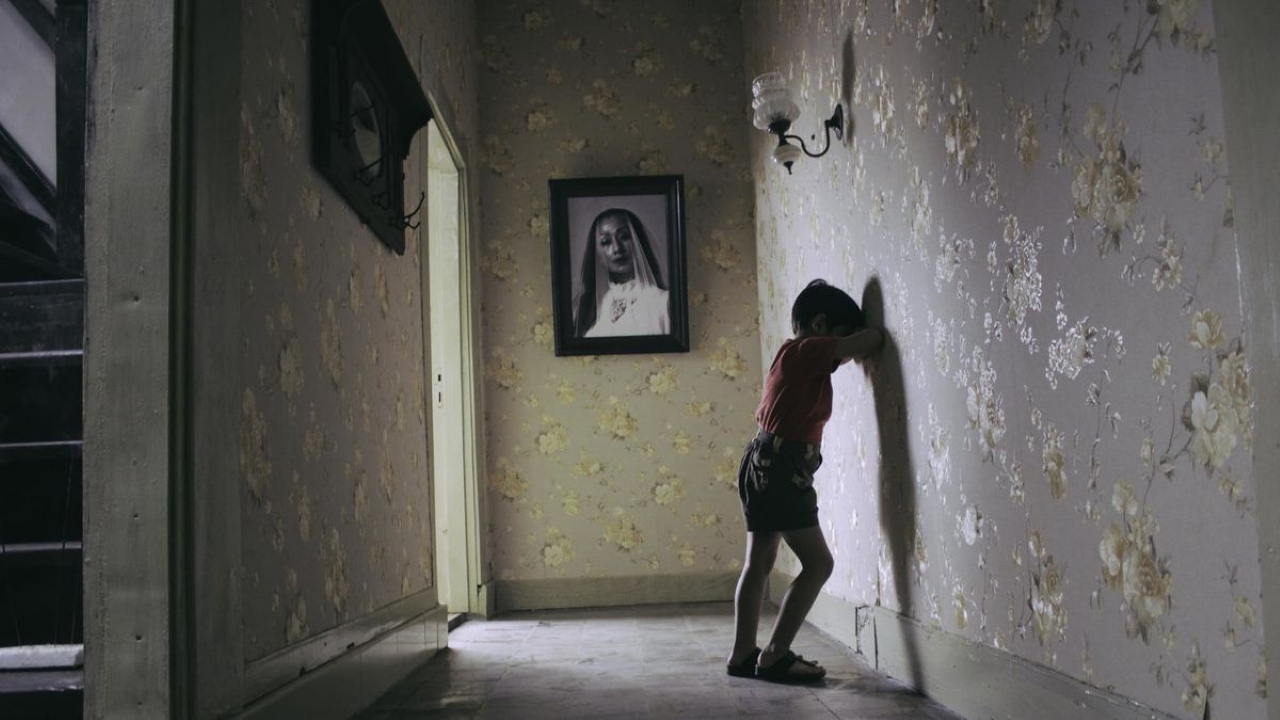
Joko Anwar keeps his lighting scheme subdued and neutral – the film comes in desaturated tones. Amid this, he produces a number of quite reasonable jumps. There is one scene where Tara Basro enters the mother’s room to see her standing facing the window but then turns around to see the mother is in bed, before this is revealed to be a dream and Tara enters the room for real and everything repeats itself. Or where Endy Arfian enters the dead mother’s room to find her bell ringing all by itself in mid-air. Anwar gets one great boo jump – one undoubtedly inspired by the classic scene in The Exorcist III (1990) – where the boys toss a sheet over the portrait of the dead mother at the end of the hallway only for this to move and come after them like a ghost.
All of this is effective in moments, although on the whole Satan’s Slave is a little quiet when you are used to diet of Western horror sensibilities. One more interesting thing is seeing the traditional elements translated to another country – in this case, among Indonesian Islamic religion. At one point, there is the concerningly traditional comment made that “Houses in which the inhabitants don’t pray will easily be inhabited by Satan.”
Satan’s Slave 2: Communion (2022) was a sequel.
Trailer here