


Crew
Director – Francis Lawrence, Screenplay – J.T. Mollner, Based on the Novel The Long Walk (1979) by Richard Bachman [Stephen King], Producers – Cameron MacConomy, Francis Lawrence, Roy Lee & Stephen Schneider, Photography – Jo Willems, Music – Jeremiah Fraites, Visual Effects Supervisor – Greg Kegel, Visual Effects – Distillery VFX, Special Effects Supervisor – Davin MacRae, Production Design – Nicolas LePage. Production Company – Vertigo Entertainment/About: Blank.
Cast
Cooper Hoffman (Raymond Garraty #47), David Jonsson (Peter McVries #23), Garett Wareing (Stebbins #38), Charlie Plummer (Gary Barkovitch #5), Joshua Odjick (Collie Parker #48), Tut Nyuot (Arthur Baker #6), Ben Wang (Hank Olson #46), Mark Hamill (The Major), Judy Greer (Ginnie Garraty), Jordan Gonzalez (Richard Harkness #49), Roman Griffin Davis (Curly #7), Josh Hamilton (William Garraty), Damon Wrightly (Rank #19)
Plot
In the future, the USA has economically collapsed. Young men find hope in the annual event of The Long Walk presided over by The Major. Contestants must walk for hundreds of miles without stopping for rest or sleep. Any contestant that stops, slows beneath three miles-per-hour or attempts to leave the course will be shot by soldiers that are closely following behind. The winner will have their wish granted. Raymond Garraty is one of the fifty contestants selected by lottery. He enters the race and bonds with various of the other youths competing. The race soon becomes harrowing as physical and mental exhaustion or injury claims their numbers. Through it all, Raymond and his newfound friend Peter McVries try to keep each other going.
The Long Walk (1979) is an early Stephen King novel. King had started writing it back in the 1960s (some have read it as an allegory for the Vietnam War – young men conscripted by a harsh military system and expected to die). It became the sixth published of King’s novels, although went out under the Richard Bachman pseudonym, the second of King’s five Bachman books. Various film versions have been attempted since the 1980s by the likes of George A. Romero and Frank Darabont.
This version comes from Francis Lawrence who came from a background in music video and made his directorial debut with the Keanu Reeves Constantine (2005), followed by I Am Legend (2007) and the non-genre circus film Water for Elephants (2011). He next took over The Hunger Games franchise for all of the sequels The Hunger Games: Catching Fire (2013), The Hunger Games: Mockingjay Part 1 (2014) and The Hunger Games: Mockingjay Part 2 (2015) and the prequel The Hunger Games: The Ballad of Songbirds & Snakes (2023). In between these, Lawrence made Red Sparrow (2018) and Slumberland (2022).
The idea of Death Games has been a popular one on films with the likes of The Tenth Victim (1965), Punishment Park (1971), The Prize of Peril (1983), Battle Royale (2000) and Series 7: The Contenders (2001), among others. Indeed, King had previously ventured into Death Games themes with another of his Bachman books The Running Man (1982) – filmed as The Running Man (1987) and The Running Man (2025). And of course Francis Lawrence took up the theme in the various Hunger Games sequels. The basic premise of The Long Walk had previously been lifted by the modest The Human Race (2013) where a group of people are abducted by aliens and forced to compete in a race where their heads will explode if they stop. (I have an essay about the subject here at Films About Human Bloodsports and Death Games).
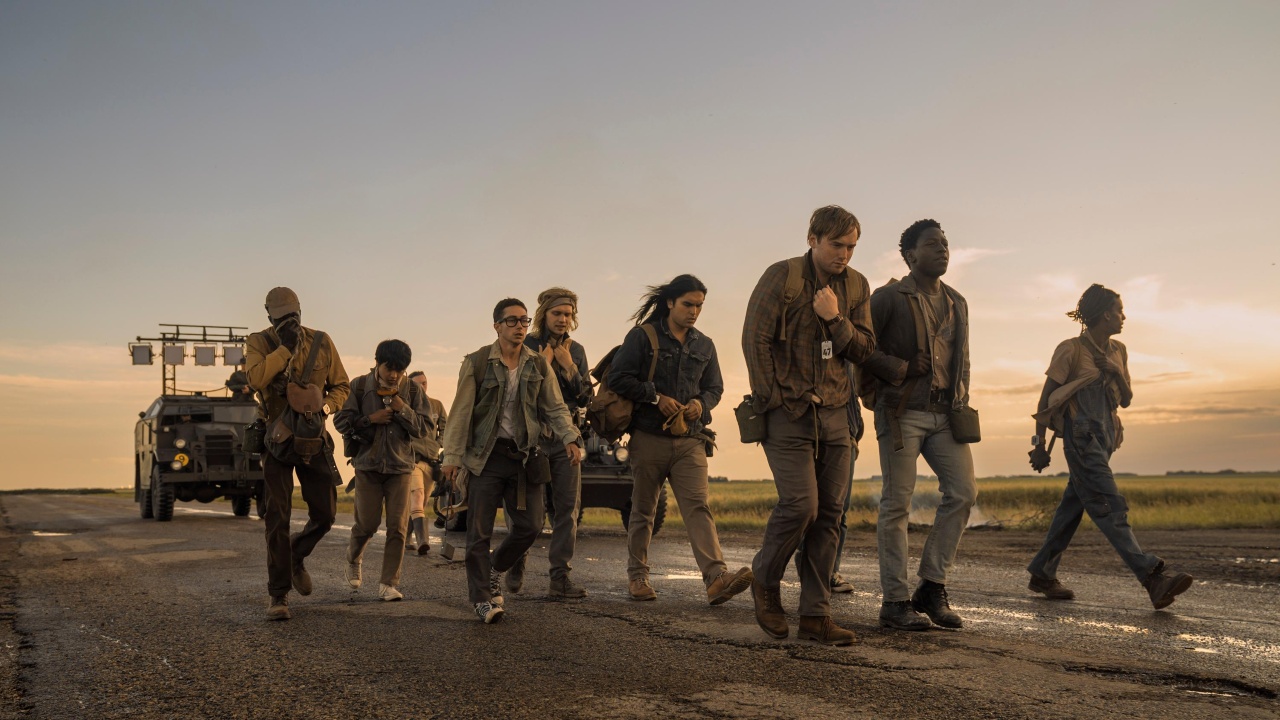
There have been minor changes made to the film over the book. The number of contestants is reduced from a hundred to fifty, while the speed for the race is cranked down from 4 mph to 3 mph. The most noticeable change is when it comes to the ending where who wins and the prize they claim has been changed. The future is sketched out in minimalist terms, not that much more is needed.
Certainly, there are some elements that strain plausibility. If The Long Walk is such a big event, why do we see no tv cameras covering the event? There would surely be camera crews following all along the route and a lot more spectators than there are. The other things are some of the physical symptoms that the contestants would be experiencing. Cooper Hoffman’s shoes wear out and he keeps on walking in bare feet for another hundred miles, by which times his feet would be a bloody pulp. (Nobody throughout ever seems to get blisters either). I have also covered before in films like Awake (2021) the lack of believable portrayal on screen of people who have stayed awake for days on end where they would be experiencing hallucinations, lack of mental coherence, impaired coordination, mood changes and bags under the eyes. At most the cast here seem to experience physical exhaustion and the occasional character who zones out.
I have mixed feelings about Francis Lawrence as a director. Constantine, I Am Legend and Slumberland are all film adaptation that treat their source works atrociously. On the other hand, some of his Hunger Games sequels emerged with more of a political edge than I was expecting when I went in. The question is which way The Long Walk would go. The answer surprisingly ends up being far more towards the latter. It would appear that when Lawrence isn’t being distracted by the business of making a big-budget film – almost the entire film here takes place out of doors on dreary back country roads – and has more of a political investment in the material he can do quite a bit better than he usually does.
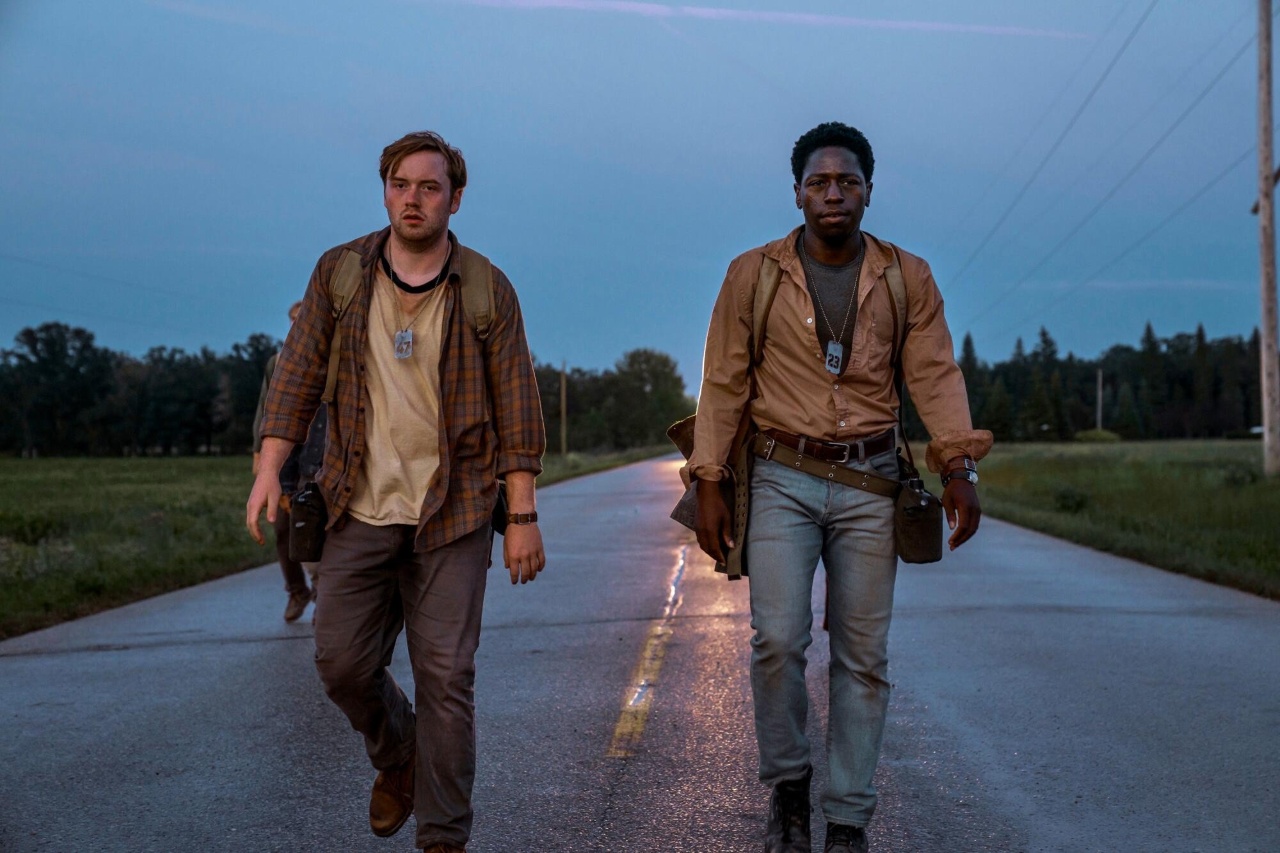
The Long Walk has a soberly serious tone. The future is not bleak grim but where the washed out desaturated look speaks all. It is a film that comes with a great set-up but is also one where the set-up is in effect the plot. The rest is just characters walking and talking. This does provide some dramatic limitations to the story. Nevertheless, this has a cumulative effect as we start to see the physical wear on the various contestants and the film starts to build its slow effect.
It is only at the ending, which comes as frankly unbelievable, that the film falters – where [PLOT SPOILERS] David Jonsson enacts Cooper Hoffman’s wish for a carbine and turns it on Mark Hamill’s The Major. It, first, seems a stretch to accept that the entire system hangs on only one person, and, secondly, that there would not be instant reprisals such as Jonsson immediately being shot down by the other surrounding guards rather than allowed to just walk off.
Other Stephen King genre adaptations include:- Carrie (1976), Salem’s Lot (1979), The Shining (1980), Christine (1983), Cujo (1983), The Dead Zone (1983), Children of the Corn (1984), Firestarter (1984), Cat’s Eye (1985), Silver Bullet (1985), The Running Man (1987), Pet Sematary (1989), Graveyard Shift (1990), It (tv mini-series, 1990), Misery (1990), a segment of Tales from the Darkside: The Movie (1990), Sometimes They Come Back (1991), The Lawnmower Man (1992), The Dark Half (1993), Needful Things (1993), The Tommyknockers (tv mini-series, 1993), The Stand (tv mini-series, 1994), The Langoliers (tv mini-series, 1995), The Mangler (1995), Thinner (1996), The Night Flier (1997), Quicksilver Highway (1997), The Shining (tv mini-series, 1997), Trucks (1997), Apt Pupil (1998), The Green Mile (1999), The Dead Zone (tv series, 2001-2), Hearts in Atlantis (2001), Carrie (tv mini-series, 2002), Dreamcatcher (2003), Riding the Bullet (2004), ‘Salem’s Lot (tv mini-series, 2004), Secret Window (2004), Desperation (tv mini-series, 2006), Nightmares & Dreamscapes: From the Stories of Stephen King (tv mini-series, 2006), 1408 (2007), The Mist (2007), Children of the Corn (2009), Everything’s Eventual (2009), the tv series Haven (2010-5), Bag of Bones (tv mini-series, 2011), Carrie (2013), Under the Dome (tv series, 2013-5), Big Driver (2014), A Good Marriage (2014), Mercy (2014), Cell (2016), 11.22.63 (tv mini-series, 2016), The Dark Tower (2017), Gerald’s Game (2017), It (2017), The Mist (tv series, 2017), Mr. Mercedes (tv series, 2017-9), 1922 (2017), Castle Rock (tv series, 2018-9), Doctor Sleep (2019), In the Tall Grass (2019), Pet Sematary (2019), The Outsider (tv series, 2020), The Stand (tv mini-series, 2020-1), Chapelwaite (tv series, 2021), Lisey’s Story (tv mini-series, 2021), Firestarter (2022), Mr Harrigan’s Phone (2022), The Boogeyman (2023), The Life of Chuck (2024), Salem’s Lot (2024), the tv series The Institute (2025- ), The Monkey (2025) and The Running Man (2025). Stephen King had also written a number of original screen works with Creepshow (1982), Golden Years (tv mini-series, 1991), Sleepwalkers (1992), Storm of the Century (tv mini-series, 1999), Rose Red (tv mini-series, 2002) and the tv series Kingdom Hospital (2004), as well as adapted his own works with the screenplays for Cat’s Eye, Silver Bullet, Pet Sematary, The Stand, The Shining, Desperation, Children of the Corn 2009, A Good Marriage, Cell and Lisey’s Story. King also directed one film with Maximum Overdrive (1986). Stephen King on Screen (2022) is a documentary about King film adaptations.
Trailer here