


Crew
Director – Genki Kawamura, Screenplay – Kentaro Hirase & Genki Kawamura, Based on the Videogame The Exit 8 (2023) by Kotake Create, Producers – Taichi Ito, Yuto Sakata, Kenji Yamada & Akito Yamamoto, Photography – Keisuke Imamura, Music – Shohei Amimori & Yasutaka Nakata(Capsule), Visual Effects – Tree Digital Studio, Production Design – Ryo Sugimoto. Production Company – Story Inc/AOI/Toho.
Cast
Kazunari Ninomiya (The Lost Man), Yamato Kochi (The Walking Man), Naru Asanuma (The Boy), Kotone Hanase (The High School Girl), Nana Komatsu (The Woman)
Plot
A man exits a subway train just as his ex-girlfriend calls to announce that she is pregnant. The man says he will come to her at the hospital but becomes lost as he tries to exit the subway. He finds that he is in a labyrinth consisting of the same stretches of tunnel that show the way to Exit 8. He keeps going through the same corridors, each with the same posters on the wall and the same man who passes him. A sign on the wall warns him to turn back if he encounters an anomaly. As he progresses, the man discovers these anomalies – tiny, often unnoticed changes in the environment – can have disastrous consequences.
The Exit 8 (2023) was a videogame from Kotake Create, who is a solo Japanese game developer. The purpose of the game is a fairly simple one where the player must walk through a series of railway station corridors in search of the titular exit. As we see in the film, the player is warned to turn and go back if they see any anomalies – things such as differences on the posters and signs, the ratio of the corridor and the like – while going forward causes the game to reset to Exit 0. The game enjoyed popularity and was released to various gaming platforms, even a VR version, before being adapted into this film. Kotake later released a follow-up with Platform 8 (2024) where the player has to escape a never-ending train.
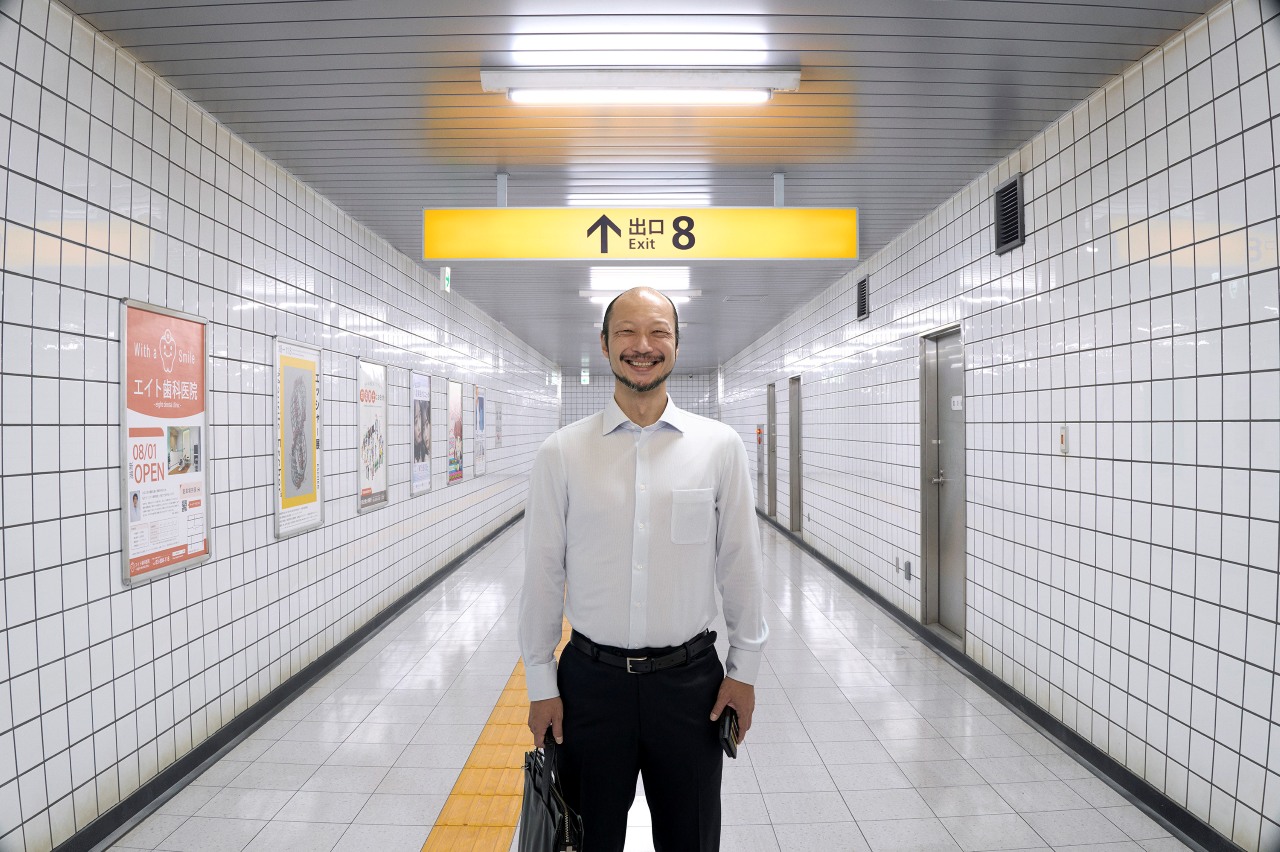
Exit 8 is another film based on a videogame but a far cry from the action driven or zombie/monster hunting emphasis of most other Videogame Adaptations. Instead, it heads into the same mysterious Labyrinth territory of films like Cube (1997) or maybe In the Tall Grass (2019). I kept thinking throughout of Isaac Ezban’s The Incident (2014) where people were trapped in an endless loop climbing the same set of stairs over and over again. There is a similar kind of thing going on here where Kazunari Ninomiya walks through the same set of subway exit corridors over and over, passing the same posters, the same man coming towards him, the same service doors and hydrants.
Except for the beginning and ending, most of Exit 8 is contained to the same three stretches of corridor – it must have been a very economical film to make. There is something oddly compelling, even soothing, in watching Kazunari Ninomiya walk up and down these corridors, counting off each thing he expects to see. There are some minor variations on this – a door that opens, a different person (a girl) appearing. For a brief section, the point-of-view switches over to the man (Yamato Kochi) who keeps walking toward Kazunari, but the man then makes it out (even though his otherwise unreactive figure continues to appear during Kazunari’s walk).
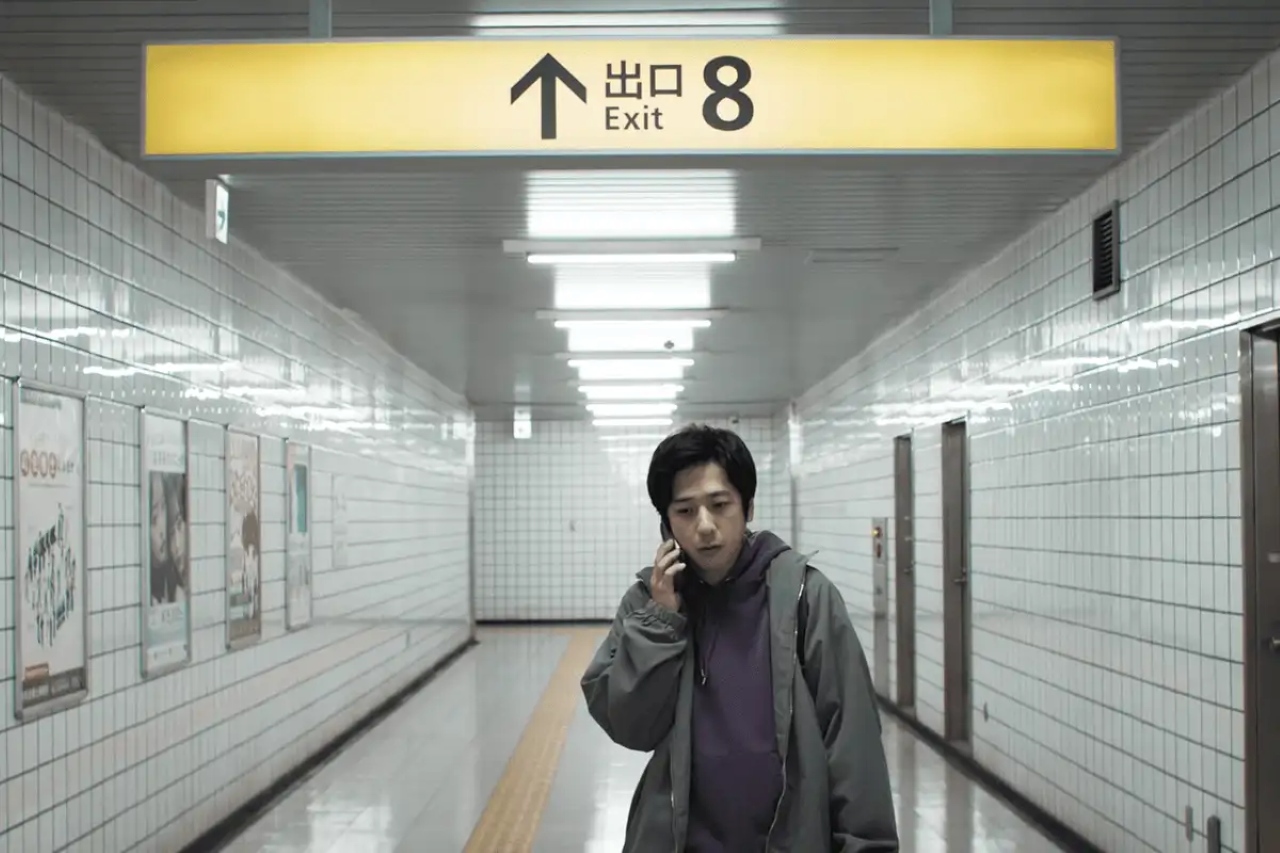
All the talk about anomalies leads you to expect that Exit 8 is more of a puzzle film than we get. The anomalies occur but their purpose – the doorway that leads Kazunari to seeing himself earlier when he was on the train, a flood that sweeps through the tunnels – is unclear. If there is an underlying message to the film, it is perhaps one about Kazunari having to learn about parental responsibility. His only connection with the outside world is the opening phone call from his ex-girlfriend who announces she is pregnant. Throughout she calls and even at one point appears inside the tunnel. The opening scene takes place on the subway train where Kazunari switches off and exits after hearing another guy on the train yelling at a woman with a crying child. It is not clear if the boy that accompanies Kazunari is his unborn child or the boy from the train, but he seems to develop a concern and responsibility for them as the film progresses. That said, the film ends by returning to the opening scene with the man yelling on the train where it is not clear whether Kazunari switches off again or not. All very enigmatic and baffling.
Exit 8 was the second film as director for Genki Kawamura, who had previously worked as a screenwriter and novelist. His previously directorial film was the non-genre A Hundred Flowers (2022). He has also produced a number of films including Parasyte Part 1 (2014) and sequel, anime such as Bubble (2022), Mamoru Hosoda’s Wolf Children (2012), The Boy and the Beast (2015), Mirai (2018) and Belle (2021), and Makotu Shinkai’s Your Name. (2016), Weathering With You (2019) and Suzume (2022).
Trailer here