

Crew
Director – Saskia Boddeke, Producer – Julia Emmering, Music – Luca D’Alberto & Borut Krzisnik. Production Company – Beeld/NTR/Mediafonds/Fonds 21.
With
Peter Greenaway, Pip Greenaway
Director Peter Greenaway became an arthouse favourite after emerging in the 1970s with a series of experimental films. He gained acclaim with full-length films such as The Draughtsman’s Contract (1981), The Belly of an Architect (1987), Drowning by Numbers (1988), the hit of The Cook, The Thief, His Wife & Her Lover (1989), Prospero’s Books (1991), The Baby of Mâcon (1993) and The Pillow Book (1996). They are films run through with non-narrative storytelling, obscure jokes and obsessive-compulsive list-making. Greenaway is still making films including the likes of 8½ Women (1999), the Tulse Luper films, Nightwatching (2007) and Eisenstein in Guanajuato (2015), although these have not quite enjoyed the acclaim of his earlier work. (See below for a list of Greenaway’s genre films).
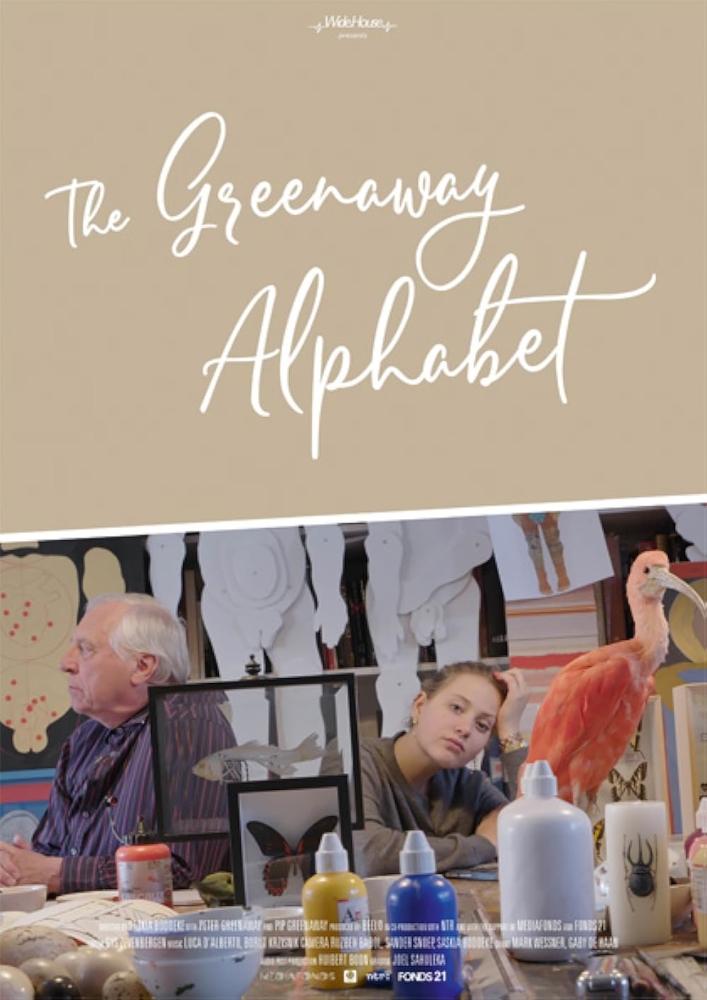
The Greenaway Alphabet is a Documentary made by Greenaway’s wife Saskia Boddeke. The film essentially consists of Greenaway and his daughter Pip as they go through the alphabet and choose something that relates to Greenaway and the themes in his films for each letter. This is liberally interspersed with clips from Greenaway’s films. Saskia herself remains a presence only behind the camera. She does introduce herself in voiceover at the start with the intriguing comment: “I love Peter. I’m not sure if he loves me. He has a very peculiar idea of love.”
The surprise star of the show ends up being their daughter, the 15-16-year-old Pip Greenaway who has a fresh-faced innocence that proceeds to run rings around the more staid 75-year-old Greenaway. In the opening scenes, she accuses him of being on the autism spectrum, offering evidence of his lack of eye contact and lack of close real friends, which he disputes and then sort of agrees with with provisions. (Which is an insight that does explain a lot about Greenaway’s films). In later scenes, we see her at a haberdasher trying to get him to lighten up the colour of the black-and-white pinstripe suit he always wears. She even challenges his filmmaking style, asking him at one point why his films are so flat and take place with even cinematography and the camera moving in a left-right plane as though the set was a stage.
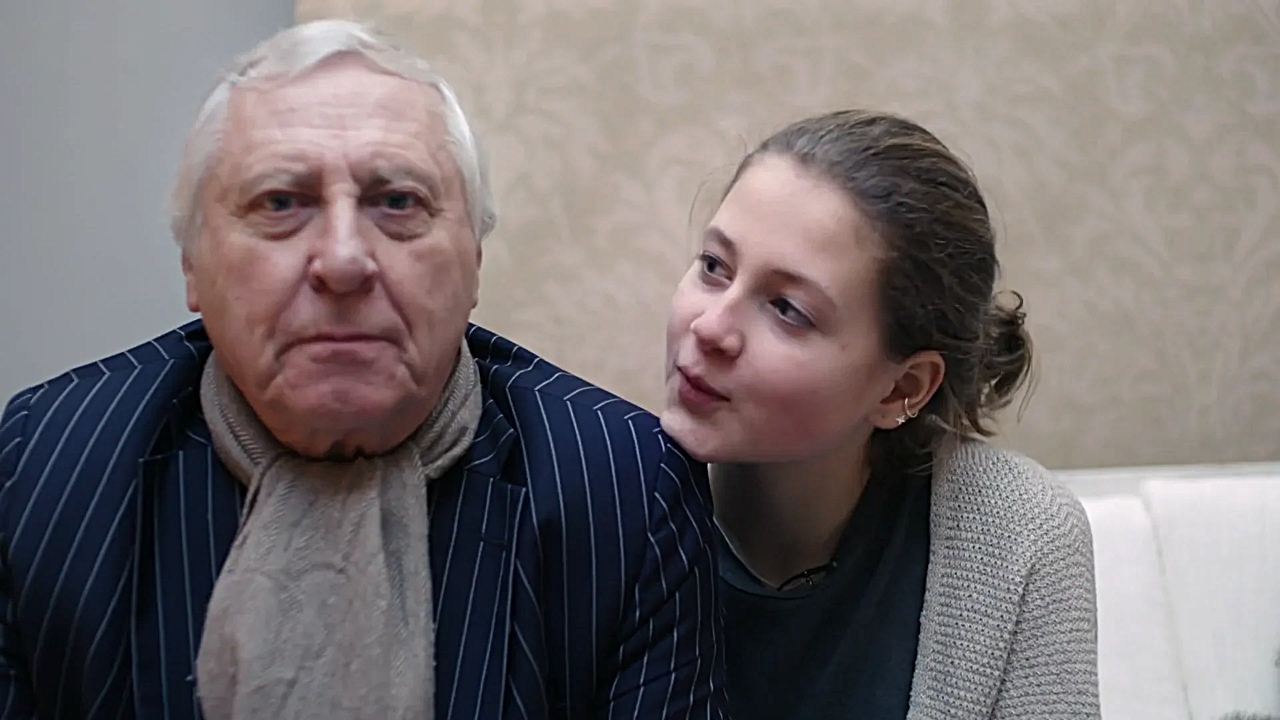
Greenaway opens up a little about his background. Indeed, The Greenaway Alphabet often feels like Greenaway trying to turn his own life into one of the potted little biographical snapshots that appear in films like The Falls (1980) and Tulse Luper. In B for Birds, he talks about his father who was an ornithologist, which led to the recurrent obsession with birds that turns up in his work. Greenaway even tells us that The Falls with its lists of names beginning with ‘fall- ’ and bird obsessions was a way for him to deal with his father’s terminal illness. In F for Family, he tells Pip how he is estranged from his three other children because of his divorce from his first wife. She queries whether he is going to leave her in a similar manner (the answer is no) and whether he misses the other children (apparently only in an abstract way). Throughout, Greenaway makes interestingly provocative statements “Cinema is far too sophisticated a medium to be left in the hands of the storytellers” or “There is no such thing as history and all historians are liars.”
The film begins with the idea of exploring an alphabet relating to Greenaway – in effect making his life another of the lists that populate his films. It starts out passing through the letters one by one but then around the letter G sort of abandons this and skips over a whole bunch of them to get to L, while the rest of the alphabet thereafter barely even gets a look in.
Peter Greenaway’s other films of genre interest are:– the surreal post-holocaust ‘documentary’ The Falls (1980); The Cook, the Thief, His Wife & Her Lover (1989); several episodes of the modernised tv series A TV Dante (1989-91); Prospero’s Books (1991), Greenaway’s interpretation of Shakespeare’s The Tempest (1611); the miraculous child film The Baby of Mâcon (1993); and The Tulse Luper Suitcases: The Moab Story (2003), The Tulse Luper Suitcases, Part 2: From Vaux to the Sea (2004) and The Tulse Luper Suitcases Part 3: From Sark to the Finish (2004), a surreal mock biography that is part of a mammoth multimedia work from Greenaway.
Trailer here