

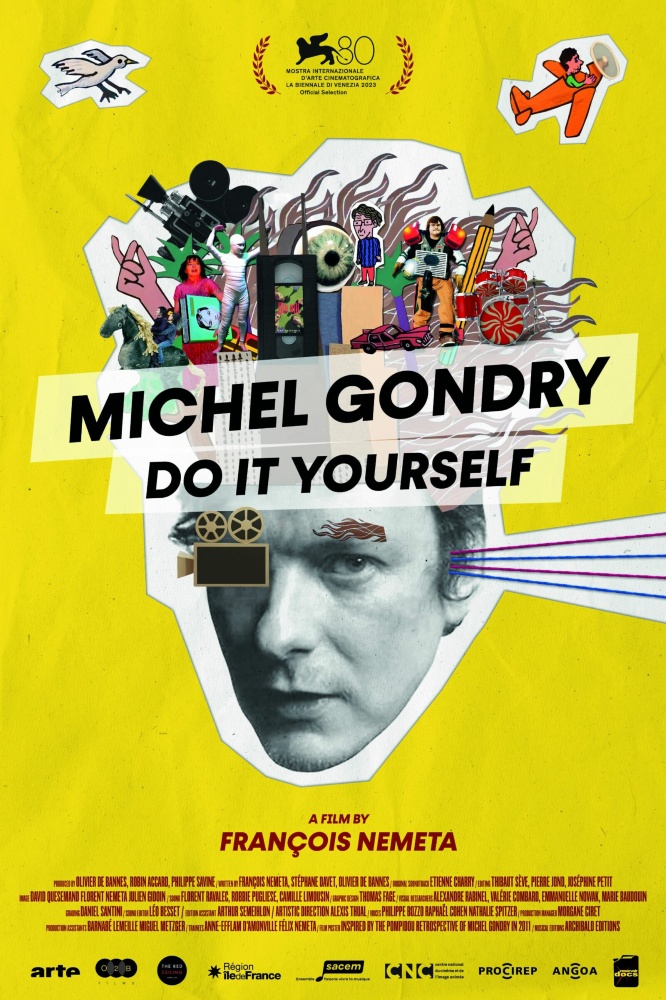
Crew
Director – Francois Nemeta, Screenplay – Stephane Davet, Olivier De Bannes & Francois Nemeta, Producers – Robin Accard, Olivier De Bannes & Philippe Savine, Photography – Julien Gidoin, Florent Nemeta & David Quesmand, Music – Etienne Charry. Production Company – Arte France/O2B Films/The Red Ceiling/Region Ile-de-France/Sacem.
With
Michel Gondry, Akhenaton, Beck, George Bermann, Björk, Jack Black, Jon Brion, Etienne Charry, Thierry Fremaux, Charlotte Gainsbourg, Francois Gondry, Olivier Gondry, IAM, Spike Jonze, Bianca Li, Kylie Minogue, Francois Nemeta, Pierre Niney, Pierre Pell, Tom Rowlands, Stephane Rozenbaum, Jack White
French director Michel Gondry developed a cult in the 1990s with his eccentric and highly creative music videos. He made his feature film directorial debut with Human Nature (2001) and then had the acclaimed hit of the memory-bending SF film Eternal Sunshine of the Spotless Mind (2004). This was followed by The Science of Sleep (2006), an appealingly delightful mix of romance, dreams and wacky surrealism; the Interior Design segment of the anthology Tokyo! (2008); Be Kind Rewind (2008) wherein Jack Black makes ultra-low-tech copies of popular films; the disastrous big-budget version of The Green Hornet (2011); the wackily surrealistic Mood Indigo (2013); and Microbe and Gasoline (2015) about two teen inventors on a journey. Gondry has become quiet by the latter half of the 2010s and done little feature film work since then. Michel Gondry: Do It Yourself is a Documentary about Gondry.
The documentary starts with a cutely captivating opening where the narrator/director Francois Nemeta talks about being a fan of the French band Oui Oui and wanting to find who made them their unique music videos – and going to meet their drummer, which turned out to be Michel Gondry. From this point, Nemeta takes us through Gondry’s childhood, his joining a band with his brothers and others with Oui Oui, which did achieve modest popularity. After the band’s break-up. Gondry was asked to direct videos for others, before having a breakthrough with the video for Björk’s Human Behaviour (1993). (What is not mentioned by the documentary is that Gondry had directed videos for several other well-known artists up to that point, including Thomas Dolby, Inspiral Carpets, Lenny Kravitz and Terence Trent D’Arby).
It was the quirkily surreal ideas for Human Behaviour and other Björk videos that caused Gondry’s name to be noticed and more offers of work to pour in. The documentary screens clips from some of these and we see Gondry’s unique visuals – a video that consists of a series of endless zooms for the French band IAM; Beck accompanied by walking shoes in Deadweight (1997); Kylie Minogue encountering multiple versions of herself in Come Into My World (2002); leading to the cult acclaim of Daft Punk’s Around the World (1997) where Gondry choreographed the dance moves to the beat of the music.
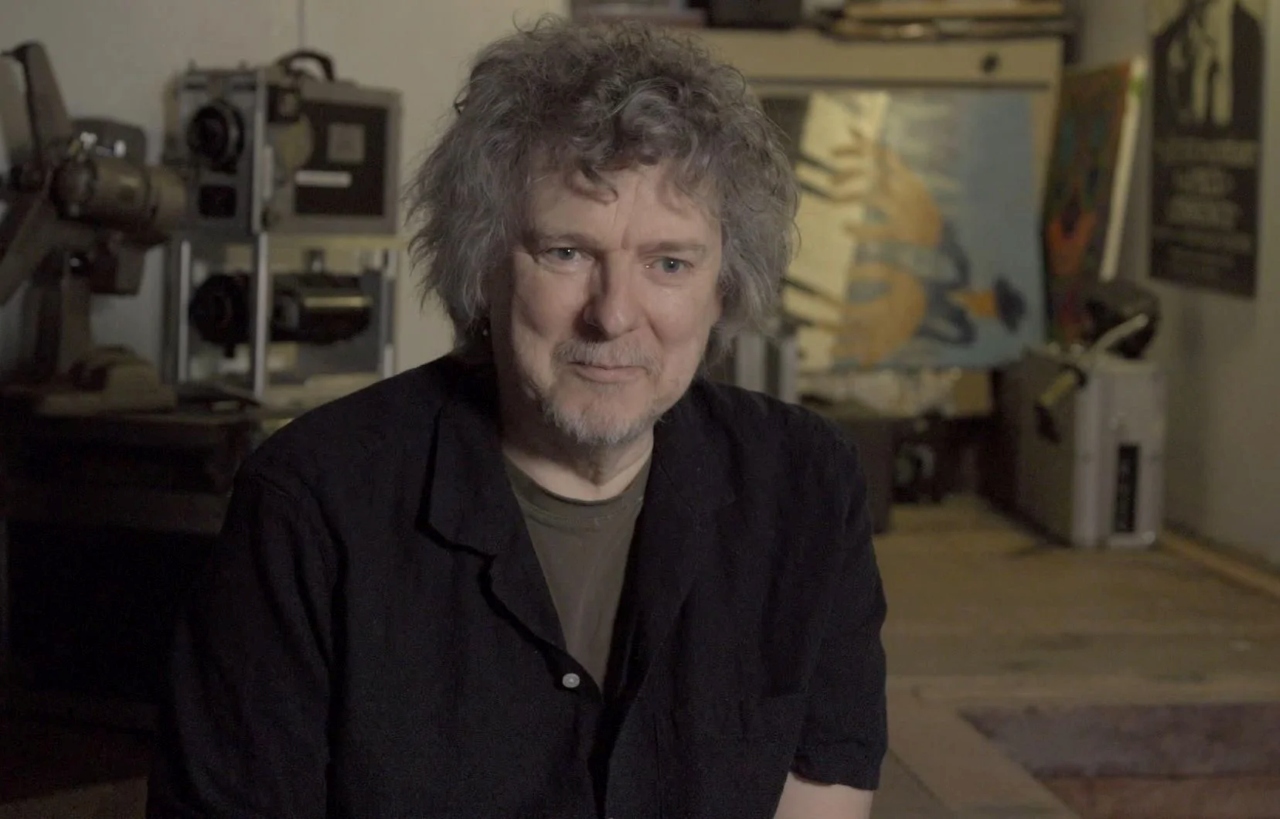
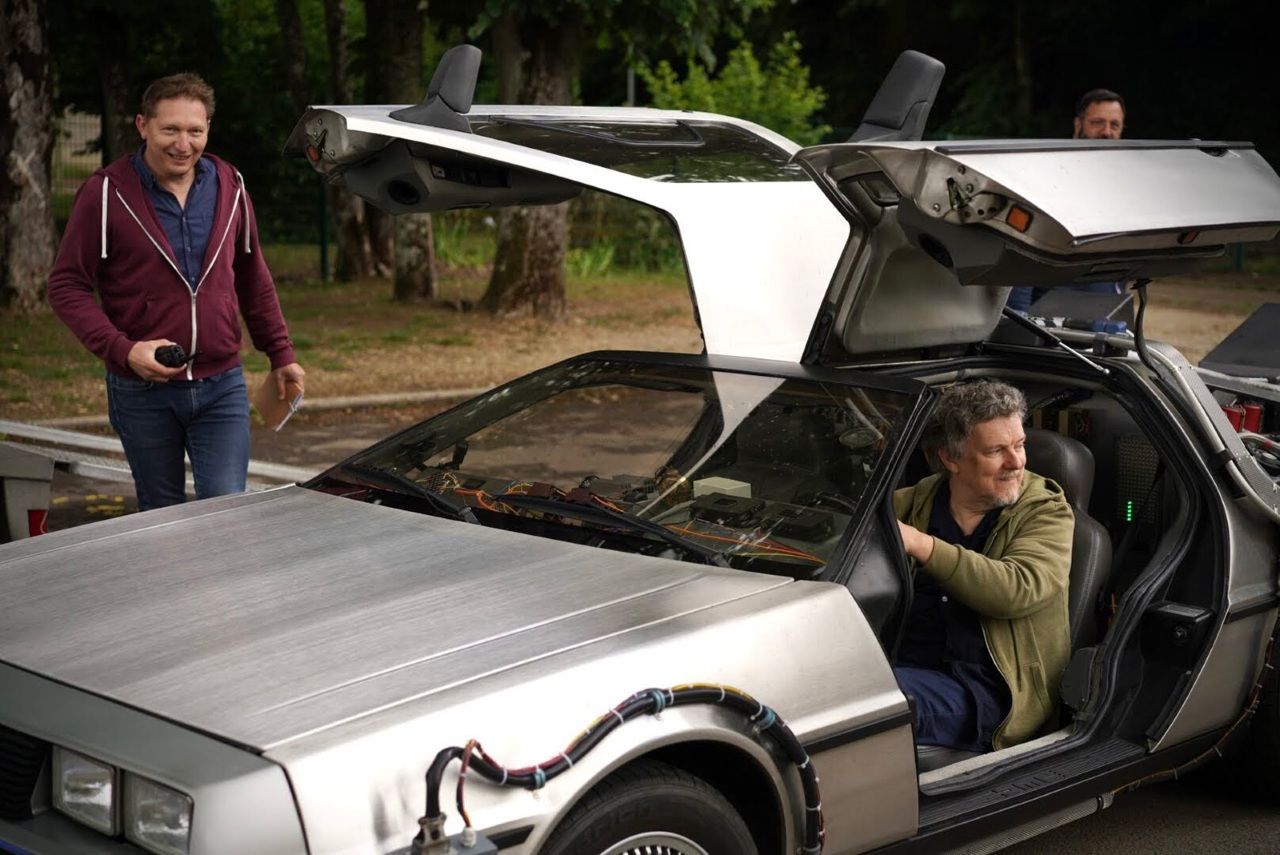
Gondry is interviewed alongside Spike Jonze who was also an emerging as a director in music video at the time. The two are joke about the supposed rivalry they were said to have and their friendship. This prompted Gondry’s move to Hollywood in the mid-1990s where he tried to find a feature film project that interested him – by having to use a handheld device to translate scripts into French. In one of the most fascinating nuggets, Gondry tells about the commercial he directed that pioneered the use of Bullet Time and then of Joel Silver, the producer of The Matrix (1999), calling to ask how he did it and the rest being history. After Gondry admits he wanted to make films like Back to the Future (1985), we see Gondry and Francois Nemeta driving around L.A. in a DeLorean.
The Spike Jonze connection led to Gondry meeting Charlie Kaufman on the set of Jonze’s directorial debut Being John Malkovich (1999) and then to Jonze backing Gondry with his film debut Human Nature. This led to a further Kaufman collaboration with the hit of Eternal Sunshine of the Spotless Mind. From there, Do It Yourself charts its way through Gondry’s various other films to date, although skips over Microbe and Gasoline. This does bring us to the contentiousness of the disaster that was The Green Hornet. The film is too genteel on Gondry to go into much of this, although we get clips of Gondry telling us he agreed to make the film as long as he could subvert the superhero genre. These sections don’t end up being as insightful or revealing of new material as the focus on the early parts of Gondry’s career do.
Trailer here
Full film available here