
Crew
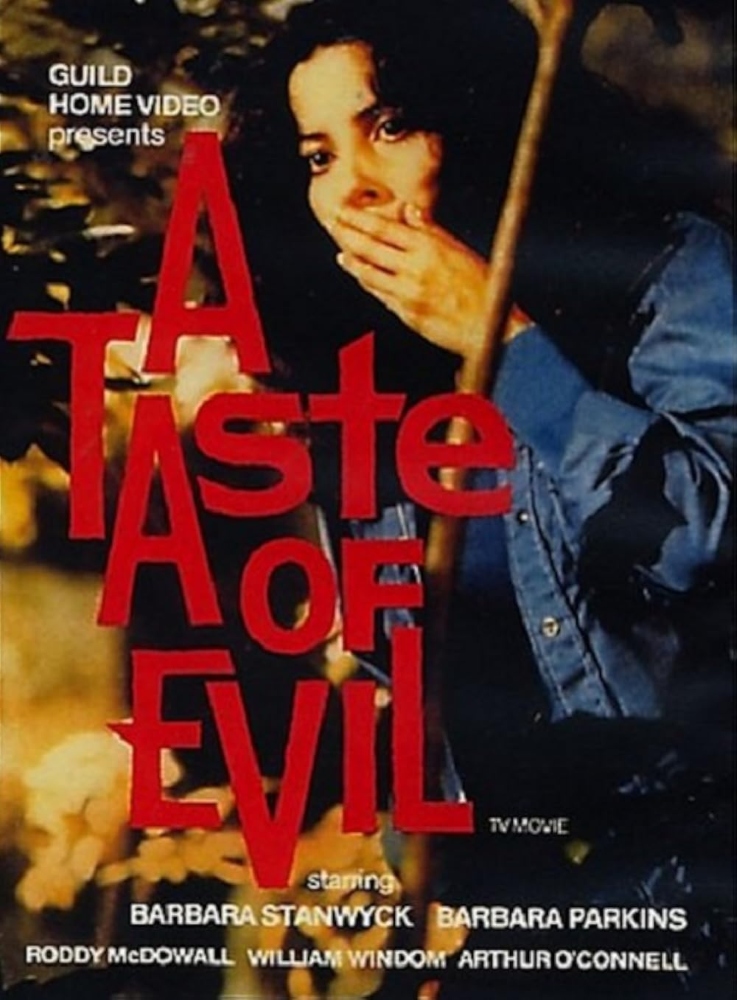
Director – John Llewellyn Moxey, Teleplay – Jimmy Sangster, Producer – Aaron Spelling, Photography – Arch Dalzell, Music – Robert Drasmin, Art Direction – Paul Sylos. Production Company – Aaron Spelling Productions/American Broadcasting Companies, Inc.
Cast
Barbara Stanwyck (Miriam Jennings), Barbara Parkins (Susan Wilcox), Roddy McDowall (Dr. Michael Lomas), Arthur O’Connell (John), William Windom (Harold Jennings), Dawn Frame (Young Susan)
Plot
During one of her mother Miriam’s parties, thirteen-year-old Susan Wilcox is raped by a shadowy figure. Seven years later, the now grown-up Susan is released from the sanitorium she has been placed in in Switzerland and returns to join her mother at the family estate outside San Francisco. Miriam has remarried to Harold Jennings, but he is an alcoholic. As Susan settles in around the house, she starts to see the Harold’s dead body. However, there is nothing there when she calls somebody else and her mother starts to believe that Susan is going crazy again.
Producer Aaron Spelling was one of the most prolific television producers of all time. He masterminded shows such as Starsky and Hutch (1975-9), Fantasy Island (1976-84), The Love Boat (1977-86), Charlie’s Angels (1976-81), Dynasty (1981-9) and Beverly Hills 90210 (1990-2000). For a time during the early days and before he became a recognisable name, Spelling also made a number of horror TV Movies with the likes of Crowhaven Farm (1970), How Awful About Allen (1970), The House That Would Not Die (1970), Satan’s School for Girls (1973) and Cruise Into Terror (1978) and the SF films The Love War (1970), The Last Child (1971) and A Cold Night’s Death (1973). A Taste of Evil was another of these.
Jimmy Sangster was one of the key names associated with UK’s Hammer Films and wrote their cornerstone classics The Curse of Frankenstein (1957) and Dracula/The Horror of Dracula (1958). Following the huge success of Alfred Hitchcock’s Psycho (1960), Hammer Films launched a series of copycat Psycho-Thrillers. The chief architect of these was Sangster who wrote the first of these with Scream of Fear/A Taste of Fear (1961), followed by the likes of Paranoiac (1963), Maniac (1963), Nightmare (1964), Hysteria (1965), The Nanny (1965) and Crescendo (1970) and then stepped up to direct Fear in the Night (1972). Sangster patented a formula borrowed from Les Diaboliques (1955) of an improbable plot usually set around a family and the attempts to gaslight one of the heirs into thinking they are going crazy. These were all founded on absurdly far-fetched twists. In the 1970s, Sangster made the move to Hollywood where he found employ writing tv movies and episodic tv, even a Disney film with The Devil and Max Devlin (1981). (See below for Jimmy Sangster’s other genre films). Indeed, A Taste of Evil substantially rehashes the plot of Scream of Fear.
The Hammer psycho-thrillers were usually shot in stark black-and-white and had the benefit of former cinematographer Freddie Francis in the director’s chair. A Taste of Evil does have John Llewellyn Moxey, a director who was at work during the early days of the Anglo-Horror Cycle with the particularly atmospheric City of the Dead (1959). By the late 1960s, Moxey had emigrated to work in US tv where he turned out a series of unremarkable tv movies (see below for his other credits). Similarly, there is nothing remarkable about A Taste of Fear from a stylistic viewpoint, just routine tv dramatics.
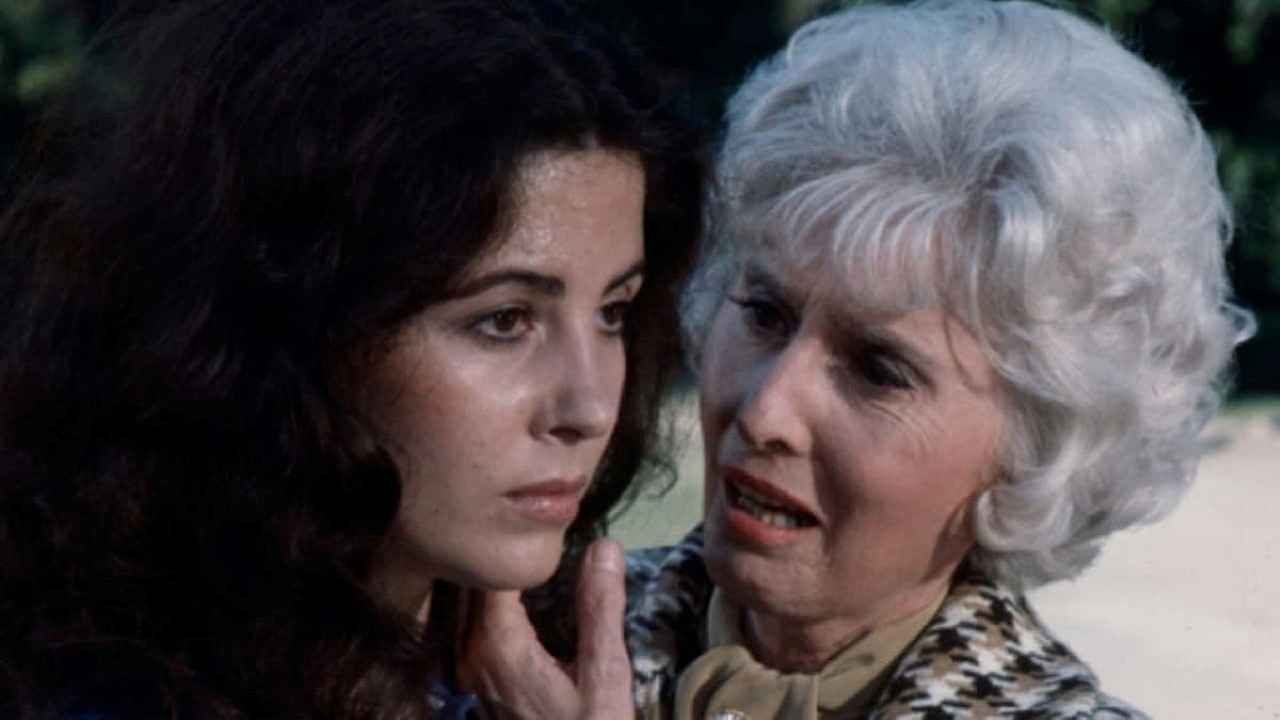
There is another of Jimmy Sangster’s trademark improbable twists that comes in middle of A Taste of Evil where we realise [PLOT SPOILERS] that much of what has been going on is another Les Diaboliques set-up to have an heiress driven mad. It does serve to push Barbara Stanwyck, in an effective twist, over to the dark side into another of the Grand Dame Guignol films that was in vogue during the era following the success of What Ever Happened to Baby Jane? (1962). Sangster then places an even more contrived double twist on what is going on as Stanwyck is terrorised by the seeming same things that she inflicted on Barbara Parkins.
John Llewellyn Moxey (1925-2019) was a British director who first appeared with City of the Dead/Horror Hotel (1959), one of the early films of the English horror cycle. After a handful of other films and work on British tv, Moxey moved to the USA and became a prolific tv director. His other genre work includes tv movies such as The House That Would Not Die (1970), The Last Child (1971), the classic The Night Stalker (1972), Gene Roddenberry’s Genesis II (1973), Where Have All the People Gone (1974), The Power Within (1979), No Place to Hide (1981), I, Desire (1982), The Cradle Will Fall (1983), and numerous episodes of various tv series, even the pilot for Charlie’s Angels (1976-81).
The script comes from Jimmy Sangster, one of the key writers at Hammer Films during the Anglo-horror cycle. Jimmy Sangster’s other genre scripts are:– X the Unknown (1956), The Curse of Frankenstein (1957), Dracula/The Horror of Dracula (1958), The Revenge of Frankenstein (1958), The Man Who Could Cheat Death (1959), The Mummy (1959), The Brides of Dracula (1960), the psycho-thrillers A Taste of Fear/Scream of Fear (1961), Paranoiac (1963), Maniac (1963), Nightmare (1964), Hysteria (1965), The Nanny (1965) and Crescendo (1970), and Dracula – Prince of Darkness (1966), all for Hammer. Sangster’s non-Hammer scripts are the medical vampire film Blood of the Vampire (1958), the alien invasion film The Trollenberg Terror/The Crawling Eye (1958), Jack the Ripper (1959), the tv movie psycho-thriller Scream Pretty Peggy (1973), the Grand Guignol psycho-thriller Whoever Slew Auntie Roo? (1972), the occult tv movie Good Against Evil (1977), the occult film The Legacy (1979), the spy tv movies Billion Dollar Threat (1979) and Once Upon a Spy (1980), the psycho-thriller Phobia (1980) and the story for Disney’s The Devil and Max Devlin (1981). As director, Sangster made three films:– The Horror of Frankenstein (1970), the lesbian vampire film Lust for a Vampire (1971) and the psycho-thriller Fear in the Night (1972), all at Hammer.
Full film available here