

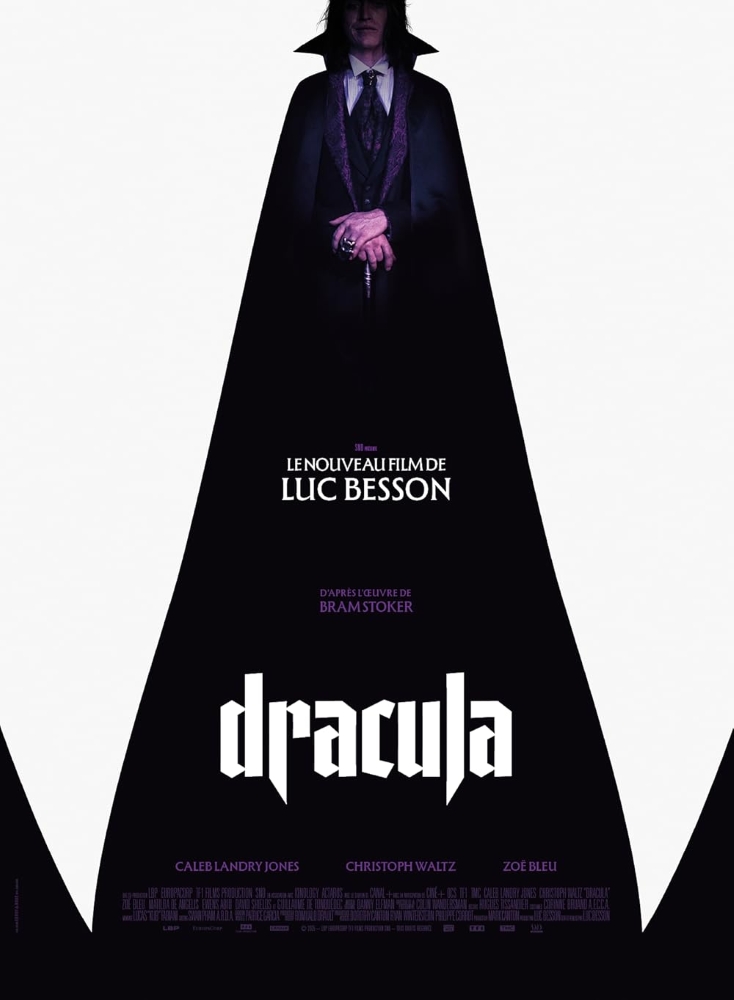
USA. 2023.
Crew
Director/Screenplay/Producer – Luc Besson, Based on the Novel Dracula (1897) by Bram Stoker, Photography – Colin Wandersman, Music – Danny Elfman, Visual Effects Supervisor – Laurent Creusot, Visual Effects – MPC & Rodeo FX (Supervisor – Franck Lambertz), Special Effects – BigBang SFX (Supervisor – Jean-Christophe Magnaud), Prosthetics Supervisors – Denis Gastou & Jean-Christophe Spadaccini, Production Design – Hugues Tissandier. Production Company – LBP/Europacorp/TF1 Films Production/SND/Kinology/Actarus/Canal+/Cine+/TF1/TMC.
Cast
Caleb Landry Jones (Prince Vlad/Count Dracula), Christoph Waltz (Abraham Van Helsing), Zoe Bleu (Mina Murray/Elizabeta), Guillaume de Tonqueduc (Dr Dumont), Matilda de Angelis (Maria de Montebelo), Ewens Abid (Jonathan Harker), David Shields (Henry Spencer), Raphael Luce (Clerk Simon)
Plot
Europe, 1480. Prince Vlad of Wallachia, Count Dracula, goes off to fight against the Turkish hordes only for his beloved wife Elisabeta to be killed by Turks as she is taken away to safety. The church refuse Vlad’s entreaty to raise her from the dead and in anger Dracula turns against them and kills the priest on the altar. Paris, four hundred years later. Van Helsing, a priest with the Catholic Church assigned to fight unusual threats, is brough to an asylum to examine Maria, where he concludes she is a vampire. She says she is waiting for her master who is coming to find his true love. Meanwhile, lawyer Jonathan Harker has been dispatched to Transylvania to where Dracula lives in his castle tended by gargoyles to ask about buying an abandoned abbey that Dracula owns outside Paris. Instead, Dracula makes Jonathan a prisoner and feeds on his blood. When Dracula sees the locket containing a photo of Jonathan’s fiancée Mina, he realises that she is the reincarnation of his beloved Elisabeta and sets out to woo her.
Bram Stoker’s Dracula (1897) is one of the cornerstone works of modern horror fiction – it didn’t create the vampire but laid down the lore that subsequently became associated with the Vampire Film. There have been an enormous number of screen adaptations of Dracula from the famous silent film Nosferatu (1922) to the iconic Dracula (1931) with Bela Lugosi to Hammer’s Dracula/The Horror of Dracula (1958) starring Christopher Lee, which led to a series of sequels, and Francis Ford Coppola’s Bram Stoker’s Dracula (1992), among many others – there is a full list of these at the bottom of the page. And that’s not counting the assorted sequels, modernisations, comedies and parodies, relocations to other locales, adult interpretations or team-ups with other monsters – see Dracula Films.
Dracula: A Love Tale is another version of Dracula from French director Luc Besson. In the 1980s, Besson emerged as a director of films that had an assuredly stylish confidence and cool with the likes of the Subway (1986), The Big Blue (1988) and then into the 1990s went onto a duo of dazzling action films – Nikita/La Femma Nikita (1990) and The Professional/Leon (1994). By the end of the 1990s, the assuredness of Luc Besson’s earlier films had fallen into overinflated bombast – as witness flops like The Fifth Element (1997) and The Messenger: The Story of Joan of Arc (1999) – and into the 2000s he became more known as a producer of other people’s films. (See below for a full list of Luc Besson’s other genre films).
The world hadn’t heard much from Besson after the flop of Valerian and the City of a Thousand Planets (2017), an expensive and visually dazzling space opera that befell a bad US distributor, the flop of which bankrupted Besson’s studio Europacorp. He has made a few other films since then – the action film Anna (2019), which I saw and seemed to have entirely forgotten it, and a couple of other dramas with Dogman (2023) and Jules and John (2025), which seemed to attract so little attention they failed to make it on my radar. Certainly, he has been active as a producer through much of the 2010s with various Taxi, Taken and The Transporter sequels, but these too started to thin out in the 2020s.
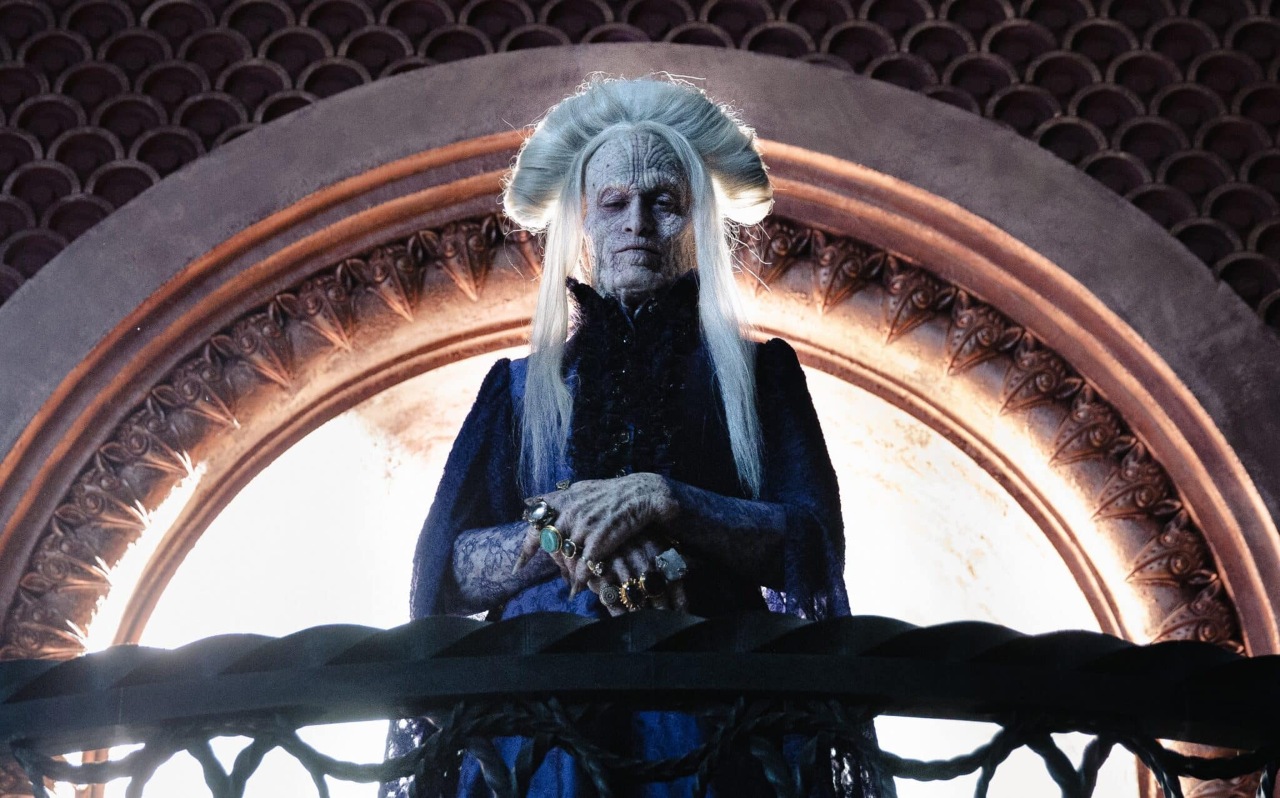
The surprise about Dracula: A Love Tale is that Luc Besson has gone and all but uncreditedly remade Francis Ford Coppola’s Bram Stoker’s Dracula. First there it the title – it is worth remembering that the whole ‘A Love Tale’ aspect is one that was essentially invented in the movies – the Bela Lugosi Dracula went out on Valentine’s Day of 1931 with the advertising tagline “The story of the strangest passion the world has ever known.” In Stoker’s book, there is no mention of Dracula’s wife Elisabeta and he does not see Mina as her reincarnation. This was an element that was hinted at in the earlier Dracula (1974) with Jack Palance but came in proper in Coppola’s version, which created a prologue where Dracula becomes a vampire after Elisabeta’s death – we get an expanded retelling of that here. There are a number of other visual references to the Coppola film here such as Caleb Landry Jones’s Dracula appearing as an old man with elaborate headdress as Jonathan visits the castle, or the scenes with Jones outfitted as a dandified gentleman stalking Zoe Bleu’s Mina and wooing her. Besson also borrows from Nosferatu the scene where Dracula becomes fixated on Mina after seeing Jonathan’s locket, which has no equivalent in the book.
Dracula: A Love Tale offers some variations on Stoker and other previous film versions of the story. Van Helsing in the person of Christoph Waltz is present but is now a monster hunter sanctioned by the Catholic Church just as he became in Van Helsing (2004). There are equivalents of Lucy, Dr Seward and Arthur Holmwood, they’ve just been given different names, while the script adeptly swings around to turn the Lucy equivalent, Matilda de Angelis’s Maria, into the film’s Renfield. Missing also are Dracula’s wives, which have been replaced by a bunch of CGI gargoyles that run around his castle as all-purpose servants. One of the oddest additions to the mythology is that Dracula no longer has a mystique and hypnotic influence – what modern vampire films call ‘glamour’ – but uses a perfume that makes him irresistible – something that you cannot help but feel has been taken from the extraordinary climactic scenes of Perfume: The Story of a Murderer (2006).
The biggest change is that Luc Besson relocates the story from England to Paris. In the book, there is the distinct sense of placid Victorian English life being overrun by a foreign menace that invades the comfortable lives of English gentlemen and seduces their wives. Besson, in relocating the story on the continent, removes that sense. Now Dracula mundanely travels to Paris by coach; there is no voyage of the Demeter and shipwreck washing up on the shores. The women are not polite wilting willows but seem perfectly at home in cosmopolitan Paris – there is not the book’s horror of seeing fragile society wives being seduced and turned wanton.
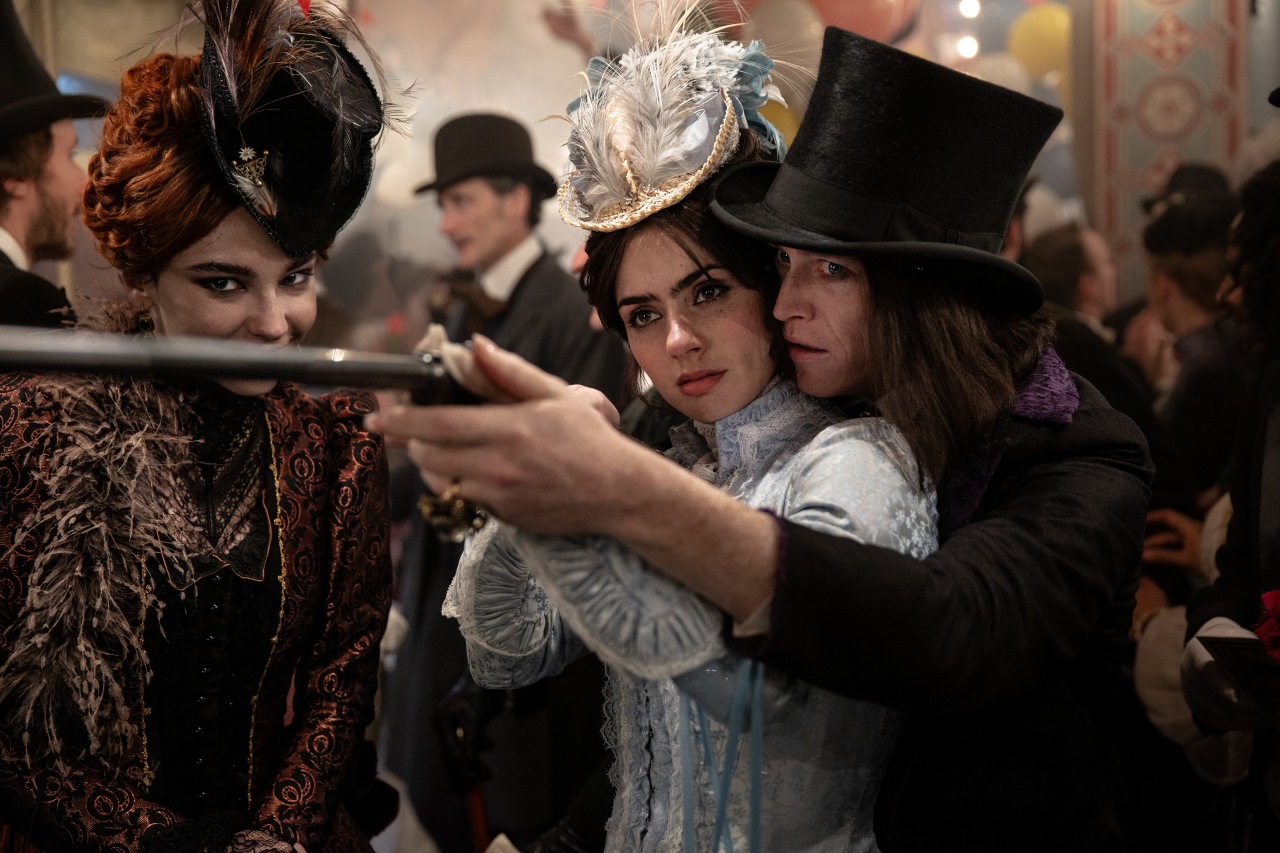
Coppola created a film that was visually ravishing but Besson falls too much in his shadow and fails to quite recapture that. There are occasional compensations – visual images of armies lined up fighting through flames; Zoe Bleu’s Mina fleeing on horseback with a long purple train flowing out behind her; Caleb Landry Jones using the perfume in a nunnery and being mobbed by a horde of nuns. The one thing that Dracula: A Love Tale does superbly is capture a sense of Belle Epoque Paris where the set dressings for the various palaces, castles and dwellings are visually ravishing.
I felt disappointed with Dracula: A Love Tale. Luc Besson has produced some extraordinary action films – Nikita and The Profesisonal – and some fine ventures into SF – Le Derner Combat (1983), Valerian and the City of a Thousand Planets and, some people will argue, The Fifth Element, which at least has some amazing production design. But Besson’s Dracula is only an imitator of another director’s work and one where Besson has stripped the most interesting elements – Coppola’s visuals – out for something far less exciting. All that that leaves him is making a copy of yet another version of a familiar tale. At one point, Besson was a leading director on the international stage, he shouldn’t be someone merely reduced to copying another director’s work.
Other adaptations of Dracula are:– the uncredited classic German silent Nosferatu (1922); Dracula (1931), the classic Universal adaptation starring Bela Lugosi; the Spanish language version Dracula (1931) shot on the same sets as the Lugosi version starring Carlos Villarias; Hammer’s classic Dracula/The Horror of Dracula (1958) with Christopher Lee; Dracula in Pakistan (1967), an uncredited remake of the Hammer film; Count Dracula (1970), a cheap continental production that also featured Lee; Dracula (1974), a cinematically-released tv movie starring Jack Palance; Count Dracula (1977), a BBC tv mini-series featuring Louis Jourdan; Dracula (1979), the lush romantic remake with Frank Langella; Werner Herzog’s remake Nosferatu the Vampyre (1979) with Klaus Kinski; Francis Ford Coppola’s visually ravishing Bram Stoker’s Dracula (1992), featuring Gary Oldman; the modernised Italian-German Dracula (2002) starring Patrick Bergin; Guy Maddin’s silent ballet adaptation Dracula: Pages from a Virgin’s Diary (2002); Dracula (2006), the BBC tv adaptation starring Marc Warren; the low-budget modernised Dracula (2009); Dario Argento’s Dracula (2012) with Thomas Kretschmann as Dracula; the low-budget Canadian Terror of Dracula (2012) with director Anthony D.P. Mann as Dracula; the tv series Dracula (2013-4) with Jonathan Rhys Meyers; the BBC mini-series Dracula (2020) starring Claes Bang; Bram Stoker’s Van Helsing (2021), which actually features no Dracula; The Asylum’s Dracula: The Original Living Vampire (2022) with Jake Herbert, which actually features no Dracula; Nosferatu, A Symphony of Terror (2023), a shot-for-shot remake with Doug Jones as Orlok; and the remake of Nosferatu (2024) with Bill Skarsgård.
Luc Besson’s other films of genre note are:- the arty Le Dernier Combat (1983) set in a post-holocaust world where people have become mute; the space opera/action film The Fifth Element (1997); his fantastical interpretation of the historical story of Joan of Arc in The Messenger: The Story of Joan of Arc (1999); the eccentric angelic intervention film Angel-A (2005); Arthur and the Invisibles (2006), a part-live, part-animated film based on his own children’s books about adventures in a land of miniaturized people, and its sequels Arthur and the Revenge of Maltazard (2009) and Arthur and the Two Worlds War (2010); the adventure film The Extraordinary Adventures of Adele Blanc-Sec (2010); Lucy (2014) in which Scarlett Johansson gains enormously expanded mental abilities; and the space opera Valerian and the City of a Thousand Planets (2017). Besson also produced and wrote Kamikaze (1986) where a scientist invents a device that can kill people on tv and The Dancer (2000) about a mute dancer who gains expression through a unique sound invention; produced the mystical quasi-sf Quebecois film Chaos and Desire (2002): wrote and produced the End Times serial killer thriller Crimson Rivers II: Angels of the Apocalypse (2003); produced the serial killer film Tristan (2003); produced and wrote the futuristic action film Banlieue 13 (2004) and its sequel Banlieue 13: Ultimatum (2009); produced the serial killer thriller Tell No One (2006); produced the Backwoods Brutality film Frontier(s) (2007); produced the videogame adaptation Hitman (2007); produced the horror film The Secret (2007); produced the animated A Monster in Paris (2011); produced the orbiting prison film Lockout (2012); wrote/produced the English-language Banlieue 13 remake Brick Mansions (2014); and wrote/produced The Warriors Gate (2016) in which a videogamer is transported to Ancient China.
(Nominee for Best Cinematography at this site’s Best of 2025 Awards).
Trailer here