


Crew
Director – Sam Raimi, Screenplay – Damian Shannon & Mark Swift, Producers – Zainab Azizi & Sam Raimi, Photography – Bill Pope, Music – Danny Elfman, Visual Effects Supervisor – Everett Burrell, Visual Effects – Bot, Fin Design + Effects (Supervisor – Will Gammon), Industrial Light & Magic (Supervisor – Jason Snell) & Kojo (Supervisor – Paul Nelson), Special Effects Supervisor – Dan Oliver, Makeup Designer – Chiara Tripodi, Production Design – Ian Gracie. Production Company – 20th Century Studios.
Cast
Rachel McAdams (Linda Liddle), Dylan O’Brien (Bradley Preston), Xavier Samuel (Donovan), Edyll Ismail (Zuri), Dennis Haysbert (Franklin), Emma Raimi (River)
Plot
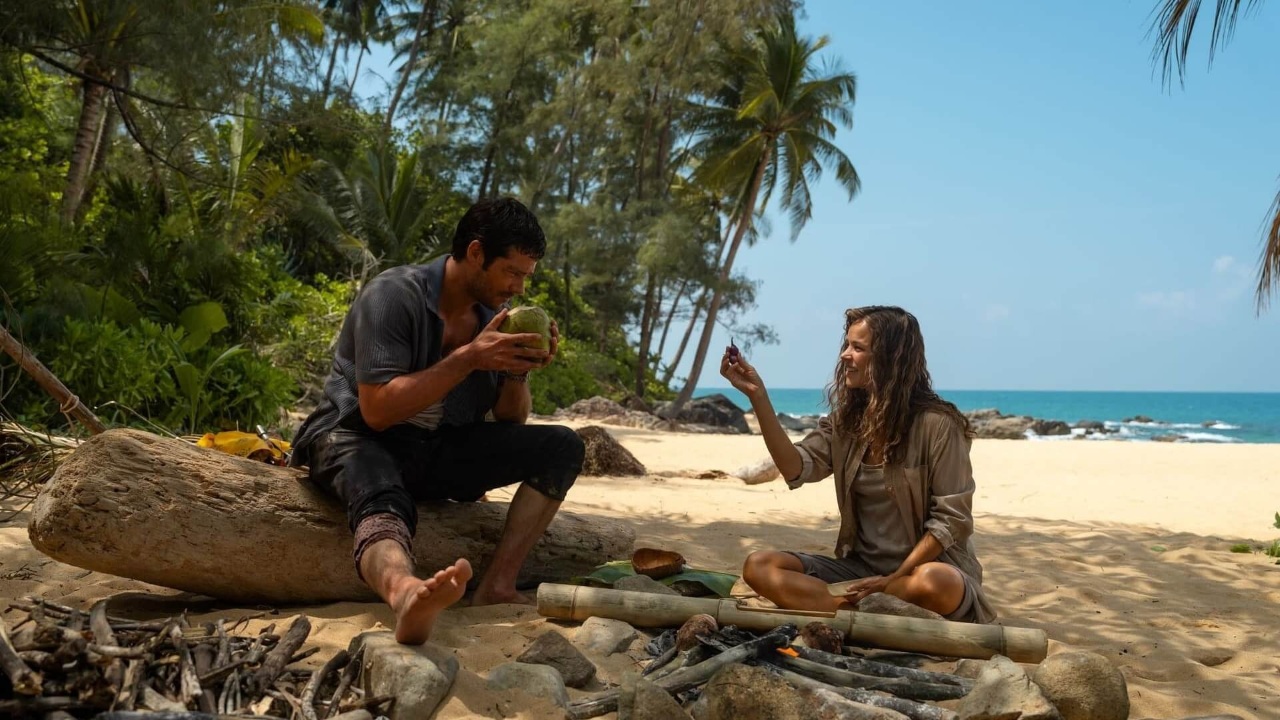
Linda Liddle has worked in strategy and planning with a company for seven years and is expecting to be appointed as vice president. However, the former boss’s son Bradley Preston takes over as CEO and instead appoints his friend Donovan, who only been there for six months, over her. Disgusted with Linda’s gaucheness, Bradley makes plans to shuffle her off but is forced to take her with them to a meeting in Bangkok. While on the flight, some of the other guys find Linda’s video audition for Survivor with her demonstrating her survival skills and make fun of it. Just then the plane enters a storm and undergoes an explosive decompression. Linda manages to survive and swims ashore on a nearby island. In the morning, she finds Bradley washed ashore and tends him back to health, using her survival skills to improvise shelter and obtain food. He resents being dependent on her. Gradually, the two thaw and he warms to her, even as he schemes to get free at the earliest opportunity. However, a darker undertow awaits.
Sam Raimi should need no introduction. He is the wunderkind who appeared with The Evil Dead (1981) and went on its sequels The Evil Dead II (1987) and Army of Darkness (1992). Raimi of the 1990s diversified into other genres, as well producing the various Hercules: The Legendary Journeys (1994-9) and Xena: Warrior Princess (1995-2001) tv series, among others. Raimi of the 2000s made a major comeback with Spider-Man (2002) and sequels Spider-Man 2 (2004) and Spider-Man 3 (2007). (See below for a full list of Sam Raimi’s other films).
For the greater part of Send Help’s running time, I didn’t even think it was a film I was going to have to write up. It seemed like it was no more than a standard castaway(s) on a desert island drama in the vein of the numerous film versions of Robinson Crusoe (1719) and The Swiss Family Robinson (1812), and other works like Castaway (1986), Cast Away (2000) and, probably the closest these sections come to, the romantic comedy Six Days, Seven Nights (1998). Rachel McAdams is one of those characters who probably don’t exist in real-life who is precociously nerdy but proves a fount of obscure trivia and survival smarts once out in the wild that we get in films like The Edge (1997), Up (2009) and Bookworm (2024).
Sam Raimi is a director akin to Peter Jackson who seems to prefer cartoonish caricature to characterisation – that is to say that both will substitute effects or over-the-top comedy, slapstick and absurdly loud underlined actions in lieu of any kind of nuance and depiction of the interiority of their characters. I started to become annoyed with Send Help from its opening scene where Rachel McAdams is portrayed as off-the-scale nerdy and gauche – she wears rumpled cardigans, sensible shoes, eats sandwiches at her desk and has bits of tuna stuck to her cheek, is social ill-adroit – and Dylan O’Brien and Xavier Samuel who have no other characterisation as slimy, double-dealing male corporate executives. Certainly, O’Brien does smooth and ruthless well in these scenes, but when it comes to scenes of Samuel being dragged out the plane and smeared across the window outside like something out of a Looney Tunes cartoon, this becomes ridiculous. Not to mention, you can predict where almost everything in the story – the screening of the Survivor audition tape, the poison berries, the treacherous corner of the rock trail – is going from the moment it is foreshadowed.
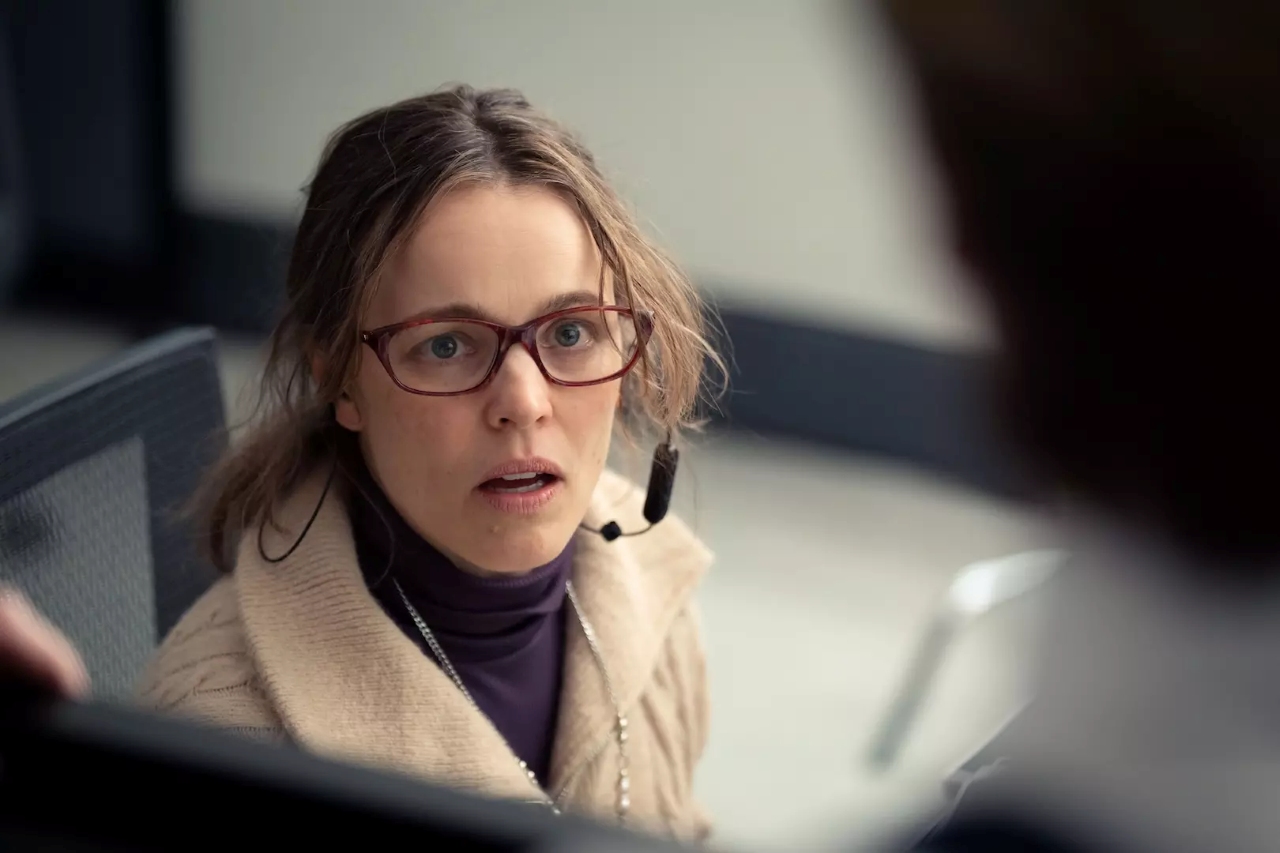
The scenes on the island equally lack any kind of nuance. Rachel McAdams has only one form of characterisation – the nerdy nobody who is suddenly in her element and a fount of practical wisdom when it comes to their survival – while Dylan O’Briens’s only characterisation is him champing at no longer being in control and having the really obvious arc that the only course due to him is a grudging redemption and changing of his ways or not. This is something that Send Help follows for the first hour and a quarter of its 113-minute running time.
Certainly, Sam Raimi has ventured off to make regular dramas before. He had a period in the 1990s where it seemed he had to prove himself outside of genre material with the likes of The Quick and the Dead (1995), A Simple Plan (1998), which I would argue is still his best film, and For Love of the Game (1999), so I felt there was no reason that he shouldn’t feel a desire to do so again here. But then Send Help gets twisted and weird.
[PLOT SPOILERS] There is the scene where Dylan O’Brien returns from his ill-fated rafting venture and Rachel McAdams feeds him a paralysing agent she has synthesised and prepares to conduct a DIY castration to tame him. There is the sense of “Holy shit, the film is really pushing into some wild, out there territory.” But then there is the incredibly frustrating moment where Raimi pulls back from going that far and has Rachel McAdams merely hold up a dead rodent rather than Dylan’s extracted testicles.
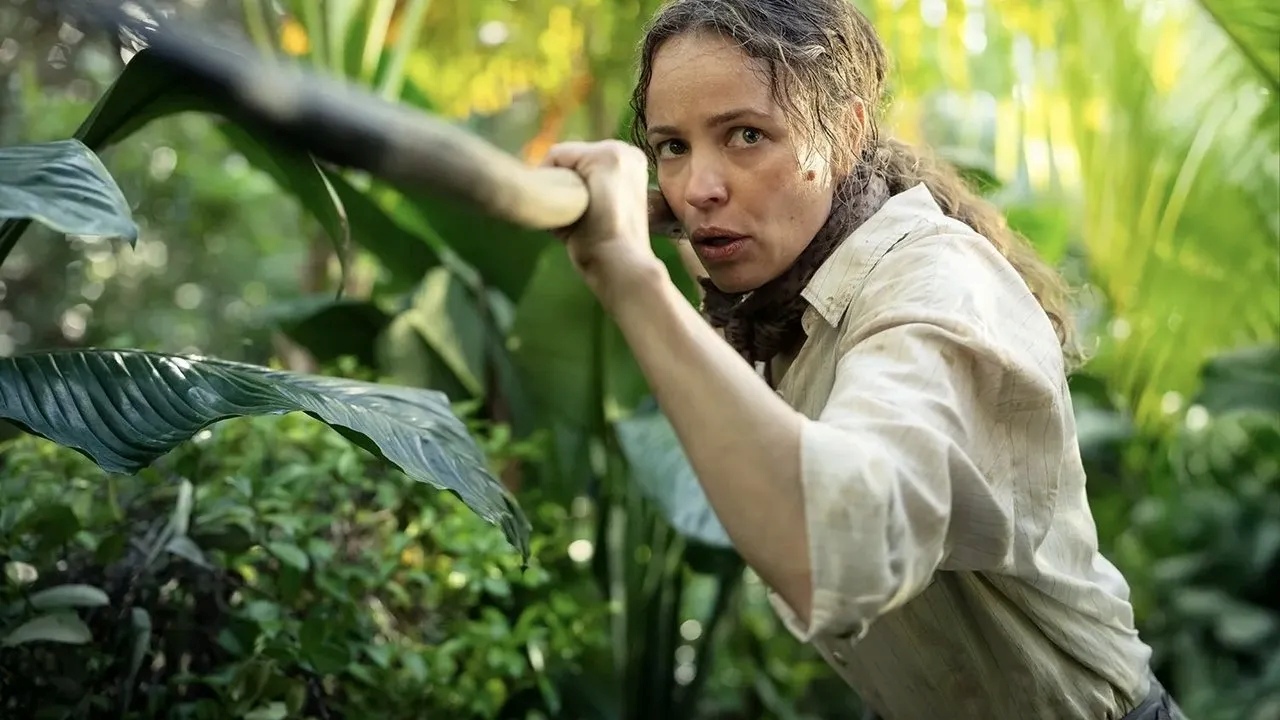
[PLOT SPOILERS CONTINUE] Raimi then spends the next little while doing this incredibly annoying flip-flop where he keeps wanting to push the film into something nasty but then backs off actually doing so. There is the scene where Edyll Ismail’s fiancée unexpectedly turns up on the island. This is expectedly a great “oh, shit” moment for Rachel where she realises that everything is about go back to what it was before. We see Rachel leading Edyll and the boat pilot along the cliff edge – only for Raimi to abruptly cut to black before we see what happens. Certainly, we do find out what happens later and Rachel’s return to camp alone clues us in, but it seems a frustrating avoidance of going for broke. Similarly, there is a scene not long after where Rachel wakes up to discover Edyll washed up on the beach and the question of what is going to happen now sits there only for everything to predictably turn out to be one of the lamest devices in the book – she wakes up and it was just a dream.
[AND CONTINUE TO CONTINUE] About the one point that Sam Raimi decides to properly embrace this is a scene where Rachel McAdams and Dylan O’Brien are going for it against one another in an all-out fight, tearing parts of their scalp off and gouging fingers into eyes. However, another big twist right near the end is so stretched in terms of plausibility that the film comes collapsing down altogether.
If I were to coin a capsule description of Send Help, it would be Misery (1990) by way of Cast Away – but one where Annie Wilkes is the sympathetic protagonist of the story and everything plays out across the 2020s gender wars divide. And that in a way ended up being the killer for me. Because Raimi is so prone to characterisation by caricature, the film is a sole black-and-white divide – mousy downtrodden woman who suddenly finds herself in a position to display her hyper-competence vs one man (well actually all men in the film excepting Dennis Haysbert) who are corporate jerks, slimy and back-stabbing, sexist, rule by ridicule of others and the buddy system.
Send Help falls within the lines of what I have started calling the new Fashionable Misandry in Hollywood. It can be seen in films like She Will (2021), Things Heard & Seen (2021), House Red (2022), Hunt Club (2022) and Barbie (2023). My rule of thumb with films like these is to swap the genders of the characters in the film and see whether the story would still hold up or else collapse into being called sexist. Imagine this – a mousy Clark Kent type in an office is overridden for promotion by a new bossy woman who promotes one of her girlfriends over him because of his klutziness; the two are trapped out in the wilderness where he gets to show his competency and help them survive but she keeps trying to scheme and reassert her dominance. He makes her behave by threatening to conduct a DIY hysterectomy!. All before an ending where he feels justified in killing her and then goes on to claim the promotion that was originally his and write a successful self-help book about doing so. My feeling is that such a story would attract howls of sexist outrage and the male character be labelled an incel. My question is why such a story is acceptable and even celebrated as a positive portrayal when it is one gender on the receiving end and not the other.
Sam Raimi’s other genre films include:- the splatter comedy The Evil Dead (1981) and its sequels The Evil Dead II (1987) and Army of Darkness (1992); the bizarre cartoonish crime drama Crimewave (1985); the dark superhero film Darkman (1990); the psychic thriller The Gift (2000), and the trilogy of Marvel Comics adaptations Spider-Man (2002), Spider-Man 2 (2004), Spider-Man 3 (2007), followed by the horror film Drag Me to Hell (2009), Oz: The Great and Powerful (2013) and Doctor Strange in the Multiverse of Madness (2022). Raimi also co-wrote the Coen Brothers fantasy film The Hudsucker Proxy (1994) and produces the zombie film The Dead Next Door (1989) under the pseudonym The Master Cylinder. Sam Raimi has also had some success with his Renaissance Pictures production company, who have been particularly enterprising in the field of television fantasy. Theatrically, Renaissance have produced the bizarre Lunatics: A Love Story (1991), John Woo’s American debut Hard Target (1993) and the Van Damme time-travelling action film Timecop (1993). On television, Renaissance have produced such genre works as the superhero series M.A.N.T.I.S. (1994-6), the smalltown Deviltry show American Gothic (1995) and then had enormous hits with the dual successes of the tongue-in-cheek revisitings of Greek myth and sword and sorcery with Hercules: The Legendary Journeys (1994-9) and Xena: Warrior Princess (1995-2001). These were followed by similar tongue-in-cheek series as Young Hercules (1998-2000), the futuristic Cleopatra 2525 (2000-2), the historical romp Jack of All Trades (2000-1) and the Evil Dead tv spinoff Ash vs Evil Dead (2015-8) and film sequels Evil Dead Rise (2023) and Evil Dead Burn (2026). Raimi also formed the Ghost House Pictures production company and co-produced the likes of the American remake of The Grudge (2004), Boogeyman (2005), The Messengers (2007), Rise (2007), 30 Days of Night (2007), The Possession (2012), Evil Dead (2013), Poltergeist (2015), Don’t Breathe (2016), The Unholy (2021) and the tv series Legend of the Seeker (2008-10) and 13: Fear is Real (2009) as well as Raimi Pictures that produced Crawl (2019), Umma (2022), 65 (2023), Boy Kills World (2023) and Locked (2025).
Trailer here