

Crew
Director – Fred Gallo, Screenplay – Rodman Flender & Daniella Purcell, Producer – Roger Corman, Photography – Ivan Varimazov, Music – Ed Tomney, Special Effects – Ultramatrix Optical Effects Team (Director – John Eppolito), Makeup Effects – Optic Nerve (Supervisors – Everett Burrell & John Vulich). Production Company – New Horizons.
Cast
Stacey Travis (Theresa Jennings), Christopher Atkins (Vlad), Doug Wert (Alec), Vessela Karlukovska (Michelle), Nikolai Sotirov (Timothy)
Plot
Art restorer Theresa Jennings is approached at a gallery event by the charming Vlad. Afterwards, she has erotic dreams about him coming to her. She is then hired to travel to Vlad’s home in Eastern Europe to do restoration work there. She is welcomed by Vlad’s brother Alec, but then Vlad appears and tells her to go away. What she is not aware is that the two brothers are vampires. Alec urges Vlad to put the bite on Theresa and make her his. Theresa has flashbacks to the mediaeval period where she was a poor peasant girl who was charmed by Vlad, a monk at the local monastery, and how they conducted a forbidden liaison, which met the harsh disapproval of Vlad’s fellow monk Alec.
Dracula Rising was one of the new wave of films that came out in the late 1980s that reconceived the Vampire as a darkly magnetic and sexy figure. See other films of this period such as To Die For (1989), Tale of a Vampire (1992) and big studio films like Bram Stoker’s Dracula (1992) and Interview with the Vampire: The Vampire Chronicles (1994). These films were just as much horror stories as works that conceived themselves in terms of dark romance.
It seems quite evident that Dracula Rising was made by Roger Corman’s New Horizons production company as an attempt to jump on the bandwagon of Bram Stoker’s Dracula. Most obviously, while there are vampires here, there is no Dracula, despite the title, although we do get a painting of Vlad the Impaler, the historical model for Dracula. There is the same brooding, dark romantic/erotic tone, while a central part of the plot both here and in Bram Stoker’s Dracula is of a woman being pursued by the vampire who sees her as the reincarnation of his lost love.
Dracula Rising shoots itself in the foot fairly much from its opening scene when it introduces its darkly romantic, sexy vampire and what we get is blonde-haired Christopher Atkins, better known as Brooke Shield’s teenage love interest in The Blue Lagoon (1980) and a not a huge amount since. Certainly, the film does offset this by creating the evil vampire brother, a goateed Doug Wert, and sets much in the conflict between the good Atkins and the cruel, despotic Wert who spends most of the film urging Atkins to put the bite on Stacey Travis.
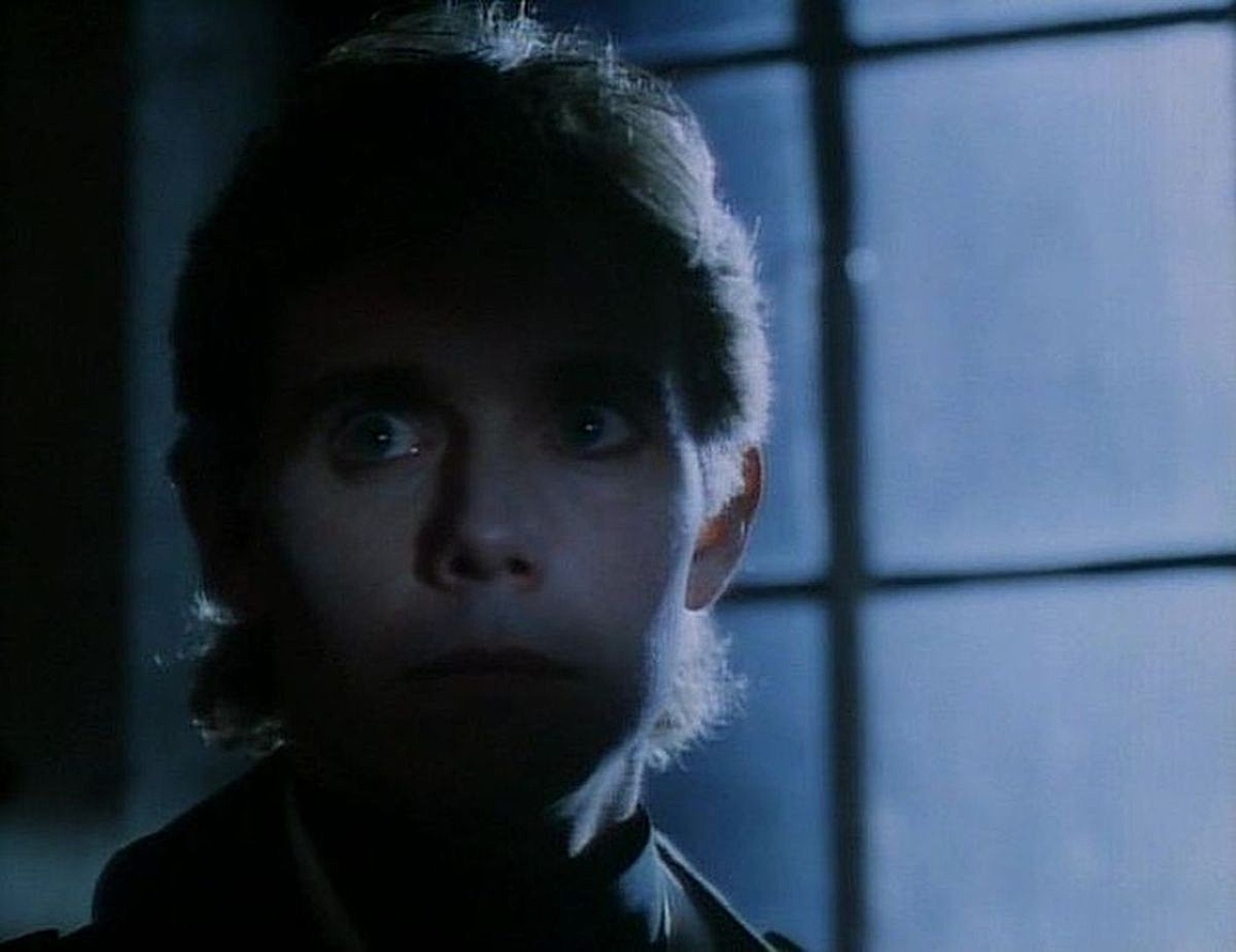
The problem with Dracula Rising is that it never does anything interesting There is a great deal of brooding and shadowy mood where much of the film seems to be shot in churches, catacombs or against stained-glass windows – there is no production designer credit so one assumes that these are real locations in Romania where the film was shot. The plot wavers between Christopher Atkins’s indecision over his attraction to Stacey Travis, which consists of lots of “do it, you must” and “no, I can’t” dialogue, and lengthy flashback scenes, which are more romantic than vampiric. However, none of it seems to much go forward anywhere. There is a bizarre ending that seems to be set in Hell, which seems inserted to bring an end to proceedings more than anything.
Director Fred Gallo emerged as a director with Roger Corman’s Concorde production company, also making Dead Space (1991) and the thriller The Finishing Touch (1992) and for other companies the thriller Lady in Waiting (1994) and the SF films Starquest II (1996) and Termination Man (1998).
Trailer here